A Legacy of Leadership: Lessons on Purpose, Passion, and Perseverance
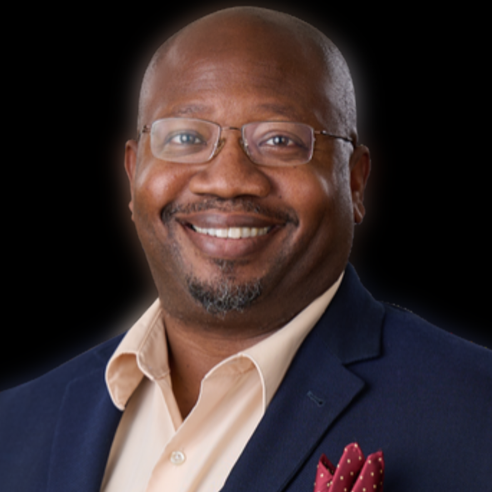
Dr. William T. Choctaw sits down with Preston Choctaw to discuss the enduring impact of strong leadership and its ripple effect on future generations. From raising a family to managing thriving organizations, this episode delves into the importance of living with purpose and nurturing a legacy that inspires others.
0:00 Coming up on this episode of the healthy, wealthy, and wise podcast, asking the question, what, how do you maintain a work life balance? You know, are you, are you married? Do you have kids? You know, how do you answer to a lot of that, but I want you to tell us, how does that work? How does that fit into all of this? So, yes, I, uh, I am married, been married for, welcome to the healthy, wealthy, Wealthy and Wise Podcast with Dr. William T. Choctaw, MD, JD. This podcast will provide you with tools and actionable information you can use to help live a more healthy, wealthy, and wise life.
0:43 It's powered by the over 50 years of medical experience of this Yale University Medical School trained surgeon, who is also a Western State Law School trained attorney, with executive of experience being a former mayor of Walnut, California, as well as the current Chairman of the Nonprofit Servants Arms, and as president of Choctaw Medical Group Incorporated. This is the Leadership Masterclass edition already in progress. Welcome, ladies and gentlemen to our next episode of the Health and Wealth and Wise Podcast. We are absolutely delighted. To have one of our unique leaders, um, and we indeed, uh, view this podcast as an offshoot of the Leadership Masterclass.
1:31 And one of the things that we try to do on a regular basis is have leaders in different levels of leadership and have them to stop by and share their words of wisdom with us. Uh, we are absolutely I'm absolutely, uh, thrilled, uh, to have, uh, Mr. Preston Choctaw. Now, you may say, wait a second, wait a second, Choctaw? And I would say, yes, you heard that right. Uh, he is indeed one of my progeny. And we will, we will have him, uh, to tell us about himself, but welcome Preston, welcome to the Healthy, Wealthy, and Wise podcast.
2:13 Well, thank you very much. Very glad to be here. Glad to be here. Give us your thoughts about leadership and what has been your experience over, uh, your, your, uh, lifespan, uh, in terms of, uh, what you think leadership is and, and how you've been involved with it. Uh, I was, so I was a quality improvement manager, um, for, um, PACE essentially, uh, and then I moved into a center director role. So center director means that I was actually running a PACE center. So the census I was running was about like three, I don't know, like 325 or 350, uh, amount of participants who were at the center.
2:57 And that was when I gave the example I had about, you know, Uh, you know, 70, 80 employees or so, give or take, and then supervisors, managers were about 10 or 11 or so. Got it. Got it. Um, and when, as, as a center director, um, you know, I'm out, I'm in the front, like, so my example was as QI director, QI, sorry, QI manager, I'm in the background, center director, I'm in the foreground. I'm, you know, I'm, you know, You know, everything runs, runs through me. I'm the face of the center. Um, you know, I make sure I talk with all the participants whenever they come in.
3:37 I try to interact with them, let them, let them know who I am. You know, uh, I, you know, and, and essentially I, I ran my, my center, uh, in such a way that that's, so that's how I learned more so about being, um, a more, uh, I guess you can say a more impactful, broader leader. Okay. Right. Okay. And as a QI manager, I had a team of about, what, about four or five, four, right? Okay. Thank you. Before that, when I was a manager at the, um, uh, at, at, at, at the managed care company, I had a staff of about 16 or so, but that was a lot different environment.
4:21 Um, and then as a center director now at PACE, you know, I have, you know, a whole lot of participants, participants are essentially patients, a whole lot of patients that I'm responsible for. And then I have all, all the staff, right. Um, and the key thing that I learned throughout that was, um, you can utilize. Quality, quality improvement techniques in director level leadership or in leadership in general. Give an example. Yeah. Okay. Yeah. I thought you would ask that. So, one of the key things about quality improvement, and if you get into, you know, uh, Lean Six Sigma, or you get into the model for improvement, Or you get into, what else, just lean and, I mean, there's all these, all these improvement methodologies, right?
5:14 Right. Um, The first step, always the first step, for instance, in Lean Six Sigma, you know, they talk about DMAIC. Well, that's, that's, those are acronyms, but the first step is the D is define. Define the problem. What is the problem? Right. Um, in, uh, uh, um, and when you define the problem, you have to figure out, okay, you know, What's the real problem? Not just what I think the problem is, not just what do you think the problem is. What is the real problem? So how do you get down to what that real problem is?
5:57 So It's something so now I'm going to get into something that I've been saying for a while now It's not patented. So anyone can use it, but I've been using it in presentations ever since. Okay. Okay Uh, I call something, uh, the the the three t's Okay. Truth, trust, truth, trust, and transparency. Okay. I like that. That's, that's how you start with, with, with your team. So you use quality improvement, quality, first step. How do you know what the problem is? You got to know what the problem is. How do you get there? You need to have truth, trust, and transparency with the people that you're working with.
6:37 One. Two. Truth. Speak the truth to them, right? Be honest with yourself to them. Speak truth to them. Maybe they'll speak truth back, right? Two, trust. Once you start speaking truth back and forth, then you establish the trust, right? Now you have trust within each other. And then three, transparency. Be open as well. Be open and honest and that'll foster that openness with them as well. So when you get all three of those things together, And your team is now open with you right now, you start to figure out, well, the problem was this was a problem, but no, it's really here. This is the real problem.
7:19 So you start to get down to what the root cause of the problem is. And oftentimes you got to have people with the truth, trust and transparency to be honest with you and tell you what's really going on. Right. So that's from quality, but you see how that's right with leadership too, right? Exactly. I worked with my, with my managers, you know, I would have one on one meetings with my managers every single week and one on one safe space in my office. You tell me what is going on, what is bothering you? What are your issues? What are some good things? And how can I help? Let's, let's get it. Right. I feel like let's get into it. So they would tell me, they'd be like, you know, at first in the beginning, I think, you know, it took a little bit of time, but you know, maybe after like, you know, the second or third meeting, they were all in.
8:08 So I mean, oh, this is a problem. And you know what, this, you know, or like, you know, I don't like working with this person, or there's some communication issues over here. Or, you know what, there's a problem over here in this other department, you know, or there's all these other things that I started hearing like, okay, okay, okay. Yeah. So now I know what's going on. Now I have a pulse of what's happening at my center, at my organization. I was just going to say, on average, how many hours would you say, I don't know, in a day or a week, do you put into the work either at your office or home office or, you know, total, total, I'm just trying to, trying to get it in a 24 hour a day.
8:55 Do you mean now? Do you mean in my role now? Yes. What is your position now? Okay. Sorry. Yeah. Yeah. So when I talk about being a studio director, that was That was my previous role. Currently, I'm a Process Improvement Manager. Okay. Uh, and what that means is, I'm essentially, I work very closely with a PACE organization, and I work with their teams on improving their processes. Okay. And attaining their goals. Is this in one place or multiple places? Uh. So, so it's one specific center that I'm working with now, but I'm actually an employee of, uh, a research center.
9:42 Excuse me, a research institute. Okay. So, uh, I think it's okay if I, I mean, it's called West Health in Institute. Okay. Uh, it's a fantastic organization. Um, but essentially I was basically brought in, um, and they're institute full of researchers. They're pretty much all PhDs. Okay. They're, they're experts in their fields. Okay. Um, and they brought me in to essentially be a, a liaison, a bridge. To the, the pay center and the pay centers is, uh, it's actually, uh, owned by the same. It's, it's, it's not owned because, because it's, it's nonprofit, but, um, uh, it's funded by the same, uh, foundation that the, the institute also.
10:32 So there's a relationship there. Um, but my role is to, I work with the, I work with the researchers at the, at the Institute and we work out like curriculum and we work out different things that we want to, you know, some process improving methodologies, some aims and goals to work on. And then I then spend, you know, most of my day then at the center. Directly working with the teams, you know, one on ones, work groups, you know, I do trainings with them. Uh, we look at, um, uh, well, I could say PDSAs, but you probably don't know what that means. Right, that's okay. Yeah.
11:13 Do you travel to different locations? Yes. So, I, I basically split my time. I spend three days at the, um, at the Pace Center, and I spend, uh, the remaining days at the, uh, at the Institute. Okay, so I go back. Let, let me ask you another question and I, I, I want to be, I want to be respectful of your time and I can tell we're gonna need to have you back, uh, because there, there, there are a number of areas that we, we we're gonna want to drill down on. But I think certainly our listeners, particularly, you know, on multiple levels would, would be asking the question, what, how do you maintain a work life balance? You know, are you, are, are you married?
11:53 Do you have kids? You know, oh yeah. How do you. Yeah, I know the answer to a lot of that, but I want you to tell us. Okay. So how does that work? How does that fit into all of this? So, yes, I, uh, I am married, I've been married for Uh, 20, 20 years now. Okay. 20 years. Yeah. I think that's right. No, I'm just fine. I'm . That's okay. Yeah. Yeah. My wife sees this. Yeah. She'll be like, what? No, no, no, no, no. But, um, so, uh, I have uh, uh, three boys. Uh, my oldest is Vince Vincent, and I believe he was on your POD podcast.
12:34 Yes, yes, he was. Yeah. That's my oldest. Yeah. Uh, he's, he's doing some good things right there. Middle one. Uh, so my oldest Vincent, he's 18. Now my middle one, Tyson is six, 16 now. And then my youngest one, Maxwell is 13. Work life balance. Yeah. So, uh, uh, I, I work a lot. Um, you know, I work a lot one because, you know, I, I love what I do and, and I, and for all your listeners out there and for all, uh, your college bound, uh, listeners and those, you know, who are trying to figure out what they want to do in their lives, you know, Yes.
13:18 If you wanna get into a role where it won't seem like a job, do something that you love to do. Absolutely. You only got one life. Absolutely. And you absolutely take advantage and pursue Absolutely. Your dreams. Yes, I agree. Um, so, so, you know, I work a lot. I love, I, I love what I do. I love doing things like, you know, like, like, like I was describing earlier. Um, but I always make it a point. It's a carve out time every single day for family. There's always family time, no matter what. So right now, you know, I work very far from where I live. Uh, it takes me typically when I go to the pace center, it'll, it'll take me an hour and a half.
14:04 So I'm driving in the morning an hour and a half and I'm driving home an hour and a half. I go to the Institute. It's, you know, it's an hour. Sometimes that's an hour and a half too, depending on traffic. You know, so I'm on the, so typically I'm on the road, like three hours every single day. But when I get home, when I get home, I always carve out as soon as I get home, I have like a a routine, you know, I change, uh, I mean, I change my clothes, I get out all my stuff, put all my comfy clothes on because I'm chilling, you know, uh, you know, you know, we, we, we, we, we, uh, we always, uh, uh, uh, eat at the table.
14:44 So when I come home and eat, uh, depending on where, where Vincent is, because now Vincent has his, car and he has classes and stuff like that. But if he's home, uh, we'll, we'll eat at the table. We'll discuss how our day is. We'll all check, check in with each other. Uh, and then also depending on if my youngest has soccer practice, cause he has soccer practice from like seven to 30 to like nine, but before that, you know, we have, we spend our, our family time together as a family. And then I typically take them to practice, come home. Then we'll spend some more time together as a family.
15:24 Then everyone will go to sleep. And then I'll usually stay up and then work a little bit more. So I typically have my work day that I work. And then I'll typically work at night. I don't know. Usually starting around 1030, you know, usually till about midnight or so. And then I go to sleep. So you basically find a way to make it all work. Okay. You, you, you, you, you have to. Okay, you know, no matter if you like your job, no matter if you don't like your job, you know, still a job and you're doing it to make money to, so you can do things for your family. But at the end of the day, it's all about your family.
16:06 It's all about who you come home to, you know, so, so that should really be a priority all the time. And, and just to pull that a little bit more, why is that such a high priority or what, what, what, what, what in your opinion, makes that a high priority? Yeah, well, um, well, for me, I mean, um, it's, No, no, no matter what, no matter what, so your life, like my, my life is really, I live for my family, really, you know, I mean, yes, I have my own things, but essentially, you know, I work and I do everything to make sure that.
16:55 You know, that my wife has what she needs, that she's supported, that I'm there for her and that, and I want my kids to grow up, you know, a certain way. I want them to be responsible. I want them to, you know, maybe have a family one day of their own. And I want to set the example of what it means to be a father to you, to your family. And for me, I mean, I mean, you know, You know, yes, I'm seeing a father because this is me, but you know, mothers as well. Right. Right. But as a father, because I can only talk to my own experience, you know, and especially the fact that I'm raising boys, so they're seeing me as the example.
17:37 Thank you for listening to the Healthy, Wealthy and Wise podcast with Dr. William T. Choctaw, MDJD. You can listen again to this and any of the previous episodes, leave a comment or pose questions to the doctor by going to. www.thwwp.com. That's www.thwwp.com and you've got it. It's also available wherever you get your podcast. Be sure to follow, like, share, and subscribe if you haven't already. Then tune in for the next episode of the Healthy, wealthy and Wise Podcast with Dr. William t Choctaw, M-D-J-D-A, production of Change Makers Communications, LLC.
