America at a Crossroads: The Legal, Social, and Ethical Future of Voting
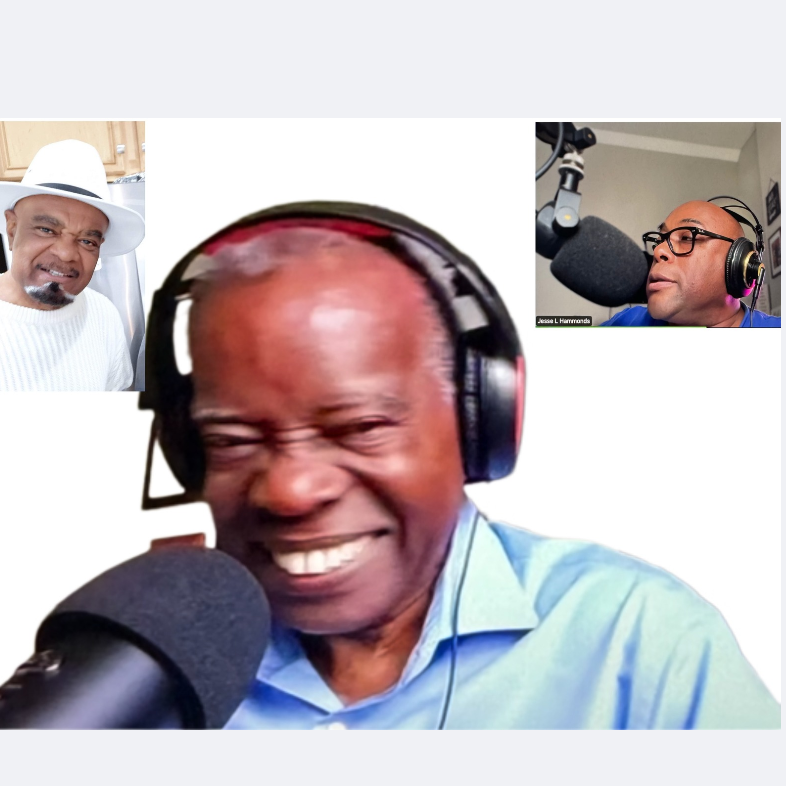
Attorney Bernie Brown joins Dr. Choctaw in an intense discussion on voting requirements, suppression concerns, and the evolving landscape of electoral ethics. What new changes and tactics are shaping the path forward? This is a must-listen for those invested in preserving democracy and understanding their rights.
0:00 Coming up on this episode of the Healthy, Wealthy, and Wise podcast. Well, let's see. Let's see here. Well, a couple of things, actually, you were speaking about him being the evil one, being a convicted felon. He would be, if he were elected, he would be prohibited from entering about 38 different countries as a felon. Really? Okay. I didn't know that. Includes Canada, Japan, Australia, New Zealand. In the UK just to name a few . He would act, he would be prohibited from that. And those, one of those two famous papers that failed to endorse either candidate, right?
0:46 Them broke the Watergate scandal. Yes, they did. Yes. Welcome to the Healthy, wealthy and Wise Podcast, a podcast that provides actionable information and tools you can use to live a more healthy, wealthy, and well. This is the Special Brothers in Law edition featuring Dr. William T. Chonka, MD, and attorney Bernie Brown, a former Los Angeles City prosecutor. Let's join the conversation. Yes, but, you know, it's amazing because the name calling, the bullying, it's gotten to a point where it's being rewarded. And being accepted by so many people, the vulgarity is just, it's horrible.
1:30 I agree. And it's coming from one main source. You know, people are following the leaders coming from one main source. But one of the things I find encouraging, and I didn't think I would see, is the large number of staunch Republicans who are standing up, members of the military who are standing up, And saying this is wrong. Um, and even though we're going to put country over party, put country over party, that this is not a Democrat or Republican issue. And I've been both in my lifetime. I've been in the Republican party. I've been in the Democratic party and, but saying this is something different. This is, this is something we haven't seen before. Yes. And I think it is honorable that Liz Cheney and even her dad Well, I have not been a fan of for a number of years because of the previous wars and stuff, but even he stood up and said, no, even, you know, this is wrong.
2:24 Yes. Uh, that's absolutely right. I'm so proud of these people standing up for what's right. Yes. You know, it's not a, at some point it gets to the point where it's not about party. It's not about winning. It's about just what is right. Exactly. I'm absolutely proud of these people and I've said it before and I'll just say it again. I'm afraid of both consequences. I'm afraid that if Trump loses, he will. Insurrection. Certainly he will try to cause, you know, like he did before he'll get people all riled up and there'll be violence.
3:04 I think there is a strong probability, probability that if he loses, there will be violence. No, go ahead. Good. On the other hand, I think if he wins, I think inevitably You know he falls out with everybody over time. Oh yeah. And I just don't want to see that day when he falls out with Putin and starts calling Putin names. Well see I worry less about that because I think if he loses he will be in jail. There are a number of cases out there that he's very selectively been able to use his attorneys to delay and delay and certain people in the judiciary, who I won't name, but, but who may or will be a little suspect.
3:52 But the last time he created havoc was when he was in power in, in Washington. He is not in power. He's trying to get back to where he was. And my point is, if he loses, he won't get back. He won't give it. He will be a convicted felon. Uh, he won't be able to vote in certain places. And I think his whole power will be diminished. Now he's not going to go away completely. And the people who follow him won't go away completely. But I, I'm not concerned that it's going to be anything near what January 6th was. I'm hoping you're right. You are a brilliant man. So I'm hoping you're right. I go back to this entirely different subject, but I go back to the years when I was a young man and there were tanks driving down the street and they were saying, burn baby, burn.
4:44 I was on the radio. I remember that. The Watts riots. Yes. And it was like, man, I couldn't believe it. Military tanks driving down the street down Vermont Avenue, you know, burning up and looting and fires and all of this and they're like, No, I don't believe this. Well, I can tell you I was in 1968. I was in college. I was a junior in college. And believe it or not, I had been elected to student council president elect. In 1968, and this was April of 1968. And I never forget, you know, that was an assassination that had occurred.
5:24 And that, you know, there were rides everywhere, all over the place. And, and the, the Dean of students came to me and said, you know, we, we've got these tanks, then we had tanks on our campus on a car, cause they were concerned about the colleges, particularly the HBCUs. And he said, the Dean of students said, you are the city as a student council president. And I said, no, sir, I'm sitting a student council president elect. And he said, well, the president has just stepped down because he says he's a senior and he's done. That's exactly what he said. But I learned, I can tell you, I learned some very important lessons that in the midst of all that fear and anger and confusion.
6:13 You can find common ground and basically all they needed me to do was to go with the leadership of the university downtown to the city in the deep south to meet with the representatives of the city in the deep south to let them know that at my college we weren't going to do anything crazy. And they needed to hear it from a student representative. And I basically didn't say very much, I just listened to the adults in the room talk or whatever. But my point is, it gave me hope. It gave me hope that no matter how dark things look, you can find some people who can walk to the middle of the room or the middle of the field and sit down and have a decent conversation and come up with a solution.
6:55 You are fantastic. Those people do exist. I'd vote for you any day. I'm not running for anything. You got my vote, buddy. I just always say like, like you, I have kids and grandkids, so I'm gonna, I'm gonna turn all this over to my kids and grandkids. I, I, you know, I'm at the end of my rope, but we'll see. And certainly we will, we will have a conversation next month. Well, after November 5th, and we can sort of see where, where things are and where the country is. Sounds great, man.
7:36 Thank you for having me. It's been a wonderful conversation. Well, thank you as always for coming and you're always so grateful and so kind to us to share your very, very precious time with us. Before we let you go, Jesse, did you have any questions for Attorney Brown before we let him go? Well, let's see. Let's see here. Well, a couple of things, actually. You were speaking about him being the evil one, being a convicted felon. Um, he would be, if he were elected. He will be prohibited from entering about 38 different countries as a felon. And this includes Canada, Japan, Australia, New Zealand, and the UK, just to name a few.
8:23 He will be prohibited from that. And those, one of those two famous Papers that failed to endorse either candidate. Right. Broke the Watergate scandal. Yes, they did. Yes. And Woodward and Bernstein, but particularly Woodward was very critical. Um, of that organization, but the theory is that if one, if this person were to win, he would just make it all go away, you know, he'd, he'd, he'd fire Jack Smith and he'd, he'd, he'd get rid of all that. Well, he can make the federal cases go away, but not state. That's true.
9:04 That's true. You're right. He can make a lot of it go away, but not all of it. That's true. Some of the charges are state related charges. Right, right. Would not go away. Right. Good point. Good point. Good point. Yes, it'll be interesting as I keep saying, but it will be interesting. That would be great, wouldn't it? Like, Oh no, you can't come and hug me. But we're not allowing you Based on our rules Brother Bernie, did you ask did you explain kind of what the original purpose of the Electoral College was?
9:44 Well, it started off and it's still one of the arguments that's made under modern day circumstances And that is that it started off to protect The smaller states and there is a slightly racial side to it because the South historically, you know, blacks were not allowed to vote and we're not counted as part of the population or we're counted as only three fifths of the population. So the South felt as though, Oh, we're getting, we're getting kind of. The steep end of the deal here we get because we are getting a true count for our true population.
10:26 Well, it's kind of their own fault, but in any event, so this was part of a compromise to a certain degree due to create the electoral college to protect. the ability of states to independently cast their votes and to be represented on a national level. It was felt at some point that if you had a situation where it was totally majority rule that that would take away protections and create a tyranny, shall we say, of, against the minorities, that, that the majority could basically overwhelm and dominate the minorities, and so, it was kind of all the reverse arguments, but the primary historical context was the, of the creation, was to protect smaller states, and to protect their ability to be heard.
11:24 The, as you know, the other side of the argument is That you want to protect the overall population. And the president should not be committed to any individual states, but should be committed on behalf of the individual population of each individual person. And so, you know, the arguments, they sway back and forth. But it primarily came from the idea to protect the southern states. So that their voice would be heard. through an electoral college process. Well, along those lines, what are your thoughts on the electoral college being a form of voter suppression, especially in those Southern states?
12:13 I don't, I don't see it as a, a form of. Suppression. I mean, it, it has urging the vote. Well, I think people are going to go out there and vote and they, and they've been encouraged to vote. They're going to vote and they, their votes will be counted. At least the votes that they vote for the slate of their electors in each individual state because they're voting actually for a slate of electors. And so their votes will be counted. In that regard. And so, uh, I'm not sure that it's used to thwart the vote.
12:54 It does, as I, as I referred to tangentially earlier, it does to some degree distort it. And disproportionately represent the vote. That's the reason why we've had a situation where a candidate who has won the popular vote, the majority vote has actually lost the election through the electoral college because it's the representation, the representation, I should say, is not like one to one in the electoral college. In a smaller state, a candidate, an elector, might represent a few thousand people.
13:36 In a larger state, the representative might represent tens of thousands of persons. That's one per tens of thousands versus one per a few thousand, which means that that candidate Or electorate, I should say, who represents the smaller state has disproportionately more representation. And that's what results in an election base that's contrary to the popular vote. Like I said earlier, you could see a situation where 11 states determine the actual election of presidency. But, you know what? You could see a situation where it's the bottom of the ninth inning, there's two outs, the bases are loaded, and the team that's, uh, that has two outs against it is about to lose the game.
14:30 And then there's a grand slam home run that saves the game. Actually, it's the bottom of the 10th inning. It's never happened before. Well, it's got to be interesting. It's got to be interesting. I'm talking about the Dodgers and the Yankees. I'm not sure whether you guys follow the basics. I got that one. I did not get that one. I said, okay. You see, I could hear like, what is he talking about? I was like, oh, yeah. The point is, once in history, something happens. Yes, yes, that's true, but once in history, and people are having, we're having record voting right now, you know, from Georgia and some of the other places in the South, right?
15:14 Yeah, you're right. Parting thought for me, thank God for attorneys like attorney Bernie Brown and Mark Elias. That's it. Okay, well, thank you. Thank God for you and for Dr. Choctaw and for Kamala. So, Bernard, do you have any parting comments for us as we let you go to enjoy the rest of your day? I will just quote from a very famous former president. Keep hope alive. Good point. Good point.
15:55 I completely agree with that. Thank you as always, sir, for being so gracious with you. Very precious time. And, uh, please enjoy the rest of your day and we'll, we'll be back in touch in about 30 days or so. See where things stand. Thank you for having me. And we await the results. Indeed. Indeed. Take care. All right. God bless you too. You've been listening to the healthy, wealthy, and wise podcast, the special brothers in law edition, featuring Dr. William T. Choctaw MD and attorney Bernie Brown, a former Los Angeles city prosecutor. We value you as a listener and your views.
16:38 You can connect with. Or gentlemen@www.th wwp.com. That's at www.thwwp.com. Click on the contact link and we'll respond to you. While you are there, check out the other past episodes, blogs, and books. In the meantime, be the change you want to see in the world. This is The Healthy, wealthy, and Wise Podcast with Dr. William t Choctaw, MD JD. A production of Changemakers Communications, LLC.

