Blood Pressure and Brain Health: Can Managing Hypertension Prevent Dementia?
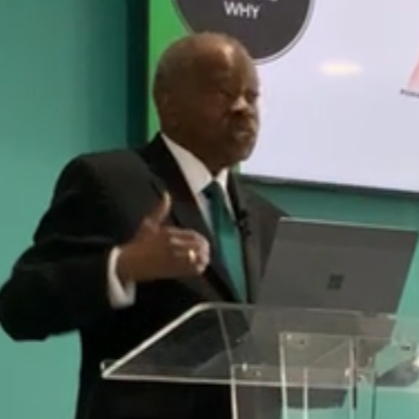
Dr. Choctaw explores the powerful connection between blood pressure and cognitive function, uncovering how effective blood pressure management could reduce the risk of dementia. With practical advice, listeners discover steps to protect both their hearts and minds.
0:00 Coming up on this episode of the healthy, wealthy, and wise podcast. We're going to talk about, we're going to define what dementia is, because that's going to be part of our two part presentation. We're going to find define what Alzheimer's is, which you may have heard Alzheimer's disease, because it is related to dementia. But we're going to try to distinguish between the two, if you will. And then we're going to talk about. Welcome to the healthy, wealthy, and wise podcast with Dr. Dr. William T. Choctaw, MD, JD. This podcast will provide you with tools and actionable information you can use to help live a more healthy, wealthy, and wise life.
0:42 It's powered by the over 50 years of medical experience of this Yale University medical school trained surgeon, who is also a Western state law school trained attorney with executive experience being a former mayor of Walnut, California, as well as the current chairman of the non profit. Transcripts provided by Transcription Outsourcing, LLC. Good morning, everyone. I have a scripture for you to go right into our session this morning.
1:23 And my scripture comes from the Psalms 103 verses one through five, which everyone quite often quite, I know they quite hold this in their heart. But it says, bless the Lord, O my soul, and all that is within me. Bless his holy name. Bless the Lord, O my soul, and forget not all his benefits. Who forgave all thine iniquities, who healed all thy diseases, who redeemed thy life from destruction, who crowned thee with loving kindness and tender mercies, who satisfied thy mouth with good things, so that thy youth be renewed like the angels, like the eagles. Let's go to the Lord in prayer. Father God Almighty, I come to you right now, Father, first of all, I just thank you for this opportunity. To be in the land of the living, my father, once more and again.
2:04 We thank you for the health and strength that you've given us, my father. We thank you, my father, for our lying down lifestyle and our rising up this morning, closing our right minds, but all our spiritual, physical, mental capacities functioning properly. But we also thank you, my father, for the opportunity to hear from Dr. Tata, my father, the servant that you sent to us to give us the information that we need concerning hypertension, my father. Father God Almighty, you're an awesome God, my father. You created us so you know all about us, my father. That's why we depend on you, but yet instead we also depend on, we trust and know that you send to us, my father, with the right information. So bless him, my father, to present to us what you've given him, my father. And we will be, we will be so very careful to give you the glory, the honor, and the praise.
2:45 Jesus Christ. Holy name. Amen. Dr. Chakta. Good morning. Good morning. Welcome. Um, I can, I can tell you immediately you were part of history. This is the largest number of people we've ever had. Simpson Hall at the morning session. So Congratulations for the last, uh, uh, uh, 24 months. Um, uh, today we're very delighted to, uh, present an interesting topic, uh, to you. Um, a lot of the, some may ask, well, how do, how do I come up with these topics? Actually, I come up with these topics from you. Uh, folks will come up to me and say, you know, that I've talked to you, have you talked about blah, blah, blah, or this or that?
3:30 And I said, yes or no. And so I, I put all that together. The other sources every week, I read, I don't know, 10 to 15, um, medical articles online. Um, and so I, I do that to sort of stay on top of what's going on since I am retired. Um, uh, and so that's sort of how these topics come about. Let me also say just, uh, one of the things that, uh, uh, my esteemed colleague, brother Hammond said, I am not president and CEO of Servants Arms, past the doctor he is, I'm the chairman of the board for Servants Arms. I just wanted to make sure I clarified that. I don't want to get in any trouble.
4:12 I get in enough trouble as, as it is. But as John Lewis, former John Lewis used to say, I try to make a good trouble, try to make a good trouble. Um, so today we're going to talk about improving blood pressure management and how that can decrease dementia. And you might say, but wait a second, what does blood pressure have to do with dementia? And what do you mean by improving blood pressure? Uh, how, how does all that work? And so we're going to go through this. Um, and, um, Um, I get your thoughts now. I always, as those of you in particular that have been following us for the last couple years or so, I like to talk about what I believe.
4:55 I like to talk about what I believe and what, why, why, why do I actually do that? I do that because. If you know what I believe, then you sort of know where I'm going, if that makes sense, you know, I mean, I can talk about X, Y, and Z, but my purpose, uh, is to communicate based on my beliefs. Um, um, I believe life is about being of service to others. I believe that that's what, that's why I'm here and why it may be why many of you here is really to help other people. Um, I believe knowledge is power. Uh, started this past week, you know, we've learned a lot about power.
5:35 Um, and my point is, uh, that my, my impression, my opinion is the way you stay empowered is by learning stuff. All the time. Learning stuff. Every day. Every day I learn something. Or try to learn something. But that empowers me. And the third thing is, I believe leaders can change the world. Again, go back to this week. A lot of stuff happened this week. And a lot of changes need to be made. So I believe that the individuals who will change things are those who are empowered. Uh, based on what they learn on a continuous basis.
6:16 I don't think you ever stop learning. Uh, and I don't think you can ever learn enough. So that, that sort of gives you an idea about why, why we're doing these things. Uh, we're going to talk about, I always like to put up an outline, because the outline does two things, it lets you know what I'm going to talk about. And more importantly, it lets you know when I'm just about done. So I know you're all busy people and you got things to do, and God bless you, you're here on a Saturday morning either on Zoom or in person, uh, but you got stuff to do. And my point is, I respect your time. Um, I respect your time. Um, and I used to always say, I still say, the only thing that I control in my life is my time. is my time. I use it wisely.
6:57 If you see me somewhere, uh, it's because I want to be there. I do not waste my time. Um, and, uh, so, uh, we're going to talk about, we're going to define what dementia is because that's going to be part of our two part presentation. Uh, we're going to find, define what Alzheimer's is. Because you may have heard Alzheimer's disease, uh, because it is related to dementia, uh, but we're going to try to, um, distinguish between the two, if you will. And then we're going to talk about how, what does all that have to do with your high blood pressure? So, you know, and so we're going to try to answer that question for you. We're going to review the signs and symptoms of each, um, um, and then as I said, um, talk about how it relates to, uh, your blood pressure.
7:45 Now, quick story about two years ago, specifically December 2020. Um, in my Sunday school class, and I see some of my Sunday school class members here this morning. Um, um, I, I decided, or I, I approached, uh, Reverend Collins after church, and I said, you know, Reverend Collins, I have this idea. Uh, I said, I'd like to do sort of like a master class about stuff. And this is all based on, in my Sunday school class, they used to have me do, you know, COVID Chats with Chalk Talk. COVID, actually Robin, uh, Nickens made, uh, came up with that. COVID Chats with Chalk Talk.
8:25 And this is during the COVID crisis and they have a lot of questions about stuff and bleach and this and that and all that sort of stuff. And I said, no, stay away from the bleach. And I would say, I don't care what that guy's telling you. Stay away from bleach. It's not going to help you. Um, and, and so, so that was sort of how all of this came about. And it was really based on the fact that I felt it important to do something, um, to sort of make a contribution, I guess is the best way I can put it. Um, and so I decided to do a masterclass, because again, remember, I believe knowledge is power. Um, I, I believe that, that the more you know, the better you can do and, and the happier you are.
9:10 So I came up with the idea of, of a masterclass. And so I went to Reverend Collins and I said, well, do you think this is something reasonable? He said, oh, I think it's a great idea. It's really good. And then I talked with the, uh, Reverend Nickens, Reverend John Nickers, who was also is one of the teachers, al resident. He loved the idea. I spoke with Pastor Revis and he thought it was a good idea. And so that was what sort of, so, so sort of launched this. Um, and I decided to make it a master class. And the reason why it's a master class is it's not a regular class. It's not a regular class. That individuals who come in here, you're here because you want to know more. It's not that you don't already know. You know a lot of stuff. But what I've learned in my seven to six years of life, uh, is that the people who know always learn more, that the superstars don't stop.
10:01 They just keep going because that's just what they do. You know, that, that the one that the A student in the class continues to make A's. She doesn't stop. She's always made A's. She's always been a high achiever. He's always been a high achiever. So those of you here online and in person, uh, this is one of the ways that, uh, you. continue to identify yourself. Because this is about health care, I always like to put in the providers, always follow your doctor's orders. This is not intent to, to tell you what you should or should not do in contradistinction to what your doctor's telling you what you should or should not do.
10:43 Why do I say that? I say that because each one of us is different. We're absolutely, I don't care if we're twins, we're still different, medically speaking. medical speaker. My high blood pressure is going to be different from your high blood pressure. My diabetes may be different from your diabetes and I'm just coming up with, with ideas. So, so the way you know what works best for you is to take your general knowledge that you learned from here and other places and go into your doctor says, you know what doctor, um, I want to ask you about blah, blah, blah, you know, and I want to get some ideas about blah, blah, blah, but always remember that this is advisory and it's for that reason. My goal is to help you to live long and thrive.
11:25 Um, and, um, I, I never imagined that I would be in my seventies, quite honestly, you know, if, if I went by history in my family, uh, but here I am. And so I, I, I personally think that that's a good thing. So let's jump right into it. What, what, what is dementia? So we're going to talk about two things. We're going to do it at once to the dementia and Alzheimer's. So first thing is dementia is a general term for decline in cognitive ability, thinking. That's what cognitive ability means. That includes memory losses. And as I said, difficulty thinking, uh, and we're going to go over examples of that.
12:06 Okay. Alzheimer's and, and dementia is not a disease. It is not a brain disease or anything like that. Dementia is something that occurs with age. Uh, what are the, you know, God bless us to be 70 plus, some of us. Uh, and with that, we get a low dementia along with it. So it's not something that you've done or you ate the wrong thing or you went to the wrong place. No, no. This is just part of your journey. If you will part of your journey as it is part of my journey, uh, and it will be part of everybody's journey when they get certain stages in life, Alzheimer's is a disease of the brain.
12:48 Okay. Dementia is not a disease. Dementia is just something that happens over time. Alzheimer's is a disease of the brain, okay, and we'll, we'll talk about what those differences are, and if you look at dementia, um, uh, as a general term of decrease in brain activity, Alzheimer's is a type of dementia. There are other types of dementia that we're going to talk about, and Alzheimer's is just one type of dementia. So, dementia is something that occurs in all of us as we get older, and you don't have to be old to have dementia. You can be, um, you know, I've got kids now that are fifty.
13:30 They're in their fifties. That used to be real old of me. It no longer is. Uh, and, and so, so you, you can, you can have dementia or 40, you know, you don't have to be 60 or 70 or 80 to have it. Uh, but, but my point is dementia is something that occurs normally and it occurs differently with different people again. And we're going to keep talking about that, that everybody's a little different. Everybody's a little different. So when somebody comes up and says, Oh, you have the same thing that my sister had. And what we did for her was, we gave her this, we gave her that. And what you can just politely say, I understand that, but my dementia is not like your sister's dementia. And you can do it with a smile, and you can be nice, and be respectful, and all that.
14:14 And you can say, well, I went to this master class, and that's how I know that. Okay, still talking about, uh, dementia and Alzheimer's. Remember, dementia is a general term, uh, for impaired ability of thinking. We also use the term cognition. Cognition and thinking mean the same thing, okay? Um, and, uh, and we'll talk about how all that, um, affects us as, as we get older. And all of us, Uh, we'll probably get some form of dementia. Remember, there are different stages of it. So you can have a little dementia or a lot of dementia, and we'll talk about that in terms of, of, of how we, uh, how we distinguish.
14:56 Now I want to take a little time to go over a little more detail, uh, as, and we're just talking, right now I'm just talking about dementia, the broad term of dementia. Recent memory, recent memory loss that affects daily life is normal. Um, it is normal to forget a meetings and names and telephone numbers. We all do that. Um, a person with dementia might have trouble remembering conversations. Um, they may ask repeated questions. So all of us might, might forget. Um, Oh my goodness, I had a meeting at three o'clock. What's the day? I just saw it. Today is Thursday.
15:36 Oops. I missed my Wednesday meeting then. Uh, but we all do that. We all do that. That is not a disease. That is not, that's not even dementia many times or maybe early dementia. Thank you for listening to the Healthy, Wealthy and Wise podcast with Dr. William T. Choctaw, MDJD. You can listen again to this and any of the previous episodes. Leave a comment or post. Questions to the doctor by going to www.thwwp.com. That's www.thwwp.com and you've got it. It's also available wherever you get your podcasts.
16:16 Be sure to follow, like, share, and subscribe if you haven't already. Then tune in for the next episode of the Healthy, wealthy and Wise podcast with Dr. William t Choctaw, MD jd, a production of change makers community.
