Diversity in Medical Trials: Pioneering Approaches for Better Outcomes
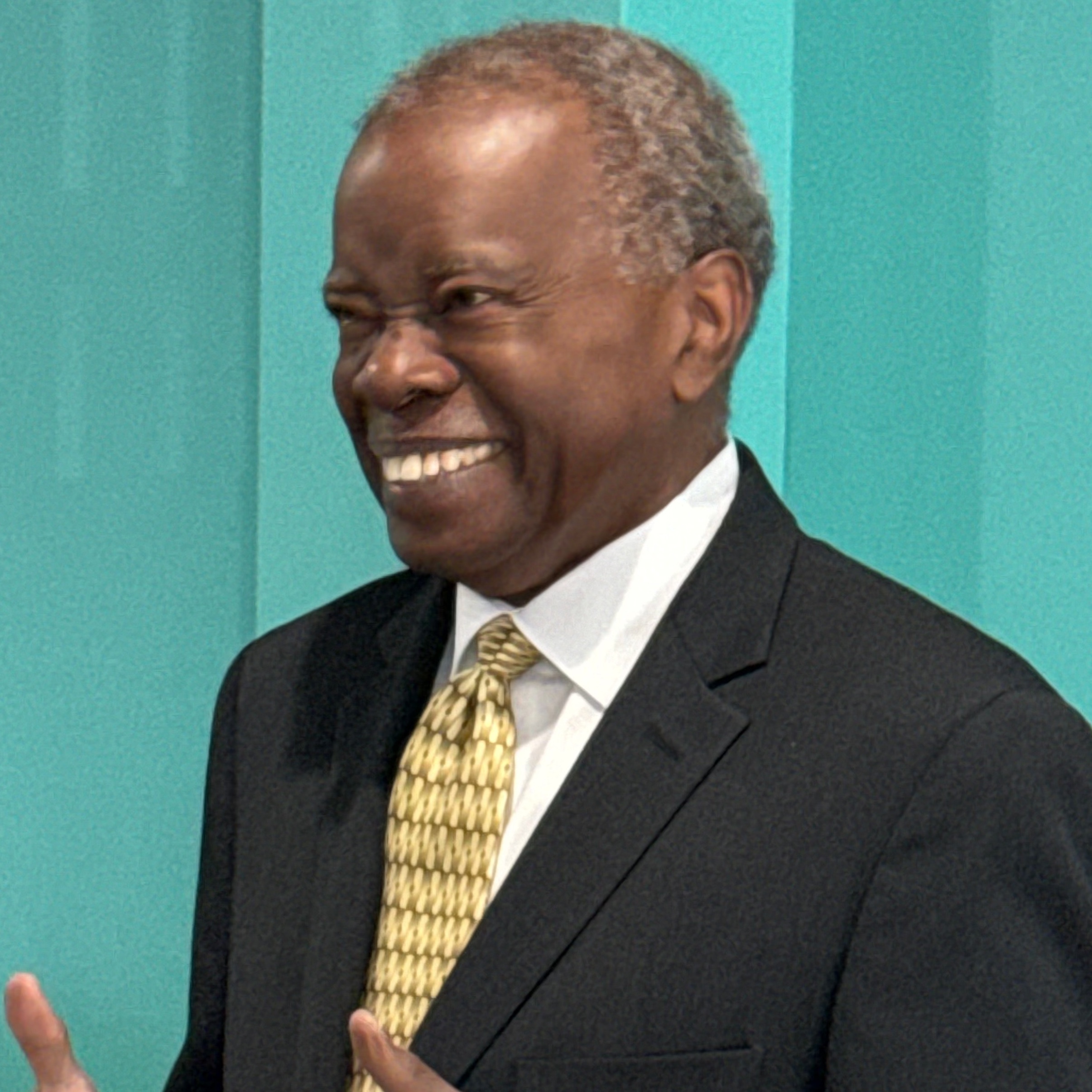
In this episode of the Healthy, Wealthy, and Wise podcast, Dr. William T. Choctaw discusses groundbreaking initiatives at Yale University and other organizations aimed at improving diversity in medical trials. Dr. Choctaw highlights the importance of inclusive research for diseases like long COVID and shares insights on how bringing testing to patients' homes is revolutionizing data collection. Additionally, Dr. Choctaw recommends Dr. Anthony Fauci's book, emphasizing the value of listening to experienced voices in the medical field.
0:00 Coming up on this episode of the Healthy, Wealthy and Wise podcast. I'm going to encourage you to read the book by Dr. Anthony Fauci. I'm sure everybody knows who Dr. Fauci is, but he was the one who had the courage to speak truth to power. You know, people didn't want to hear him. He's been in the field a long time. I do think, um, yeah, I do think he's over 80 years old. I know there's a lot of talk about these 80 year old people, but maybe we don't want to care. Welcome to the Healthy, Wealthy, and Wise podcast with Dr. William T. Choctaw, MD, JD. This podcast will provide you with tools and actionable information you can use to help live a more healthy, wealthy, and wise life.
0:46 It's powered by the over 50 years of medical experience of this Yale University Medical School trained surgeon, who is also a Western State Law School trained attorney. Executive experience being a former mayor of Walnut, California, as well as the current chairman of the non profit Servants Arms, and as president of Choctaw Medical Group Incorporated. This is the Leadership Masterclass Edition, already in progress. Your specific goal. Uh, not to belabor the point, so one of the things that Yale is doing, it's another organization too, but I know about Yale because I get a lot of their literature, Uh, is that they're saying, okay, if we're going to start investigating along COVID, we've got to have a group that represents America.
1:36 Make sense? Because we're, you know, everybody gets it, you know, it's not for this group, or that group, or that group, it's for everybody. And so what they're doing, and let me back up, Participating in these tests, um, is very difficult for patients. It's very difficult. Imagine that you're in pain and you're sick, but two or three or four times a week, you have to go into the hospital for testing and examination and this and that. You know, imagine if you can afford to do that financially. Uh, it's just on, it's just very, very hard. And so you end up selectively getting a small group that may be white Anglo Saxon fathers.
2:18 Because they're the only ones that have the time and availability to be able to do that. So what you always said, you know what, that's not, that's not going to, we're going to go to them. We're, we're, we're going to set up a, a, an evaluation of long COVID. But instead of having patients come to us, which is the traditional way, we're going to go to their homes. Now you got to have extra money to do that. They, they, they, the people running the test, and so what they did, you know, Joe has money. They, they took their money, wherever they got it from, and said, we're coming to you. And what does that mean is, that means that you're going to get a more, you have a more diverse group now, right? So now whatever you learn from that diverse group, you can now apply it and it's going to be more effective to people who look like me.
3:02 Okay? Which is what you want. Because of those three hundred and seventy something million people in this country, um, at least ten, fifteen percent of them are African American, another fifteen plus percent are Hispanic, another blah blah blah percent are Asian, I can go on and on and on and on, but you, you get my drift. You get my drift, right? So if you want to do something, To treat a problem that affects the entire country, uh, which, which is, which is multi ethnic, you've got to have a sample group that's also multi ethnic because you want to have life to treat life. And so that, that's one of the things that folks are doing and, and kudos to doctors. from Holtz and Iwasaki, um, and others in the field who are sort of doing this.
3:47 Um, um, and the other thing about that trial where they go to the homes, not only do you have better quality, you have better diversity, and so you can have a better outcome. But the problem is that these things take a while. Now finally, I want to conclude, uh, with, with a Ha ha! With a recommendation, if you want to have a little light reading, you know, you've got a lot of time on your hands. I'm going to encourage you to read the book by Dr. Anthony Fauci. I'm not sure if everybody knows who Dr. Fauci is, but he was the one who had the courage to just speak truth to power, you know, you know, people didn't want to hear him. Uh, he's been in the field a long time.
4:29 Uh, I do think, um, yeah, I do think he's over 80 years old. I know there's a lot of talk about these 80 year old people, but maybe we don't want to kick them to the curb quite so fast. Right? Right. Cause they, they do have a lot of knowledge. And they do have a lot of skill, and they learn a lot of stuff, and maybe we just, we, we, we, we younger folks just need to step back a little bit and listen to them. But anyway, uh, Dr. Fauci, um, is, is an absolute icon in the area of epidemiology, uh, and certainly was on the forefront with, um, uh, the coronavirus. Um, and Dr. Fauci has a connection with the St.
5:11 Stephen's men's class, um, back when, this is, um, January, uh, no, this is December 2022, uh, uh, well, no, let me go back even farther. They, they, they, the coronavirus, I mean, the coronavirus came out, uh, around about the 1st of January 2020, uh, January 2020, right. Um, and that's when there was all this stuff going around and most of us didn't know what was going on and what to do, 2020, 2021, or whatever. And so in the Men's ThunderSpoon class, uh, there were a lot of questions. You know, and we would spend a lot of time, and our illustrious teacher, uh, Reverend Andrew Collins and Reverend, uh, um, uh, Nickens.
5:56 Uh, they would stop the class and people would ask questions and questions and questions, and there was a lot of discussion about Tuskegee. There was a lot of discussions about, um, uh, Thorax and all that sort of stuff. So Reverend Collins and Reverend Nickens and the leaders of the class decided to say, You know what, we're going to set up a time every Sunday. at the end of the class, about five minutes, and after we finish with the Sunday school class, we're going to let you ask questions of Dr. Choptop. And so, uh, uh, Robert Nicklaus came up with the idea of corporate, uh, what do you call it? COVID chat with Choptop. And so, truly enough, every Sunday, They did that, and every Sunday, and usually with more than five minutes, they would say, well what about this, and what about that, and I read in the news this, and I was on the internet, and blah blah blah, and I remember saying to a good friend of mine, stay off the internet.
6:50 So don't, don't go to the internet. It's not looking fancy. But my point is, it was an effective way to get us all through that. To get us all through that. We all helped each other. You know, they helped me, I helped them, back and forth, whatever, whatever. And so, that was connected with Fauci. You know, because he was the leader. He was the one that I was following. And then, around about December of 2022, I decided, I came up with the idea, and I approached Robin Collins. About having this, the leadership massacres, leadership massacres, came out of that specifically. And, uh, and I mention that, is to say that if Reverend Carlson said no, we wouldn't be here.
7:37 If he had said no, and nobody would have ever known about it. This last year and a half would not have happened, if he had not said yes. We're here, we're here. And so my point is that this was a long journey, and I honestly believe that's the way good things in life happen. They aren't planned. You can't foresee down the road. You don't have a clue, but you do what you think is best and you work with somebody who works with somebody who works with somebody who works with somebody and voila, here you are, here you are.
8:18 Um, and, um, and so to finish the thing about the book, uh, this book was given to me by my dear friend. Uh, and the chief production officer, uh, brother, I should say reverend, brother Jesse Hammond. And he gave it to me as a father's day gift. Huh? Huh? Isn't that cool? So thank you brother Hammond. Uh, and again, it just shows, uh, the type of people, uh, in God's service, uh, serving God's people. Okay. This is, this is the, the, the real stuff. Not what people talk about, what you do. You know, because I, I'm not interested in what you talk about, I'm interested in what you do.
8:59 What have you done? Blah blah blah blah blah blah blah blah. And we all do different things, and that's the way it's supposed to be. I'm not supposed to be him, and he's not supposed to be me. Let me also say that when I had that conversation with Robin Collins, not that I didn't trust Robin Collins, I asked other people also. I thought, maybe Robin Collins got some extra, extra mind. So I actually, I asked Robin Reeves. And Rutherford said, yeah, I think it would be a good idea. And of course, I asked Rutherford Nickens also. Um, but Colin, Rutherford Collins was first. If he had said no, it would have been done. It would have been dead on arrival. So thank you, Rutherford Collins. Um, and thank you, St.
9:41 Stephen's. for all the help. But, but please go out, obviously I haven't finished the book, but if you want a little light read, go out and read Dr. Fauci's book. But Dr. Fauci also has had a huge impact, uh, with his, uh, his AIDS, uh, and he talks about that. This is during the Reagan administration, I know some of you young people don't even know who Ronald Reagan was. But for those of us in my generation. He was a president and was doing what was called the AIDS crisis. And people were saying all sorts of things like it was God's punishment and all that sort of stuff. And I said, no, it's not God's punishment, it's a virus. Or it's just a whatever, whatever.
10:22 Uh, and they came up with a way to cure it. And now for the most part, there's medication that people take. That pretty much keeps them asymptomatic, uh, and you don't hear them talk about it anymore. It's still there, but you don't hear people talking about it anymore, because it's much smaller. And Fauci, uh, may have a lot to do with that also. In summary, real quick, um, um, all vaccines, um, Uh, are treated with by prevention, um, and, and, and, and being, being careful. Uh, vaccines cause, uh, uh, the body to produce antibodies, uh, to, uh, fight infections. I mean, all infections basically, uh, can be prevented.
11:04 Um, uh, COVID infections can be prevented by, uh, using vaccines. Vaccines, um, cause the body to produce antibodies to fight infection. Um, remember the virus is airborne. It is airborne. It is in the air. And so we want to take extra precautions to protect against these airborne infections like wearing masks and doing other things, uh, to provide ventilation in your home. Uh, if you have central heating and air, um, particularly put it on the on position instead of auto, uh, particularly if people are going to be coming to your house. The patients who are 60 and 65 years of age and above should have boosters in addition to the vaccine shot.
11:47 The vaccine shot is just one injection. The booster is an additional shot that these individuals should have. My basic principles real quickly and I say this All the time is that God is in charge, and indeed one of the things that I've learned is that most, most if not many of the things that have happened good in my life, I had no idea they were going to happen. I couldn't predict them, I didn't see them coming, um, and, um, uh, and that again is because God is in charge. As I said before, I do not have bad days. I figured out many, many years ago that my days were good or bad, uh, if I said they were. And so, I said, okay, done.
12:28 You're over. You're gone. Uh, and so, um, uh, my, my days are very, very blunt, very, very blunt. So, you know, it's, uh, again, God is good. I don't sweat the small stuff, and most stuff is small. Um, if stuff happens, there's still things where somebody will say something, or I'll observe something, it may rub me the wrong way, you know, but what I've learned is most times that's just small stuff, and doesn't mean anything, and it's not important, and just let it go. I'm thinking if you don't understand it, just let it go, because it's not important. Forgiveness is therapy, therapy, therapy, therapy. Be your own doctor. Somebody does or says something to you that they should not have done or said from your perspective, okay?
13:14 Forgive them. Just do it. Don't try to figure it out, don't look at the facts, don't research it. Just say, I forgive you. God bless you. Move on. Move on. And finally, everything is a relationship. Everything is a relationship. Relationships are based on three things. Mutual respect, mutual trust, good communication. If you have those three things, then you have a good relationship. If you do not, You have work to do. Um, I have learned that many times the most difficult thing about that is the communication. People say, well, um, so and so knows what I think. I'll just wait for her to tell me. People can't read your mind.
13:55 How do they know what you think? He knows I love him. Or, you know, my kids know I love them. You know, I don't have to tell 'em all the time. Yeah, you do. Yeah, you do . You have to tell 'em all the time. Okay. Uh, you know, it, it doesn't, it doesn't hurt you. And, and who knows, maybe on that particular day, hearing, hearing somebody say I love you may very well help them, that person on that particular day. 'cause you have no idea of what people are going through. 'cause they're not gonna tell you. So just keep that in mind. And again, remember going back to the belief, life is about being of service.
14:36 to others. And maybe one way you can serve somebody is just saying, good morning. Good morning. Have a great day. You look nice today or whatever. I, you know, but something positive. Um, you will have, you have no idea what that can do. I remember I was in a class one day about, um, suicide and the instructor gave the example and I may have used it before. So that was this patient who said, I'm going to walk to the bridge and I'm going to jump off and kill myself. But if somebody speaks to me on the way to the bridge, I won't do it, right? Person went and jumped off the bridge and killed himself. What's my point? My point is you don't know what people are going through.
15:18 It's no skin off your nose, but be nice, be supportive, be forgiving. Be loving, be caring, uh, and you, and, and, and you will never know the benefit of that. You're not supposed to know. It's not about you. It's about them. So what am I asking you to do? I'm asking you to give unconditionally, right? Just give it. Just give it. Just give it. Just give it. Don't think about who's going to come back and all that stuff. Doesn't matter. Doesn't matter. You just do your part. So, for some of you who may miss some of these, uh, masterclass, every masterclass ends up being a podcast. And most of the times in masterclass, um, uh, Brother Hammond is the chief production officer, uh, chief technical officer, uh, Jesse has so many different titles, the podcast, the podcast professor, you know, whatever title you can think of, Jesse has it.
16:08 But that's because he's a busy guy. He's a busy guy. Seriously, he is. But, but, but basically, at the end of every Mass Effect, he edits it, edits them, and it comes up with two or three podcasts from them. Uh, and what we learned when we first started the podcast, uh, uh, with Reverend Collins about a year ago, we used to do them for an hour plus, and then, then we started to read the literature, at least I started to read the literature, that said, you know, most podcast for an hour. Maybe 20 minutes, maybe 30 minutes in their car, or while they're running around. So then Jess and I started cutting down most of the podcasts.
16:49 About 20 to 30 minutes. Um, so what he does at the end of each masterclass, he creates a podcast from them. Uh, 20 to 30 minutes. Uh, and my point is, that all podcasts now are on the church website. stsvc. org Go to the church website, uh, click on ministry at the top of the page, scroll down all the way until you see this logo, and click on the logo, uh, and then you will see the podcast. It's in what's called, uh, an embedded player. Now I didn't know what an embedded player was until Jesse taught me, okay, so I'm using all these big words like I know what I'm talking about, but in the audience with Jesse taught me all this stuff.
17:33 But, but, but the church has put one of our embeddable players on its website and so not only can you see, and this lecture will probably be out next week or so, usually about 7 to 10 days. Uh, you can go back and look at all stuff. Also, um, um, um, Pastor Davis has done a number of interviews with us for the podcast. You can go back and look at his, at his, uh, uh, his podcast. Pastor Dockery has done a podcast with us. You can go back and look at his podcast. Uh, Lorena has done one. website, www. thwwp. com and just click on it.
18:15 Um, and you can put up on your, on your, uh, favorite search engine. But my point is, these, these talks are available to you. Now sometimes I have people coming up to me and said, Oh, Dr. Sarkozy, are you going to do it again, or whatever? It's already online. It's already there. Uh, and the church provides it directly, uh, directly for you. In conclusion, be the change you want to see in the world. Pastor Rivas, could you close us with a word of prayer? God, I want to for this day. You understand, oh God, that this day was made for us, and not us with this day. Therefore, we take charge of God and we bring it and give you, giving it to you as an offering so that you know, Lord God, what to do and to give us the wisdom to be and to take of it the best it can be for your honor and for your glory.
19:09 I thank you for this opportunity and for giving us that this privilege, Lord God, to have Dr. Choctaw. Uh, sharing with us, uh, his knowledge. Allow us to be, uh, resemblance of all that teaching of our God to whatever we are. That just as the virus spreads around, Lord, that our grace, our service can spread around too. For your honor for your glory and to manifest the love that you have for humanity. We thank you again for all the blessings and for your son Jesus. Amen and amen.
19:51 All right. Thank you. Thank you, Dr. Chaptown. Great. Are there any questions? You have any questions? Okay. Thank you so much. Have a great day. Have a blessed day. All of you. Yeah, thank you. Great. Great. This was great information. Amen. Amen. Thank you. Amen Thank you for listening to this episode of the healthy wealthy and wise podcast with dr. William t chakta md jd We hope you now feel more equipped with tools and actionable information that will help you live a more healthy which includes the mental, physical, and spiritual, wealthy, which includes the financial, health, and spiritual, and wise, which includes the practical, theoretical, and emotional life.
20:39 For this one, and past podcast episodes, click Blog, books and news you can use Go to www.twp.com. That's www.thwwp.com, and you've got it. In the meantime, remember, you too can be the change you want to see in the world. You've been listening to The Healthy, wealthy and Wise Podcast with Dr. William t Choctaw. MDJD.
