Doctor-Patient Relationship: Building Trust, Communication, and Empowering Yourself in Healthcare with Dr. William T. Choctaw, MD, JD
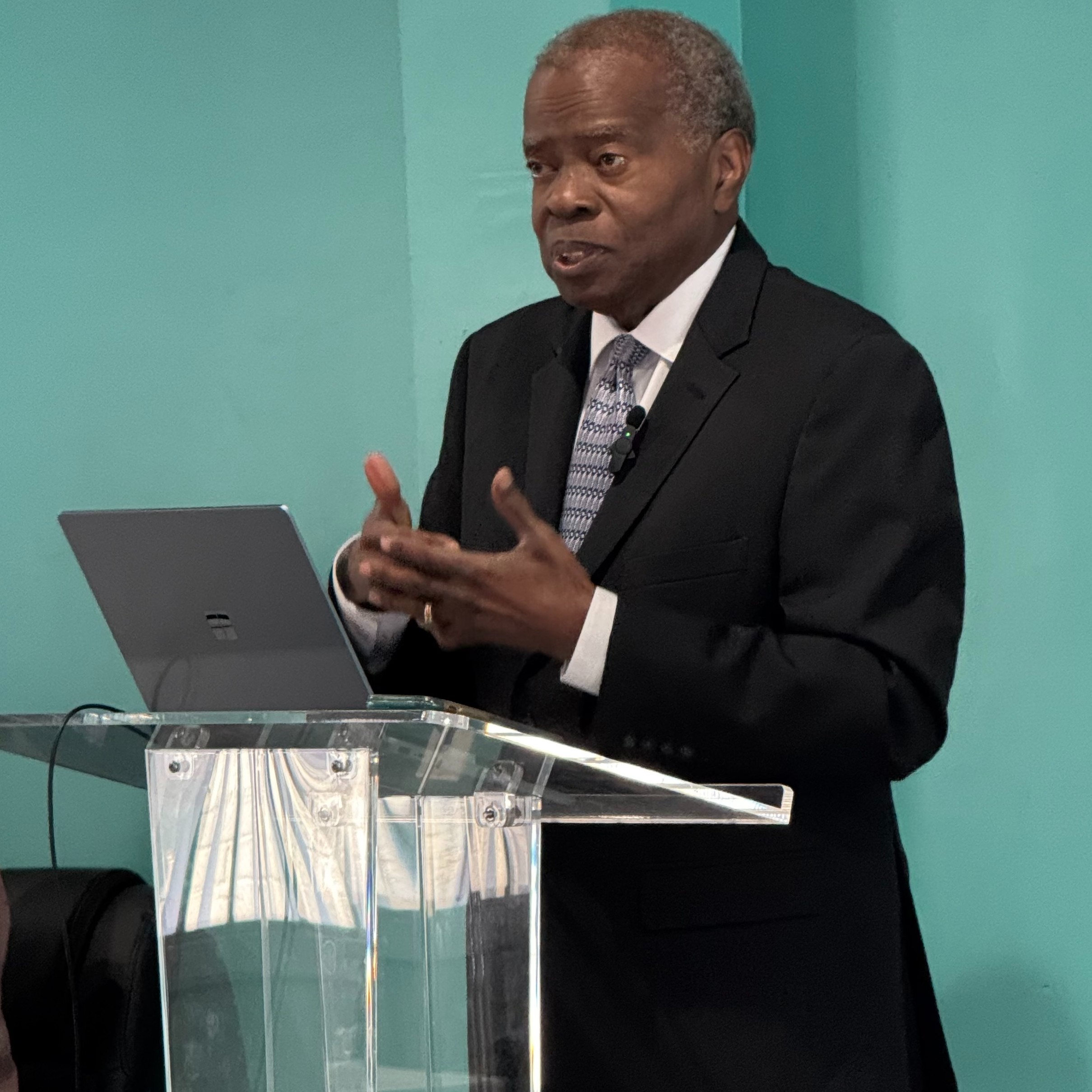
Dr. Choctaw delves into the critical importance of the doctor-patient relationship, offering insights on building trust, fostering open communication, and advocating for your own health. He empowers listeners to find the right healthcare provider and make informed decisions.
0:00 Coming up on this episode of the Healthy, Wealthy, and Wise podcast. Let me say before we finish about recovery, uh, what is relatively unique about stroke is. Welcome to the Healthy, Wealthy, and Wise podcast with Dr. William T. Choctaw, MD, JD. This podcast will provide you with tools and actionable information to You can use to help live a more healthy, wealthy, and wise life. It's powered by the over 50 years of medical experience of this Yale university medical school trained surgeon, who is also a Western state law school trained attorney with executive experience being a. Former Mayor of Walnut, California, as well as the current chairman of the Nonprofit Servants Arms, and as president of Choctaw Medical Group Incorporated.
0:51 This is the Leadership Masterclass edition already in progress. Now, a lot of you are probably familiar with this. This is the fast. nomenclature that's put out by the American Heart Association and the American Stroke Association so people can remember to how to spot a stroke. Um, face, uh, FAST, F stands for face, uh, frequently these individuals will have drooping of one side of their face, uh, certainly a change in the side of the face. You're talking to them and you're just saying, you know what, you know, you, you look a little different. Different.
1:31 Um, and you might see that arm weakness. Uh, sometimes when they, if they lift their arms or move their arms, you'll notice they aren't moving. One side of their body is equally with the other speech difficulty. Therefore, whatever reason, their speech is not clear. And many times that can be a sign of stroke. And then the T and FAST is for time. You want to call 9 1 1, get them to the hospital as fast as possible. Uh, and because as we said, uh, time is brain. Again, just the same thing but with pictures. F for face drooping, A for arm weakness, S for speech difficulty, and the T is for time.
2:15 Um, and remember as I said before, when I say time, I'm talking about minutes, not hours, in terms of getting them to a hospital. Ideally, you want to get them to a hospital that has a stroke center. Now if you call 911, the paramedics will know in the area who has a stroke center or not. And if, uh, they take them to that hospital, if they come to pick up, pick you up a family member, they'll know who has the stroke center. Why is it that you want a hospital with a Stroke Center? Because there are hospitals with Stroke Centers have, uh, methodology or equipment or staff or expertise to immediately treat the stroke.
2:59 If it's a stroke that's caused by a clot, they can give you medication that can dissolve the clot. within minutes. If it's treated by a bleed, they can do procedures, uh, diagnostically that can plug the hole and stop the bleeding. And again, time is brain, time is brain. So ideally you don't want to waste your time in a certain, in an urgent, urgent care center. for that little, um, 10 bed hospital down the street. Ideally, you want to be able to go to the street center. Most places with cities will have hospitals that have stroke centers. It becomes more of an issue when you're out in very, very large rural areas.
3:40 where there are not a lot of hospitals. I would advise you, particularly you young people who are in the 50s and 60s, when you get that second and third house, and you want this huge house and this huge area with this huge yard, check the community and see where the hospitals are. You know, like you're going to check on the schools cause you got kids, but also check and see where the hospitals are and make sure, make sure that you have good quality hospitals that are close by to wherever you go. There's another example of, um, you can see the, um, angiogram, um, of the blood vessel going up to the brain. Um, and they can identify, Bleeds or clots just by doing that.
4:24 The beauty of this is it's non invasive. Back in the 70s when I was assisting with heart surgery, we had to go in on stuff. You know, that's amazingly traumatic. And one of the biggest changes in healthcare, particularly surgery, is non invasive surgery. The things that radiologists can do, the things that cardiologists can do that are non invasive is just amazing. Yes. Yeah, patients can be awake. And that's the question was that I should notice that the patient in the picture that I'm showing was awake. Yes. And that's one of the advantages of non invasive surgery is that you avoid anesthesia.
5:06 One of the things that my surgical colleagues and I about anesthesiologists that we work with every day, but we've always, you know, teasing them. We said surgery is good, but anesthesia is bad, you know, which is not true, but we used to say it anyway. Uh, so, but my point is that if you can avoid If you can avoid invasive types of stuff, that's a good thing. If you can avoid anesthesia, that's a good thing. And still have done what you need to have done. Most times the surgery is shorter, which is good, and most times the recovery is faster. There's less pain post op, um, and all that leads to a faster recovery.
5:50 Again, um, ways to prevent stroke, exercise we talked about, um, social determinants we talked about, drugs and alcohol we mentioned, um, you want to take any medication that you're prescribed. Sometimes you may be on aspirin, um, some patients put on aspirin by their doctor, some are not. Use just 8 or 1 milligrams, uh, I would advise you to do that if that's what your doctor has recommended, uh, avoiding tobacco, um, and good nutrition. Again, same thing, um, I like this slide because one of the things that helps me, uh, when I look at eating well is that you want to eat.
6:31 Foods that have a lot of color, this is my thing, um, so, when you sit down for your dinner or whatever, look at the amount of vegetables on your plate. If your food is black and white or brown and white, chances are you may not have a lot of vegetables, uh, in, in your diet, uh, so you want a lot of color, and it's one of the things that I, We give my, my loving wife a hard time, but I say, you know, there's a lot of color in this meal, you know, uh, but actually it's a good thing because what she's doing is giving me stuff that's healthy. Uh, again, going back to that doctor patient relationship, um, uh, it is extremely important, um, to follow your doctor's suggestions and, and recommendations.
7:17 Um, but again, uh, I'm a strong believer in patient. Empowerment. And so if it is not working for you with Dr. X or Dr. Y or Dr. Z, do not hesitate to get a second opinion or tell your primary care physician, your PCP, uh, that you want to get a second opinion. Do not hesitate to do that. Again just finishing up about prevention, staying healthy, you want to keep your good cholesterol, your HDL high and your bad cholesterol, your LDL low, blood pressure control and heart rate and hypertension control.
8:01 Don't smoke, eliminate alcohol, stay at a healthy rate, eat healthy foods and be active. Uh, let me say before we finish about recovery, uh, what is relatively unique, uh, about stroke is that usually it involves a lot of recovery, uh, and let me give a shout out to all those, um, uh, home health family members who are taking care of family people who have had strokes and heart attacks. It is a tremendous task because frequently those, those family members that you're taking care of. are going to either be husband or wife, mother or father, brother or sister. It is a tremendous task, because a lot of times, particularly as they get older, And these things happen to them, they, they won't help you take care of them.
8:51 It will give you a hard time and you feel guilty on and on and on. Um, so recovery is important, uh, nursing care, physical therapy, speech therapy, very important. Um, going back to this 50 year old, he had a small stroke, but he did have some speech issues. So he had a post op, I mean a post, um, discharge speech therapist and his speech is back to normal now. Let me go back. There will be some, maybe some cognitive there. Cognitive. issues, a cognitive main thinking, you know, they said, you know, I, I, I, I think I understand what you're saying, but tell me again and again, that's a part of it. That's a part of it. It's also a part of age, you know, whether it's dementia or Alzheimer's on and on and on.
9:35 And we will have another, excuse me, discussion about that. Uh, and uh, behavioral and home therapy. And behavioral therapy particularly, it may have to do with attitude. Attitude. Attitude may not necessarily be physical. Uh, you know, it's just that they may not be that happy go lucky type person that you grew up with, or you've been with for a long time. Um, uh, my point is be more patient. This many times is a part of the illness, um, and, uh, as challenging as it is just to be more patient. And it goes to the mental health support. And a lot of times that mental health support is not necessarily seen in psychiatrists.
10:17 It's just that home health care person, that home care person being more tolerant. Now that's hard. That is very difficult. And I saw a lot of patients in my practice who were sons and daughters, who were caregivers of mom and dad. And I would many times try to get them to do things to help themselves so they can be even more effective in terms of helping their loved one. But you do have to persevere. You do have to persevere, and it takes time. It takes time. I will clearly admit, I'm one of those people who does not like to waste time. I tell people, particularly when I was doing surgery, I said, time is the only commodity that I have.
11:02 It's the only commodity I can control, and I do not like to waste time. I'm one of those people, if you tell me to be somewhere at 8 o'clock, I'll get there at 7 30, because I don't like to be late. You know people like that. Some of you may be like that, I don't know. But my point is But I have to be patient with stuff like this, and you will have to be patient. It means that you just take a step back and say, okay, you know, as I mentioned, what always helps me, uh, in my patience, hi, welcome, come on in, what always helps me in my patience, yeah, in being patient is the serenity prayer. You know, I say that to myself, God help me, God give me the serenity to accept the things I cannot change.
11:46 Uh, uh, and, and to get through there. Uh, and so, but you have to be patient to be a good home health person. Particularly when that person is a family, it is difficult, it is difficult. And so as a result of that, it's important that you take care of yourself. Give yourself permission, give yourself permission to go out and have dinner with a friend or go to the movies or whatever it is you like. Because you need to strengthen yourself to take care of that person who is depending on you. In summary, there are two types of stroke, ischemic and hemorrhagic. The important thing is you want to get to the hospital quick.
12:26 Um, time is brain, time is brain. Um, and when, when, you know, you'd want to ideally go to a hospital that has strokes in them. Um, and why is that important? Because those hospitals have particular expertise to maybe do thrombectomies that we have a plug that, that bleed if necessary, very, very quickly. Um, and, um, you need to take care, have this happen in minutes and not hours. Sometimes surgery is necessary, uh, and that can also be done because the Strokes Center has surgeons, neurosurgeons, cardiac surgeons who are on call. Um, one of my specialties at Queen of the Valley Atlantic Community, in addition to being a general surgeon, I was on the trauma surgery team.
13:12 And we want a 24 7 call, um, and as we saw, they said traumas don't come at four o'clock in the afternoon. They do not. They come on the weekends, in the middle of the night, when people are coming from the clubs, coming from the clubs. That's frequently when a lot of stuff happens. So finally, my basic principles, I, I say this all the time for the last two years, but I, I think it's important for me to tell you what I believe and what's helped me. Now, this may or may not help you. Uh, but, uh, number one, my first principle, which is obvious, God is in charge. And again, uh, when, when I'm going through my issues. about time or whatever it is.
13:53 Um, I repeat my serenity prayer or whatever prayer you want to repeat that works for you. Um, but about recognizing, um, uh, that God really is in charge, that that really does help me. Second thing, I don't have bad days. I've said this before. Um, I figured out about 30 years ago now, um, about 30 years ago now, That days were good or bad. I said they were. I said they were. Example, if I get up in the morning and it's raining cats and dogs outside. And I said, Oh my God, it's raining, you know, I'm going to get wet, you know, I may shrivel up and disappear, but you know, Oh no, no, no, no, then that's true.
14:37 But if I get up and say, Oh my God, it's raining cats and dogs, how beautiful is that? It's going to clean up everything and everything will be bright when the sun comes out. That is all in my attitude. So I said, gee whiz, if I have the control of whether I have a good or bad day, guess what I'm going to choose. So I got rid of him. I got rid of them. I said, I've had enough bad days, don't want any more. So I have good days and great days. But it's always a good day. Always a good day. Don't sweat the small stuff, most stuff is small. Learn this. I've learned this. When I would get upset with somebody or she said X to me or he said Y to me And then I think about it's two or three hours and I said, you know, I don't think she really meant that I think that's really me, you know, and then I sort of figured out, took me a while, I'm a little slow, took me a while, I figured out You know what, let's just let that go.
15:33 You don't even know whether that was what she meant or not. So is it really worth all this? And so then what I learned, which the next one is, forgiveness is therapy. Forgiveness is therapy. Forgive her whether it's true or not. It doesn't matter, is my point. Because it goes back to about that small stuff, types of stuff. If I can't figure out whether it's good or bad, it's probably not worth it anyway. And the very last thing, and I say this all the time, and I really believe it, everything, everything, everything is relationship. I don't care what kind it is. Whether you work in the food bank, or you're in Sunday school, or you're, Husband, wife, boyfriend, girlfriend, daughter, son, um, uh, whatever, uh, it's a relationship.
16:16 Relationships are based on three things, mutual respect, mutual trust, good communication. I would argue that the good communication is most important because if we're in a relationship and we can't communicate, means when she talks to me, I'm, I'm not listening. I'm looking at her, but I'm not listening. You know, I'm thinking about something over here, we're not communicating, then you never get to that mutual respect and mutual trust. Does that make sense? Because it means that I don't even know her. I'm not listening to her, so how can I understand what it is she's trying to tell me? She's trying to tell me something, but I'm, you know, on a different planet, uh, or a different world. So, I get it. These are the lessons that I've learned.
16:57 These are my lessons learned. You may have all this down pat and that's great, God bless you, but if you don't, uh, you can get better because I got this, you know, therapy. And finally, as I was mentioning to Claudette, if a lot of this material you want to go back and review, it is available to you through the graciousness of Shelley Shaw, who created, true story, created two different ways to do it. One, if you go to the church website, go to the events, scroll down, you'll see masterclass. Click on masterclass, it'll take you to the subject matter for the next masterclass.
17:41 Stay on that page, go down to the bottom, there's a PowerPoint, it'll say PPT, and click on it, and it'll give you the PowerPoint that I presented today. You know, I said, we've been doing this for two years and she's got everyone there. Secondly, if you just want to see some additional, you just want to hear parts of it yourself, go to the church website instead of going to events, go to, uh, ministries. Thank you, sir. I'll say that. Let me say, the reason why he's here. He's, he's like, he's the director of production, uh, and we call him a podcast professor, you know. But his job is to keep me straight, that was what he was doing.
18:25 Thank you, sir. God bless you. Uh, but you, you go to ministries and scroll down and you'll see my pictures, see podcasts, whatever. Click on that and there's what's called an embeddable player, which are bite sizes of presentations we call podcasts. Of every single podcast we've done, we've done close to about 130 in the last two years. Every single subject. Uh, so you can always go back, you can always go back, um, and certainly feel free to email me a Jessie or grab us in the church or whatever, ask us a question, that's not a problem. And finally, and I always like to say this. How are we doing on time? See, you've got five minutes left.
19:06 Five minutes left. Uh, be the change that you want to see in the world. What's my point? My point is, if you're frustrated and if you're sick and tired of being sick and tired, do something. Don't whine and complain. Do something, uh, and you'll be amazed how you can championed. Thank you. Thank you for listening to the Healthy, wealthy, and Wise Podcast with Dr. William t Choctaw, MDJD. You can listen again to this and any of the previous episodes. Leave a comment or pose questions to the doctor by going to www.thwwp.com. That's www.thwwp.com and you've got it.
19:49 It's also available. Wherever you get your podcast, be sure to follow, like, share, and subscribe if you haven't already. Then tune in for the next episode of the Healthy, wealthy and Wise podcast with Dr. William t Choctaw, M-D-J-D-A, production of Change Makers Communications, LLC.
