From Ohio to Activism: A Journey of Standing Up and Speaking Out with Warren West
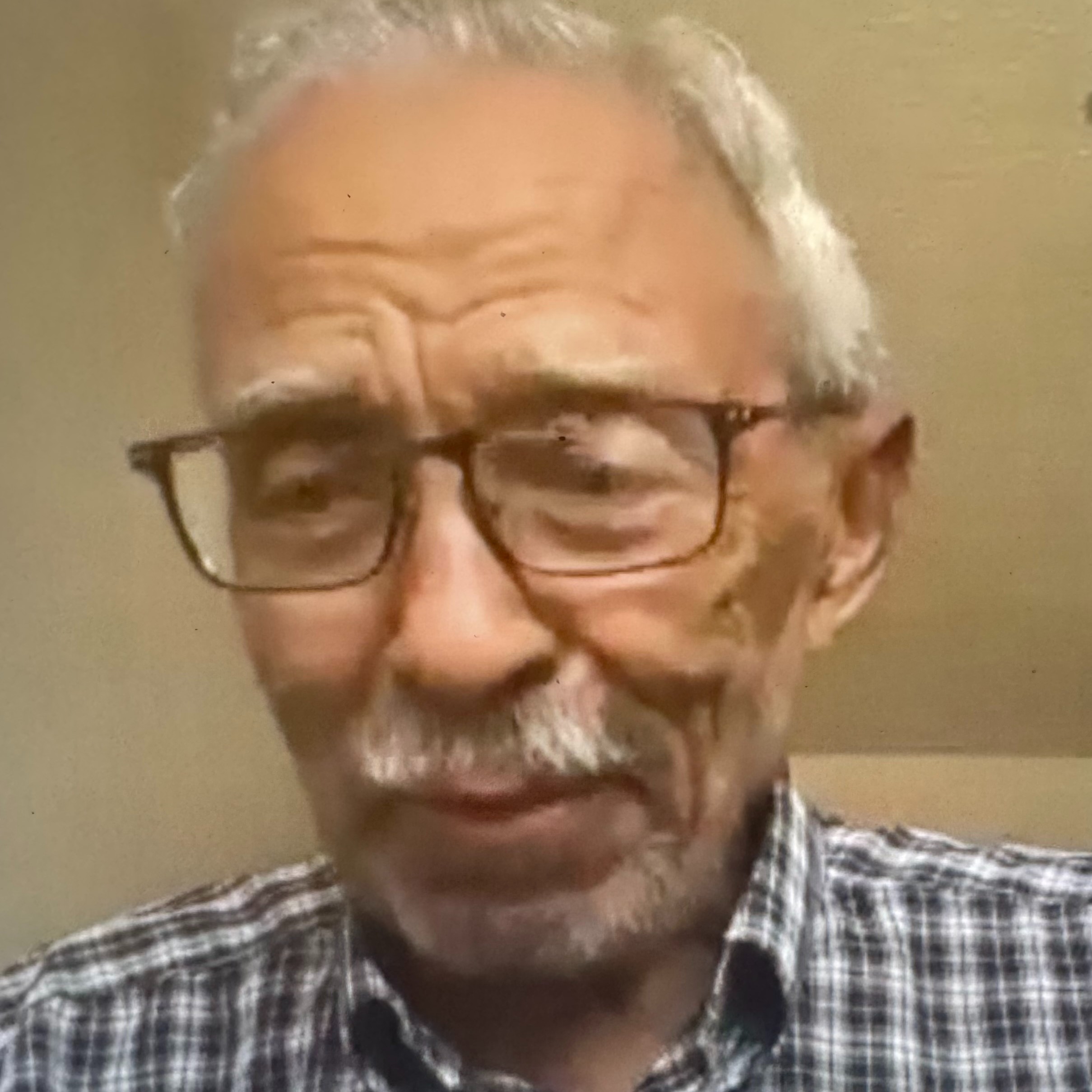
Warren West shares his powerful story of confronting racism and advocating for change through the NAACP. Discover the challenges he faced in a new community and how his unwavering principles led him to become a leader in the fight for equality.
0:00 Coming up on this episode of the Healthy, Wealthy, and Wise podcast. Why do you think the black churches were not receptive to letting a small group of NAACP people needed their church? Why do you think that? Welcome to the Healthy, Wealthy, and Wise podcast with Dr. William T. Choctaw, MD, JD. This podcast will inform, educate, and motivate you to live a more healthy, wealthy, and wise life. It's powered by the over 50 year of medical experience of this Yale University Medical School trained surgeon who also received his Juris Doctorate from Western State Law School. He has executive experience as a former mayor of Walnut, California, as a chairman of the non profit Servants Armed, and as president of Choctaw Medical Group, Incorporated.
0:50 You've got questions or concerns, he's got answers for both. So let's listen in on an interview already in progress. Welcome, welcome. Good morning, Brother West. Good morning. Good morning, Jesse. You know, every time I say that, um, I always think of, um, the Wild Wild West and, uh, and, uh, what was his name? He was a Secret Service agent. I forget his name. Jim west. Yes. I'm sick of it. So he already knows They know all about the west Well, thank you so much brother west for joining us this morning Uh, jesse and I were just commiserating about the the democratic convention that that's just been going on this past week and uh Jesse, I I basically just watch it on tv You know 24 hours or something or whatever.
1:52 Jesse watches it on YouTube and all the other online types of uh, uh, uh, venues available, but we still get the same information. Uh, so what have you been watching it this year? Yes, I watched it. Uh, so what, what, what did you think? Well, I thought it was the best one I've ever seen. I've been watching it for quite a few years. Yep. Same here. Same here. Same here. So I, I, I'm just anxious to see what's going to happen in the next, what, 70 days? Right, right, exactly, exactly. Uh, it's, it's, it's an exciting time. It's definitely an exciting time.
2:32 I guess my first convention, I remember, uh, Fatty Lou Hamer. And I think this was 64. I was in college, I think. No, I was in high school in 64. Um, but I remember her, she, she brought a, a, a delegation from Mississippi because she felt that they should be seated. And the other delegation from Mississippi didn't want to seat her. You know, um, and so that was this big fight and on and on and on. Uh, but that, I think, that was probably my first convention. Then I saw the, the Hubert Humphrey one. You know when Johnson said he wasn't going to run.
3:13 Of course Johnson didn't endorse Hubert Humphrey. Johnson just didn't do anything and of course Hubert Humphrey was just destroyed in the general election, I mean, you know, he He didn't have a choice. So it didn't have a chance. Well, you know, Johnson, I read a backstory on that. He was actually hoping that people would, uh, like write him in or would back around and encourage him to jump back in. Because he only jumped out because of, you know, Vietnam in the situation. Right, right, right. So, I don't want to take up most of your time. So usually, the way we do this, we've been doing this about a year and a half now.
3:57 And basically, you can talk about whatever you want to talk about. I, I, I moved to West Covina in 69. Oh, okay, 1969, yeah. And, uh, my kids were young, going to school. When, uh, I think it was the first, second, and third grade or something like that. And, uh, they had a hard time. Uh huh. They came in, uh, was calling names and all that kind of stuff. Really? Really? Okay. I live north of the freeway, which is a small portion of West Cormeter. Okay.
4:38 North of the 10 freeway. North of the 10 freeway. Okay. Okay. And there was only another black couple that lived north of it at the time. Uh, okay. But my kids had to go to Covina. school district. Uh huh. And yeah, the other black family, they went to the West Covina district. Don't ask me where the dividing line was. Got it. Got it. So my kids were the only ones that was going. To, uh, schools. Got it. And, uh, it was pretty rough for them. They got called names and everything. Is that right? And this is in 1969?
5:19 Yeah. I had to call the NAACP. Okay. It was really rough for my children. So, so that was how you got involved with the NAACP? That's how I got involved with them. Okay, okay. And, so, I really got, and really involved them in about 67, 66 or 67. Okay. No, I mean, 76 and 77. Okay. My, uh, son was playing football. And, uh, the kids was calling names out on the football field.
6:02 Yes. Into it during a game. Okay. The school wanted to kick him off the football team. So, I really got involved with it, and then, after that, it just continued, I ran for Vice President, and, of the NAACP. Yeah, yeah. That chapter, huh? I got, um, disturbed because the black churches out here didn't, they didn't, uh, volunteer to help. Is that right? Interesting. And we wanted to have a place to meet.
6:43 Yes. We figured the churches would be a nice place for us to have meetings. Well, this is for the local NAACP chapter. Right. Yes. And I got kind of disturbed. So, anyway. So, let me ask you. There was quite a few of the black people. I don't know if you remember or not. Uh huh. Hank Williams. Yes, I do remember Hank Williams. Dorothy. Dorothy, um. Yes, Yes, I know who you're talking about. I don't remember her last name, but I know who you're talking about. And Helen Williams. Okay. Um, Jimmy Dixon. Yeah, that sounds familiar. And those people were quite involved, you know.
7:25 Why do you think the black churches were not receptive to letting a small group of NAACP people meet at their church? Why do you think that? I never understood it. I really didn't understand it. Okay. I think I do now, but I'm not sure. The people that I talk to, not in the church, but black people that I talk to trying to get them to be members, they, uh, felt, well, I got mine, and I don't want no problem out here in La Puente, West Covina, California, right.
8:09 They didn't want to start no mess, you know. Are you originally from California, brother? No, I'm originally from Ohio. Okay. I came to California on a vacation. Right out of high school. Okay. I've been here ever since. Yep, yep, that's why a lot of us got here. We came temporarily and never left. That's right. That's right. That's right. But uh, I had a hard time out here too because I didn't understand the black culture out here. Because what was the difference? What were some of the differences? Well, they didn't, for me, being from Ohio, my grandfather, my, and both my grandfathers and my father, we stood up against anything that wasn't right.
9:02 Yes. And these people out here didn't. Have that same attitude like discrimination and that sort of thing. Uh huh. I got mine I'm not going to get involved because I got mine, you know, yes. Yes. Yes That was very Disturbing to me And like I said when I was working I joined the union You remember I became a union steward Okay And the workers there they didn't want to stand up Really? Right. Uh, one time I did this because things wasn't right.
9:44 I shut the factory down. Okay. Because it wasn't right. Yes. And about six months later, they called me in the office and made me a supervisor. you know, stop in production. Okay, they were smart. So I, I, I became a supervisor and then eventually became a manager. So you were a very strong union man. Oh yes, I'm still a strong union man. Okay, so, so you, you, you're right in, in keeping, certainly with, with where the Democrats are now, um, you know, presidential candidate Kamala Harris, that, that particularly Putting emphasis on unions and how it protects the middle class, um, and you build from the middle class up.
10:36 The standard that we make for jobs in the union reflects to everybody else's job. Okay. I mean, even if it's not in the same class or job type, it still reflects to the supervisors who are not here, the managers who are not here, and it goes from there. Well, you know, brother was to, to, to emphasize that point. When I, I came to California and finishing my surgery training. And again, my idea was I'm going to go out and finish up and then I'm going back east and blah, blah, blah.
11:19 Raised the kids back there. I remember when I was a, a, a resident supervisor, um, USC and, uh, but my, my paycheck came from the County. I mean, I was a County employee, but I was. position and I, you know, didn't get involved with anything outside of this, outside the operating room. And I remember one day I got my check and I had a raise. And I said, Oh my goodness. And so I went out, I went outside of my office and spoke to the secretary. And I said, I forget her name now. I said, you know, I just got my check and I got a raise. And she says, yes, doctor. She says, you're a part of the union.
12:01 And I said, I am. She says, she says, yes doctor, you're a county employee, and as a county employee, you're part of the union. And I said, you know, I've never been to the union, and she said, doctor, it doesn't matter. The union represents you, and the union negotiated your raise. And I said, Oh my goodness. I, I've been loved this union. So my point is though, just to your point, a lot of people like myself at the time, didn't appreciate unions or the benefit of unions to society, to all of us. I mean, I'm a physician and I had to go start all that, but, but I had a salary and the union through their negotiation got, got me a raise.
12:48 Um, and I think just, just to validate what you just said, I. I've literally experienced that in in my lifetime. Thank you for listening to the Healthy, wealthy and Wise Podcast with Dr. William t Choctaw, MDJD. You can listen again to this in any of the previous episodes. Leave a comment or pose questions to the doctor by going to www.thwwp.com. That's www.th wwp.com and you've got it. It's also available wherever you get your podcasts. Be sure to follow, like, share, and subscribe. If you haven't already, then tune in for the next episode of the healthy, wealthy, and wise podcast with Dr.
13:32 William T. Choctaw, MD, JD, a production of change makers communications, LLC.
