Health Disparities and Strokes: Addressing the Impact of Genetics and Inequities in Minority Communities with Dr. William T. Choctaw, MD, JD
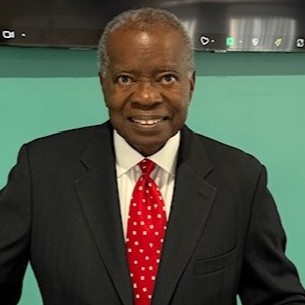
Dr. Choctaw discusses the complex issue of health disparities in stroke rates among minority groups. He explores the interplay of genetic factors and systemic inequities, highlighting the urgent need for change and providing actionable steps for advocacy and empowerment.
0:00 Coming up on this episode of the Healthy, Wealthy and Wise podcast. So what are some of the common signs of stroke in women? And I say in women, distinguishing women from men, because one of the things that I've learned in my 50 years of health care, And the whole, um, healthcare, uh, industry has learned, um, education has learned. Welcome to the Healthy, Wealthy, and Wise podcast with Dr. William T. Choctaw, MD, JD. This podcast will provide you with tools and actionable information you can use to help live a more healthy, wealthy, and wise life. It's powered by the over 50 years of medical experience of this Yale University medical school trained surgeon, who is also a Western State Law School trained lawyer.
0:47 with executive experience being a former mayor of Walnut, California, as well as the current chairman of the nonprofit Servants Arms and as president of Choctaw Medical Group, Incorporated. This is the Leadership Masterclass Edition already in progress. We talk a lot about relationships. I particularly talk a lot about that, but one of the very important. Relationships in our lifetime, for all of us, is that doctor patient relationship. That doctor patient relationship. And what's my point about that? My point is that it is a very unique relationship. Uh, um, in my 50 years of practice before I retired, I treated a lot of husbands and wives.
1:33 Um, and many of them who would come to me individually, and the conversation would go something like this, Now doctor, this is between you and me, right? I do not want you to discuss this. And I said, no problem. Because I took an oath anyway, so I, I, I'm, that, that's my job. That's my responsibility. Uh, That, that what you say to me, you say it to me. Uh, and even though, uh, you know, the husband may be my good friend and not all that stuff, it doesn't matter. You know, it's, it's an old. Um, and so my point is that you should be able to trust that relationship. And what else am I saying? What I'm saying is that when you go to Dr. A's office and, um, he walks into the room and if you immediately or later on start to feel uncomfortable for whatever reasons.
2:21 Trust that feeling, right? Trust that feeling. And, and my point is, that sometimes that relationship does not work. Not your fault, not the doctor's fault. It's just not there. That's the way I view it. Uh, and that's okay. Move to another doctor and feel comfortable doing that. A lot of times we patients Uh, patients feel obligated, you know, well I don't want to get the doctor upset, well I don't want her to get mad at me, well she seems like a nice person but she's just really busy. All those things do not excuse poor physician behavior, poor physician behavior. One of my jobs as chief medical officer.
3:03 Um, um, uh, type at Citrus Valley and a lot of these other places is, I was in charge of the physicians. Um, and as chief of staff, um, and we had about a thousand, or still are, about a thousand physicians on staff between the three hospitals. My job was to deal with the problem docs, you know, and, and there's a pattern, there's a pattern, and part of that pattern has to do with attitude. Part of that has to do with attitude, and I would give lectures like this about What to do and what not to do. Bottom line is, uh, I would say you doctors were worried about being sued. I said, let me give you a basic amount of advice.
3:44 Patients are amazingly, um, uh, tolerant of physicians, amazingly tolerant, uh, because they, you know, God has blessed us. And so they're going to give you the benefit of the doubt, whatever it is, whatever, whatever, whatever. Um, and I said, in general. You'll be fine, except for one exception, one exception. I said, if you are a jerk, J E R K, J E R K, uh, they will sue you. And I don't blame them, I would sue you too. So my bottom line to them was, don't be a jerk. You know, just be nice, be human. If it's not working on your side, transfer the patient to another physician.
4:27 There's nothing wrong with that. But my point is, it's a relationship. It's a relationship. And relationships are based on mutual respect, mutual trust, and good communication. Especially with people who've had strokes. And that sort of thing, because when an individual has had a stroke, that involves the whole family, whole families involved, uh, in terms of the recovery and a bunch of other things. So again, and I purposefully put in some redundancy into these discussions, uh, different types of stroke, ischemic and hemorrhagic. The ischemic stroke, ischemic stroke is a stroke that's caused by Um, a hardening of the arteries, uh, atherosclerosis, uh, these are things that we're careful about if we have high blood pressure, uh, if we have high cholesterol, um, um, if we have hypertension because we don't want those vessels to become so damaged that they build, build up this plaque within the walls and it decreases the amount of blood that can get to that brain tissue.
5:31 Hemorrhagic stroke, on the other hand, similarly, if you have very, very high blood pressure, uh, many times that's those small vessels can rupture, um, and burst, otherwise, and anything that stops that blood from getting to the brain tissue where it's supposed to go is a stroke, is a stroke. They're little strokes, and they're big strokes. I had a phone call about a year ago, uh, somewhere a year ago, 2023, from a 50 year old male who called and said, you know, I, I, I don't feel good, I, I, I'm confused, and I don't know what's going on, and blah, blah, blah, blah, blah, blah. And fortunately there were others in the house with him, where he was renting, and the lady got on the phone, I said, tell me what's going on, and she said, I don't know he's just moving sort of slowly and and I sometimes I can't understand what he's saying so I said you need to get him immediately to the emergency room blah blah blah blah blah and indeed he was having a stroke fortunately it was a small stroke um and and my point is that initially when it happens, um, uh, you don't know what it is.
6:42 Um, and his stroke was caused by hypertension. His blood pressure at the time was like 200 over something. Um, very, very high. Like most people, he didn't check his blood pressure every day. Um, even though he knew he had high blood pressure, uh, and he was on high blood pressure medicine, but he didn't take it every day. Like Many people. And so my point is, that's just one example of one person who, you know, if I think 60 is young, 50 people are babies. to me. You know, so my point is it can happen. It can happen. Um, and just to digress, just talk about blood pressure, which can cause that bleeding type of stroke.
7:23 Many people think that they know when their blood pressure is high. You do not. You do not know when your blood pressure is high. Um, that's why blood pressure is called high blood pressure. the silent killer because you don't know when it's happening. Um, a lot of times if you're stressed or upset, your blood pressure may be not high. Um, so my point is the only way you know what your blood pressure is, you need to check it. That's the only way you know. So what are some of the common signs of stroke in women? And I say in women, distinguishing women from men, because one of the things that I've learned in my 50 years of healthcare care.
8:05 And the whole, um, healthcare, uh, industry has learned, uh, education has learned that men and women are different. Men and women are different in terms of how they experience various types of medical conditions. Uh, and there was no nefarious reason for that. Basically back in the seventies, when I went to medical school, a lot of the data was based on studies that only included men. that only included men. These were studies that were done in the sixties and the fifties, whatever, whatever. There were not a lot of women in those studies. They were men. Think about heart attack, uh, women were not included in those studies that had a thousand patients with heart attack, it only included men.
8:51 But yet, when we physicians gleaned that information, we applied it to everybody, and that was a mistake. And that's why now you have, uh, physicians who specialize in heart disease in women, you know, uh, because there is a difference. So my point is, these are some of the signs of stroke in women. Numbness or weakness of the face. Trouble speaking, understanding speech, visual problems, trouble walking, dizziness, severe headaches with no other cause, um, uh, nausea and vomiting. Let me also say, if you are not able to write down all this stuff, everything that I say is on the church website, it's on the church website. You go to, uh, STSBC, uh, go to events, scroll down, uh, to masterclass.
9:41 Click on Masterclass and go to the bottom of the page and the whole PowerPoint that I'm talking about is right on the website. Um, I should give Shelly kudos for doing that because it was her idea and it was brilliant, just brilliant. So my point is if you're not a fast note taker, don't worry about it. I don't want you to stress because I don't want you to, I want you to relax. That's why the room is real cool. You know, it's pretty nice colors. We want you to relax, but please go to the website and tell your friends, just go to the website. It's all there. It's all there. Yes, ma'am. Yes, they are.
10:21 Thank you for saying that because in addition, instead of going to events, if you go to another part of the website called, um, uh, ministries, scroll down to the bottom of the page, you'll see health and health and wealth and wise podcast with my picture click on that. And this was if I was excited about. Uh, her putting the popcorn on. She has an embeddable player on the church website. Now, you're saying, what's an embeddable player? Well, well, uh, the podcast professor taught me what a embeddable player is, but it's a podcast term. Right? So that every single podcast, and, and these are all broken down in a podcast from the Masterclass, are on the church website.
11:08 Every single one. And there are about a hundred. We started doing all this a year, uh, a year ago, January. So we're, we're going on, they're all on the church website. So you can look at the podcast and you can look at the Masterclass uh, PowerPoint. under the events, or you can go in the ministries and listen to them, and with the podcast, I break them down into 20, 30 minute, uh, uh, sound bites. Because a lot of times podcasts aren't designed for like an hour and all that. Um, so if, if you, if it's confusing, you say, no, I just want to hear about, you know, The different types of strokes. I don't want to hear all those. Then listen to that particular podcast. What, what the podcast professor does, uh, Brother Hamlin, he breaks each masterclass down into three or four podcasts.
11:56 So you can pick and choose. Uh, but that is delivered to you by the grace and intelligence of Ms. Shelley Shaw. Shelley Shaw was not my idea. I had no idea about it. She just did it. And I said, Oh my God. Yes. Oh, okay. Yeah. Yeah. That's fine. Go ahead. It could. It could. Yeah. Yeah. That could be certain unique qualities that people have. that are not normal or regular. And you say, you know, so, so you, you don't worry, but what does that mean? You don't do that normally. Blah, blah, blah, blah, blah, blah. Yeah. Uh, I entered those real small, subtle types of things because what's happening is that the brain is not functioning normally the way it does.
12:44 And the brain is, is, is amazing in terms of how it functions. But if you throw it off a little bit, You many times you can notice that Yes, ma'am. Mm-hmm, susceptible, uh, that, uh, you know, then quite honestly, then there's no way for you to know. I, you know, you may talk to family, particularly older family who may have some idea, you know, when you have your Thanksgiving dinner or you get together, um, that sort of thing. But, uh, plus I, I don't know a lot about my family history. I just don't know. So what I do then, I just assume that I, I may very well have that risk. and try to do everything that I can on my side, on my part, to mitigate that.
13:24 But again, you're right, um, many times if you don't have that information, there's no way for you to know. Good question. Thank you. Uh, for men, in terms of some common stroke signs, and remember that there's overlap, there's overlap, um, and that's okay. But the point I want to make is That it's not a hundred percent the same with both. That, uh, as the book says, men really are from Mars, and women really are from Venus. Risk factors, and again, some of this is redundant, but I'm going to go over them very quickly anyway. Obesity is a risk factor, like a lack of exercise. Sleep apnea can be a risk factor. In other words, if you don't get that good, REM sleep at night, rapid eye movement sleep, many times that can throw off the functionality of the brain and can make you susceptible.
14:16 Alcohol use we talked about, smoking, diabetes, cardiovascular disease, high cholesterol, high blood pressure. These are all factors that can contribute to, um, um, stroke. Yes. Well, that's a good question. Theoretically, if you use a sleep apnea machine, that helps you with the sleep apnea. So, I would think, and I don't know exactly, but I would think, If you use the machine and it helps to sleep apnea or mitigates it, then that would lessen your risk from that particular issue.
14:57 Yeah. Dr. Choctaw, could you please repeat The questions when, when asked, when they ask, because we can't hear the questions that the audience is asking. Okay. Thank you so much. The last question she asked was, uh, if you use the, uh, the, the machine, uh, for sleep apnea, would that decrease your risk of stroke from sleep apnea? And I said that I think it probably would. Uh, in general, um, because it improves your sleep apnea, and I would think if it improves your sleep apnea, that that would, that would increase. Uh, decrease the risk of you having problems, excuse me, with the sleep apnea.
15:40 Thank you. I will do that to make sure those of you online can hear. Okay. Uh, uh, causes of stroke we talked about. Some other causes of stroke, uh, are people who have, uh, atrial fibrillation. Uh, atrial fibrillation is a type of quivering of the heart, the atria in the heart. The heart is atrial and ventricle, but sometimes instead of squeezing down and pumping out the blood, the heart will quiver. We call that fibrillation. And sometimes when that quivering occurs, it can cause the heart to throw off clots that can go up to the brain and block a part of the blood supply to the brain.
16:24 Thank you for listening to the Healthy, wealthy, and Wise Podcast with Dr. William t Choctaw, MDJD. You can listen again to this and any of the previous episodes. Leave a comment or pose questions to the doctor by going to www.thwwp.com. That's www.th wwp.com and you've got it. It's also available wherever you get your podcast. Be sure to follow like she. And subscribe if you haven't already, then tune in for the next episode of the healthy, wealthy, and wise podcast with Dr. William T. Choctaw, MD, JD, a production of change makers communications, LLC.
