Leaders as Servants: Embracing Service, Knowledge, and Action to Change the World with Dr. William T. Choctaw, MD, JD
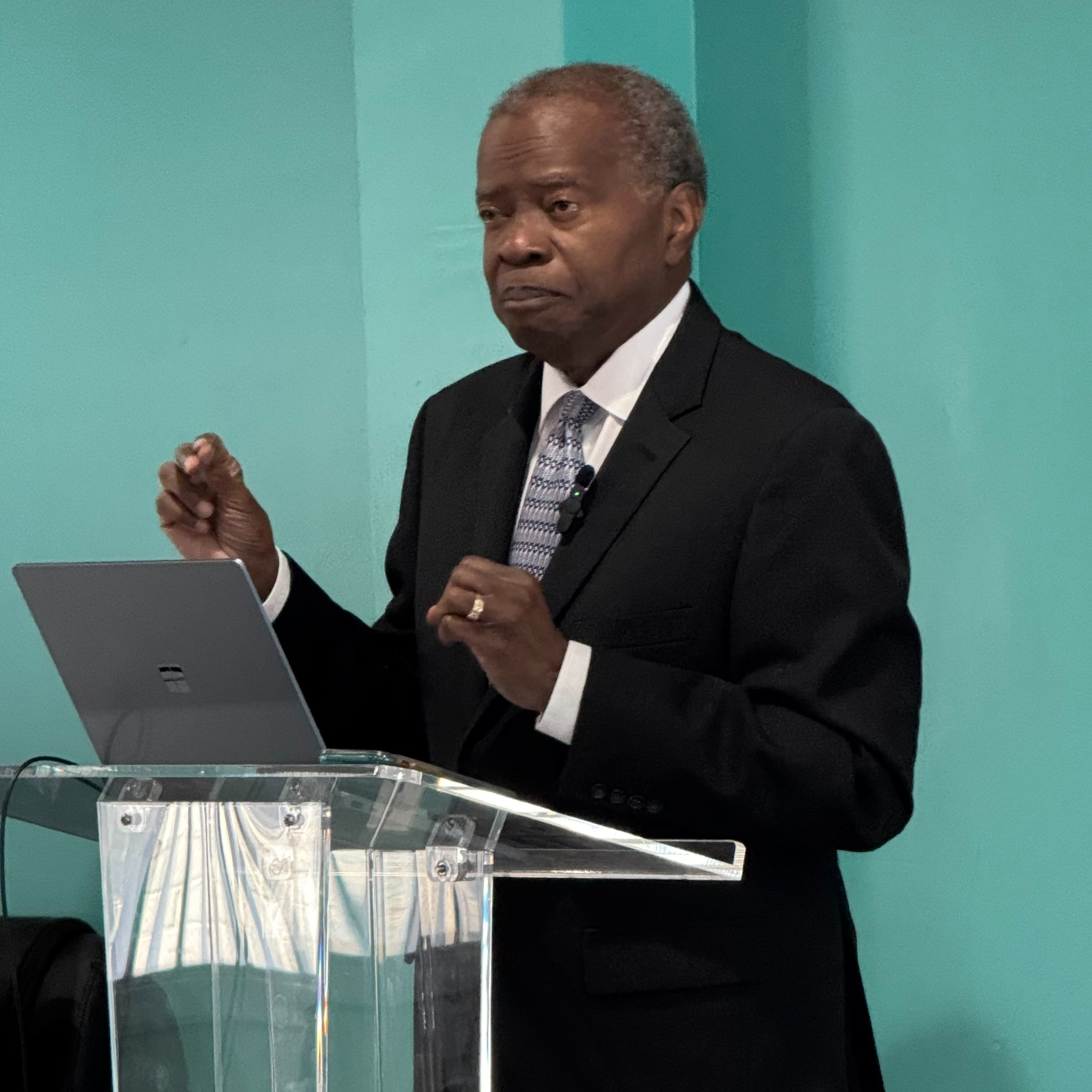
Dr. Choctaw delves into the concept of leadership as service, highlighting the importance of serving others and taking proactive steps to create positive change. He challenges listeners to embrace their leadership potential and make a meaningful impact in their communities.
0:00 Coming up on this episode of the Healthy, Wealthy, and Wise podcast. Within your body, numerous things are occurring. Number one, cells are rushing to that cut on your, let's say on your hand, and cells are immediately cleaning up the debris in that area. If there's bacteria there, cells are getting rid of the bacteria, cells of platelets are going in and stopping the bleeding and clogging up the area that's been. Injured, uh, other, other cells, macrophages and others are rushing in to start healing that area immediately. Um, and then a process occurs.
0:41 Welcome to the healthy, wealthy, and wise podcast with Dr. William T. Choctaw, MD, JD. This podcast will provide you with tools and actionable information you can use to help live a more healthy, wealthy, and wise life. It's powered by the over 50 years of medical experience of this Yale University. University Medical school trained surgeon, who is also a Western state law school trained attorney with executive experience being a former mayor of Walnut, California, as well as the current chairman of the nonprofit Servants Arms, and as president of Choctaw Medical Group Incorporated. This is the leadership masterclass edition already in progress.
1:27 Good morning, everyone. What I want to do is give you a scripture and then a prayer, and then we will go right into our session this morning. So, I'm going to be reading to you, uh, from 2 Corinthians chapter 4, verses 15 through 18. And it reads thus, For all things are for your sakes, that the abundant grace might through the thanksgiving of many be downed to the glory of God. For which cause will you fall not? But though our outward man perished, yet the inward man is renewed day by day. For our light afflictions, which is but for a moment, worketh for us a far more exceeding and eternal weight of glory.
2:13 While we look not at the things which are seen, but at the things which are not seen, for the things which are seen are temporal. But the things which are not seen are eternal. May God have a blessing on hearing, reading, and doing His holy words. Let us go to the Lord in prayer. Father God, Almighty, as we approach your throne this morning, first of all, I just want to thank you, my Father, because you've given us the opportunity to be in the land of the living once more and again, my Father. And Father God, Almighty, we know that you didn't have to do so, but Father, we know it's because of your love, grace, and mercy you saw fit to touch us with the thing I love this morning and wake us up to see another day. A day not for us, but a day for you. Go out and let us know that you are the way, the truth, and the light.
2:55 We pray, my father, that each and every one of us would extract from this particular message today, my father, the things that you have for us to extract from so we can use them, my father, and all to help us in our life as we travel down life's highway. Pray to bless each and every one as we listen to this, my father. Now I present to you now, Dr. Chalk Toff. Good morning again. Um, happy Saturday. Uh, this is our 22nd consecutive, uh, Leadership Masterclass. And yes, and we're absolutely delighted to have you with us this morning. Um, and, um, uh, these Masterclass Series are designed for leaders.
3:39 Those of you who are here presently and those of you who are online. Um, and I define, I define a leader as a servant. Those who serve others in the different ways that God has allowed you to be able to do that. Today we're going to talk about another very important topic. Um, we're going to talk about breast cancer. And there are a couple of reasons for that. One is that this is breast cancer month, acknowledging those who have experienced it and those who participate in the care of individuals who've had breast cancer. Um, and also, um, A large part of my practice, my surgical practice when I was in practice, I had to do with breast cancer patients.
4:25 And so toward the latter part of this presentation, I'll share some of my personal thoughts in terms of lessons learned. And what I mean by lessons learned is I mean lessons my patients taught me. We tend to think of doctors and nurses as individuals who teach patients and help patients. Uh, but I can tell you, uh, as someone who's, who's done this for a while, uh, patients really help us a lot as physicians. And I will share some of those things with you, uh, toward the latter part of our presentation. So we're going to talk about, um, an overview of breast cancer, um, and give you some of the latest updates too about things that are happening in the field.
5:08 As always, I believe life is about being of service to others. I believe knowledge is power. I believe leaders can change the world. And one of the things that I make in one of my missions, particularly in talking to leaders, is get the leaders motivated to do something. Not just sit, not just wait, but to actually be proactive. Because in my mind, that's what leadership is. Somebody once said, leaders are individuals who Purposely interfere with your life to make things better. Um, they, they, sometimes they make you uncomfortable because she said, you know, I just don't want to do X in there. I just want to do nothing. But, uh, time is of the essence.
5:50 Um, and God has blessed us with the ability. What is masterclass medicine? This is a term that I put together, quite honestly, uh, masterclass, as you know, is the top of the top, the best of the best, uh, medicine, you know, uh, and basically masterclass, uh, is based on three things. Uh, we want to inform you. We want to give you information. Uh, we want that information to be a source of education. My operational definition of education is receiving information that changes behavior. Receiving information that changes behavior.
6:30 That's what I call education. Uh, and thirdly, uh, we want to motivate you. But once you get that information and once your behavior has been significantly influenced, we then want you to go out and do something with that information. And again, this is educational, it's not intended to be personal medical advice. Your personal medical advice should come from your individual physician. And as we mentioned, this is Breast Cancer Awareness Month, which I think is good. And we'll talk about the importance of breast cancer awareness. In terms of having you to go out and basically get a screening mammogram. In my opinion, that is the single most important aspect of Breast Cancer Awareness Month.
7:15 As we said before, everybody is a little different healthcare wise. And one of the more frustrating things, certainly for patients and doctors also, is that we want to have knowledge that we can apply to everything all the time, but it just doesn't work that way. Uh, if you have gallbladder disease, uh, and your brother gets gallbladder disease, they are going to be the same because you and your brother are two different people or your sister or uncle or aunt or mother or father. Um, and that's just the way it's set up. And so we have to learn then the detail. We have to learn the detail. And so some of what we're going to go over today has to do with the detail.
8:00 I'm always a believer of thriving. I think one of the organizations, I think it's Kaiser, has that as one of their mottos, live long and thrive. I like that. And I think it's a good thing to keep in mind, that life is a blessing. And indeed, if you are listening to my voice, or you are, as they say, above ground, Um, that, that is a blessing and you should, um, embellish that. Well what is breast cancer? What is breast cancer? So one of the ways to think about it is that breast cancer is a process in the body that where the cells of the body won't stop growing.
8:45 Let me say that again. Breast cancer is sort of a process in the body where the cells in the body won't stop growing. If you imagine, uh, Uh, a cellular structure with very large cells, uh, and in the middle of that cellular structure may be a lot of cells, maybe 10 or 20 40 or 50, um, uh, that's sort of what cancer is. Let, let, let me, uh, use a different example. If you were to cut yourself and, um, say doing housework or whatever, and you start to bleed, you would immediately put your hand over it. Um, uh, and that would sort of stop the bleeding.
9:27 You may put a dressing on it, um, um, and then decide whether that, uh, uh, cut in these stitches or not in these stitches or whatever. Within your body, numerous things are occurring. Number one, cells are rushing to that cut on your, let's say on your hand and cells are immediately cleaning up the debris, uh, in that area. If there's bacteria there, cells are getting rid of the bacteria. Cells of platelets are going in and stopping the bleeding and clogging up the area that's been injured. Uh, others, other cells, macrophages and others are rushing in to start healing that area immediately.
10:11 Um, and then a process occurs where all those cells rusted into that area stop, they just stop, because the healing has taken place, the area has been taken care of, the area has been cleaned up, and you no longer need any additional cells in that area. What would happen if the process didn't stop? What would happen if you cut yourself, uh, and cells rushed into the area, but they just kept coming? They just kept coming. That was no cut off valve. Uh, theoretically, you can consider that a type of cancer without the cut, because you don't need the cut. So cancer is the unrestricted growth of cells in a certain area of the body.
10:57 Unrestricted growth. Unrestricted growth. of cells in a certain area of the body. Okay? So, it's, it's, it's, it's a little more, it's even more complicated than that, but we'll, we'll sort of get into it. Uh, but, but just think about it. The body is so complex, it tells every single cell what to do. But all you need is one glitch where that doesn't work and you can end up getting what, what we may euphemistically call cancer. It's when cell growth does not stop. Uh, another example, if I use the same, uh, laceration, a cut on your hand, um, and let's say the cells stop, but not after a certain period of time, and you have a scar that ends up being a very, very thick scar.
11:43 We call that a hypertrophic scar. That's not a cancer, but it's an example of what happens if more cells end up in the coming into that area than should, okay? So my point is that the body has a cut off time where it tells everything to shut down. It stops the cells from rushing into an area because the problem has been taken care of. If the body does not shut those cells down, they keep coming. And as they keep coming, the area begins to grow, we call it growth, uh, and that then becomes cancer. So, how, how is cancer diagnosed? And we're talking about breast cancer now, let me be specific.
12:26 How is breast cancer diagnosed? The two early ways of potentially diagnosing breast cancer is one, breast self examination. What does that mean? It means when you examine your breast yourself, uh, either in the shower or just standing in front of the mirror, uh, where as a patient, you just run your hand over your breast. Uh, both breasts, um, uh, and become familiar with the, uh, uh, topography of your breasts so that if you, if you, when you do that, if you feel something that was not there the last time, then you know that that may be something abnormal. So that's called breast self examination, BSE, okay?
13:09 Um, the other way breast cancer is diagnosed is usually by mammogram and why is mammogram so important? Mavigram is important because it can pick up lumps. that are too small for us to feel. Okay? Mammogram is important. It's an x ray type procedure of the breast. It's a picture of the breast. It is too, it can pick up lumps that are very, very small, uh, or too small for you to feel. So, as you run your hand over your breast, uh, in a breast self examination, you may not be able to pick up a one sonometer mass. or lumped or a 0.
13:49 5 centimeter mass or lump. The mammogram can pick up that mass or lump. Okay. So breast cancer is the unrestrained growth of cells in the body in a certain area. Um, it can be diagnosed by initially by you feeling it in your breast. Uh, and by examining your breast regularly, you feel a lump that you did not feel before. You notice I use the term lump. I don't say tumor. I don't really say mass, um, we doctors stop saying tumor and mass a lot of times because it tends to scare people, you know, if you say tumor, oh my God, I've got a tumor.
14:32 And if you say tumor, people think cancer. All tumors are not cancers, but if you say tumor, people think cancer. So usually I use the term lump, and that's, that's like the most benign term that I can think of, because anything can be a lump, right? Okay, so just, just keep that in mind. So one of the ways to diagnose a lump. Uh, or a cancer is to diagnose the lump first, or the presence or the existence of a lump, and you can do that by one, breast self examination, or you can do it by getting a mammogram. Most lumps in the breast that may be cancerous are too small for you to feel.
15:14 Hi, welcome. Uh, most lumps in the breast that may be cancerous are too small for you to feel. And that's a good thing, that's a good thing, because if they're too small to feel, then that means that that, and it's cancer, that means it's very, very early, in terms of diagnosis. How do you reduce the risk of breast cancer? Um, some have suggested decreasing smoking. controlling your weight, limiting alcohol, being physically active, avoiding radiation exposure. I'm sure that those probably are beneficial things to do. But probably one of the main things that have been shown to directly be related to decrease in breast cancer is breastfeeding.
16:02 If you have children, Or you become pregnant, um, and have a child, breastfeeding has been found, uh, to decrease your risk of breast cancer. It's not a guarantee that you won't get breast cancer, but it is felt by studies that have been done that it does decrease the risk of you getting breast cancer. Thank you for listening to the Healthy, Wealthy, and Wise podcast with Dr. William T. Choctaw, MDJD. You can listen again to this and any of the previous episodes, leave a comment or pose questions to The doctor by going to www.twp.com. That's www.thwwp.com, and you've got it.
16:45 It's also available wherever you get your podcast. Be sure to follow, like, share, and subscribe if you haven't already. Then tune in for the next episode of the Healthy, wealthy and Wise Podcast with Dr. William t Choctaw, M-D-J-D-A production of Change Makers Communications. Ella.
