Leadership Masterclass: Fast Medical Care & Your Health
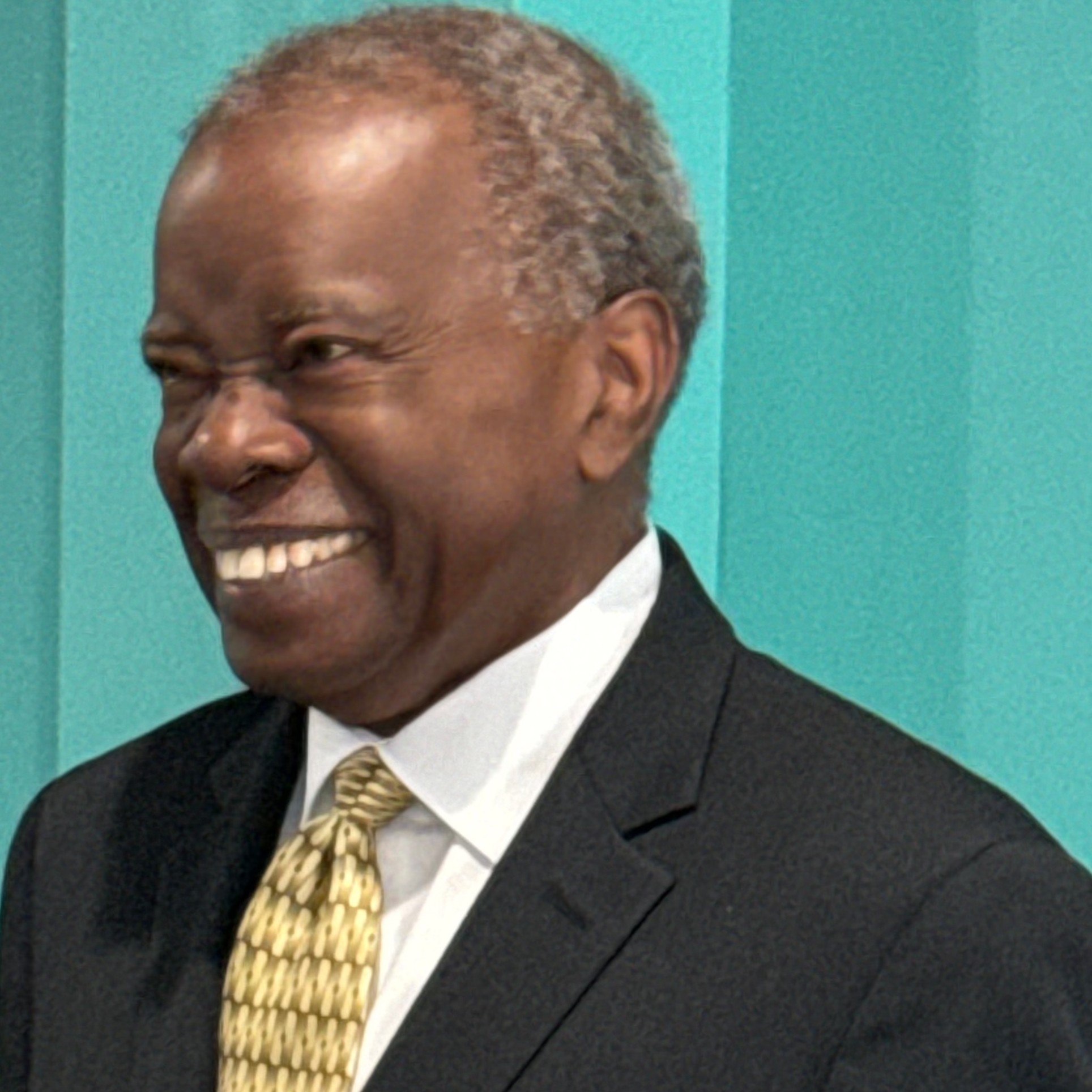
Dr. Choctaw's Leadership Masterclass focuses on empowering individuals to make informed decisions about their health. He highlights the importance of recognizing when to seek fast medical care and provides actionable steps to take in those situations.
0:00 Coming up on this episode of the Healthy, Wealthy, and Wise podcast. Medicine or healthcare is extremely complicated. It really is. And certainly one of the things that I learned in medical school was how complicated it is. And I only say that to say, you know, You may think, okay, I have a cold. I know what a cold is. I'll just do A, B, and C that I always do for colds. But that's not necessarily true. Welcome to the Healthy, Wealthy, and Wise podcast with Dr. William T. Choctaw, MD, JD. This podcast will provide you with tools and actionable information you can use to help live a more healthy, wealthy, and wise life.
0:40 It's powered by the over 50 years of medical experience of this Yale University Medical School trained surgeon, who is also a Western State Law School trained attorney, with executive experience being a former mayor of Walnut, California, as well as the current chairman of the nonprofit Servants Arms, and as president of Choctaw Medical Group, Incorporated. This is the Leadership Masterclass Edition, already in progress. Robert Andrew Col. Good morning. Good morning. Everyone. Going to have a scr, a scripture and a prayer, and then we'll go right straight into our, our session for today. I read in Proverbs, uh, chapter three verses five through 17.
1:24 Trust in the Lord with all thine heart and lean out into thine on understanding. Now all th always are knowledge him. He shall direct our past, you know, wise and thine own eyes, pit a Lord and depart from evil. Let us go to the Lord in prayer. Father God Almighty, as we come before your throne this morning, first of all, we just want to thank you, Father. Thank you for our lying down last night, and our rising up this morning, and closing our right mind with all our spiritual, physical, mental capacities functioning properly. Thank you, my Father, for bringing us to this point in time, my Father. We pray now, my Father, that you open our hearts, open our minds, so we can be able to receive what you want us to receive, my Father. As we go about what to do, my Father, we need we need fast medical care, my Father. Amen.
2:04 Help us to listen intently, my father, and take in what you want us to take in and then use it. But I want to also share with us, so they too might know also, my father, what to do, my father. We ask this of you, we thank this of you, in your daughter's name, Jesus Christ, holy name, amen. Dr. Sarkar? Good morning. Good morning. Thank you all very much for spending your very valuable time with us on this beautiful Saturday morning. Um, and, uh, to our next, uh, present edition of the, uh, Leadership Masterclass. Um, and the Masterclass is designed for those individuals who are interested in learning much.
2:49 Uh, but in addition to that, being able to take this information and hopefully to help others. Uh, and so the whole idea is to inspire, uh, to motivate, um, and to educate. Uh, our topic today is going to be when you need fast medical care, what do you do when you need fast medical care? What do you do now? Some of you may say, well, that, that's an unusual topic and maybe it is. But one of the things that I have learned in my 50 years of medical practice, uh, before I retired, that it's not the more complicated things that confuse us. A lot of times it's the real basic everyday things that confuse us in terms of improving Our quality of care.
3:37 So we're going to try to go down to some basic levels and go over some basic information that most of you know, but hopefully we'll be able to put it in a format that makes more sense and helps you to not only help yourself, but maybe help someone else too, either in your family or outside of your family. I believe life is about being of service to others. I believe knowledge is power. I believe leaders can change the world. And one of the purpose of, of individuals in a masterclass is that you're all leaders. And we all want to learn and to grow and to get more knowledge, uh, so that we can be more beneficial, uh, to others.
4:18 Now, I, it was interesting, I, uh, that was a, an introduction about this class at one of the, uh, Sunday morning services, and, and the pastor said, well, you know, the doctor talked, I was gonna say, you know, uh, uh, this is just advice, or something to that effect. This is just advice, talk to your regular doctor. And that's exactly what I'm saying. Thank you, Pastor Doc. You were right on the money. This is just, just education. This is not medical advice. This is not intended to be medical advice. You get your medical advice. from your health care provider, whoever he or she may be, but again, but by having knowledge and information, you can then have those levels of conversation with that health care provider that in my judgment will improve your health care and improve the health care of others around you.
5:14 Um, and as I said, our, our, our mission, if you will, uh, with these, with these series is to inform, mean give you information, uh, to educate. I define education as receiving information that changes behavior. Receiving information that changes behavior. Uh, and then the third, um, uh, goal is, uh, when you get this information that you do something with it, you don't just go and sit down that you either tell somebody else. Uh, but you use it to help someone else, that you pass it on, if you will. And again, um, in the words of Pasadena, always follow your doctor's orders, and I, I agree with that 100%.
6:02 And, and quite honestly, one of the reasons for this, and this is an important point that I've learned. Medicine or healthcare is extremely complicated. It really is, and certainly one of the things that I learned in medical school was how complicated it is. And I only say that to say you may think, okay, I have a cold, I know what a cold is, I'll just do A, B, and C that I always do for colds, but that's not necessarily true. One, that you may have symptoms that are really not a cold, maybe something else, uh, um, and that it is always more complicated than you think. Um, and so my point is, um, just always be humble, if you will, when, when you're dealing with healthcare related issues, um, and always recognize the fact that, uh, you may learn something that you do not know.
6:53 And it's one of the reasons that if, if patient A has a cold and patient B has a cold, that they may not be the same in terms of how that cold affects them. And that's another reason why we never want to oversimplify. Uh, health care and health care symptoms. So, obviously, if you have a, a, a medical problem, uh, or, um, a, something that requires immediate care, the most serious type of medical problem, uh, that requires immediate care is something that's life threatening. or that you think is life threatening. Now, I'm a believer that, um, patients or individuals do not have to try to play doctor.
7:34 Uh, you don't have to run to the book or run to the web to look up something if it's in an emergency, okay? Uh, just go to the emergency room. Just go to the emergency room. Um, if you aren't sure, if you're worried, um, and I would tell my patients that all the time. I say, if you're worried and you can't figure it out, uh, go to the emergency room. That, that's number one, one of the first things you can do. Uh, the second thing you can do is you can just call 911 and have them come and pick you up. Um, and I can tell you, we in Los Angeles County are very blessed that we're, there's so many hospitals around and so many, uh, paramedics around, et cetera, et cetera.
8:17 But if you live out in a rural area, and when I was working with the John commission. We would many times survey hospitals that were way out in rural areas. And many times those patients don't have a close emergency room to go to. You know, if you're pregnant and you're having a baby, uh, uh, you know, you have to go many times, uh, to be able to So a lot of times healthcare is not always as available as it is to us who are blessed to live too close to be surrounded by many hospitals. But if you can call 9 1 1, that usually gets the paramedics out.
9:00 They not only will come out and render emergency medical care in your home or wherever you are, But they're in constant communication with the hospital emergency room, uh, getting information, reporting information about you as they're transporting you, uh, to the emergency room itself. Well, let's be more specific. What are some of the things that you just want to think about? Just go to the emergency room when they happen. If you start having respiratory problems, respiratory meaning breathing, you have a difficulty breathing. Maybe you don't know why you're sitting there all of a sudden. You're having difficulty catching your breath. Um, and you sort of do some things and it doesn't get better.
9:43 it starts to get worse. Breathing problems tend to be particularly hard, or maybe there will be hard long types of problems. And those types of things, you want to start thinking about either calling 9 1 1 or have somebody call 9 1 1 or have someone to take you into the emergency room. If you are one of those people who likes to Fixed up and you get up on ladders and this and that and you fall, you know, head injury is a very common problem, particularly with those of us who are over 60 years of age. Now I know, I always have to say this, I know a lot of new 60 year olds that are listening to me and you're saying I'm 60 years old, I'm not old, uh, 60 is the new 40, I understand all that.
10:28 Uh, but my point is, uh, you would be amazed at the number of people, uh, patients who get into trouble from head injury. Uh, doing basic things, coming downstairs. I'm missing a step. I've fallen myself. Many times I've missed a step or whatever, whatever. And so my point is, be careful with that. And if you hit your head, um, it does not necessarily mean that you're knocked out. Um, a lot of times you can hit your head and just have a bruise internally within the head, but it gradually gets bigger or more severe over time. So my point is that if someone has fallen and hit their head, Regardless of who they are, but particularly if they are older, you want to think about taking them into the emergency room just to be checked out.
11:15 A lot of times people say, I'm fine, I don't worry about it, I don't worry about it. But if they have any symptoms at all, or if you're at least a bit concerned, take them in to be evaluated. If you cut yourself. Now all of us at one time or another have probably cut ourselves or injured ourselves, and we bleed, the body again is an amazing organ, uh, organism, huge, uh, organism itself, and it will heal, although those, that bleeding immediately, however, if that laceration, that cut is large, and or maybe you have taken a lot of aspirin or something else, On a daily basis, aspirin many times decreases your ability to stop bleeding, uh, not always, but it can in some patients, but my point is, if the bleeding doesn't stop, you know, you put something on it and it's still bleeding, you wrap it up and it's still bleeding, uh, then you, you, you want to go into the emergency room and to have that looked after, uh, and have them to stop the bleeding, suture the laceration, um, if need be, and, and make sure you get, uh, quality care.
12:23 Um, if, if you, uh, are sick to your stomach for whatever reason, and you're having, um, a lot of nausea and vomiting. Um, that you cannot stop. The same thing if you're having, um, gastrointestinal problems and you're having a lot of diarrhea that you cannot stop. Those are the types of things you want to consider going into the emergency room. You don't want to try to self diagnose. Um, you want to go into the emergency room. And the reason why you would go into the emergency room instead of maybe like an urgent care or whatever, uh, emergency rooms are equipped to do a lot of tests immediately. Um, and they can get a diagnosis faster many times than an urgent care or a lower level of care.
13:10 Thank you for listening to this episode of the Healthy, Wealthy, and Wise podcast with Dr. William T. Choctaw. MDJD. We hope you now feel more equipped with tools and actionable information that will help you live a more healthy, which includes the mental, physical, and spiritual. Wealthy, which includes the financial, health, and spiritual. And wise, which includes the practical, theoretical, and emotional. Life for this one and past podcast episodes, blog, books, and news, you can use. Go to www.thhwwp.com. That's www.thwwp.com, and you've got it.
13:55 In the meantime, remember, you too, can be the change you want to see in the world. You've been listening to the healthy wealthy and wise podcast with dr. William t. Choctaw md jd
