Lifelong Learning and Respect: The Keys to Success with Educator and Mentor Clifford Higgins
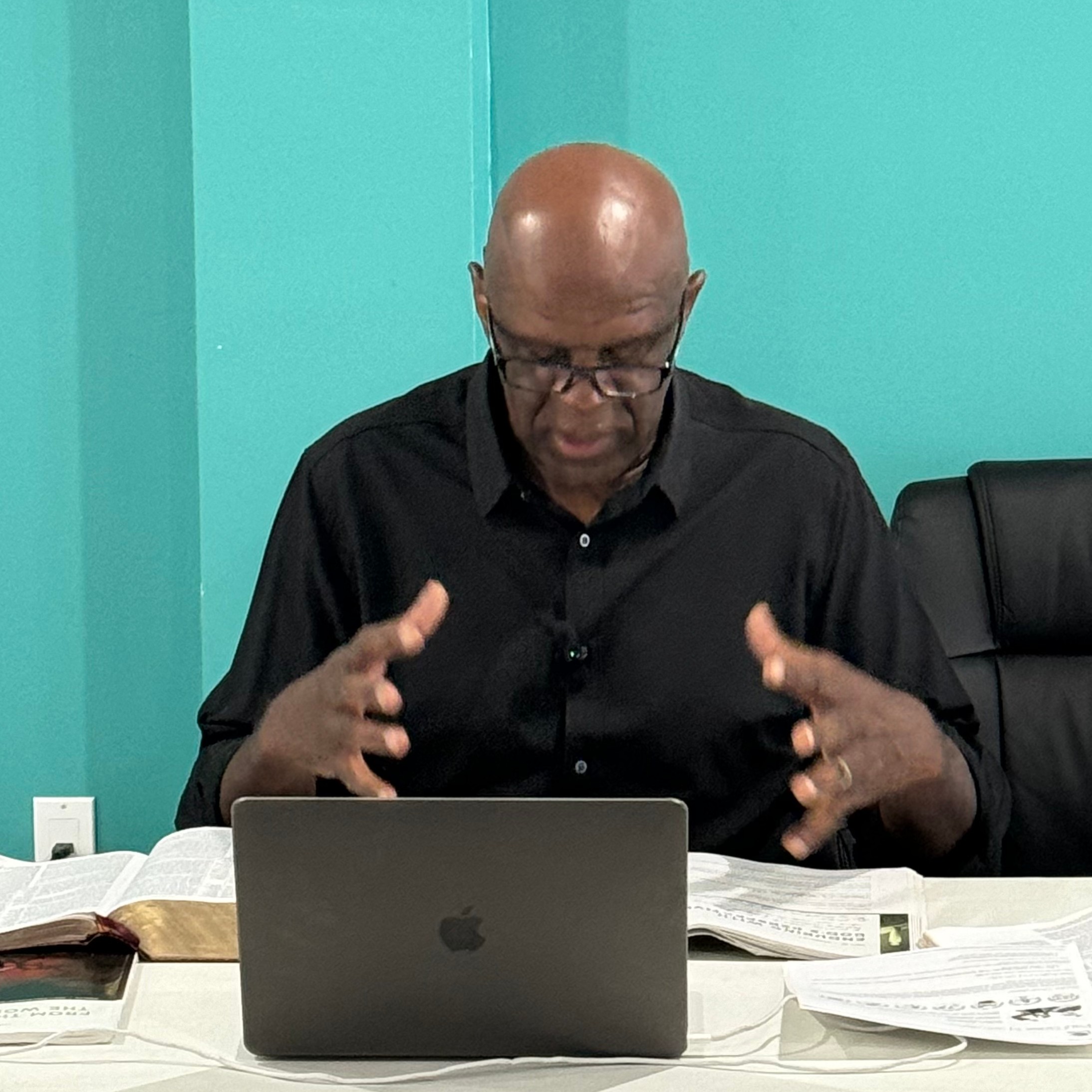
n this inspiring episode, Cifford Higgins shares his insights on the importance of respect, lifelong learning, and positive decision-making for teens. Gain valuable advice on navigating life's challenges, finding mentors, and embracing opportunities for personal growth and success.
0:00 Coming up on this episode of the Healthy, Wealthy, and Wise podcast. Yeah, there's a kid that I, you know, had to call his parents and tell them, you say, you're going to be suspended from school for X number of days. And now when I see them later, they now appreciate that. But here's the thing though, I saw what the key to that was. Welcome to the Healthy, Wealthy, and Wise podcast with Dr. William T. Choctaw, MD, JD, where the doctor helps you unlock your full potential by equipping you with tools and knowledge in the areas of. Health, wealth, and wisdom anchored in his experience as a business executive, a physician surveyor for the joint commission, a former mayor, and over 50 years of experience as a general surgeon.
0:43 You've got questions, he's got answers. So let's get started. Here's Dr. William T. Choctaw, MD, JD. When, when, when you are, um, um, um, say meeting with your staff, it's interesting you mentioned about being a disciplinarian because what I always remember about my school, we were always afraid of the principal. You know, they said, well, we're going to send you to principal Higgins. Oh God, no. What did I do now? So there was always this, this intimidation and fear. But my point is, I think you have a unique perspective though, by being involved with young people, uh, and in a role of a disciplinarian, um, uh, because you have to have a philosophy that basically helps the child.
1:35 You know, you want to correct the child, but you don't want to destroy the child at the same time or reinforce a negative behavior. Um, and it's interesting to hear you say that you would tell them, I'm not saying you you a bad person, you made a bad decision. And I think making that distinction, I think you helped a lot of kids, uh, many times who you will never see again. I may not ever see again, but they will remember that, that, that principle. And I was terrified of him and, and I thought he was going to do all these horrible things or sell these horrible things, but he was really a pretty nice guy. And so I think that's a huge win. Yeah. And I appreciate that because, you know, I do experience that, you know, Um, even to this day, because you do run into former students, okay, whether it's, you know, uh, at the mall somewhere, or at the store.
2:24 And, and, and this is, these are students that, you know, they, they perhaps maybe, you know, when you were, uh, at the time they were, you know, at your school as you serve as a disciplinarian, uh, they may have always been on their best behavior. But one of the things that. It's most satisfying the most, and I'm sure you can attest to that, is that when you see them years later down the road, they, they, hey, Mr. Higgins, man, oh man, yeah, you were cool, man, you were cool, you know, and that's a warm feeling to know that, yeah, it's a kid that I, you know, had to call his parents and tell them, you, hey, you're going to be suspended from school for x number of days, and now when I see them later, they now appreciate that.
3:05 But here's the thing I saw what the key to that was. Even as a classroom teacher, one of the things I will say, um, as an administrator, mm-Hmm, , I missed the classroom. Okay. I missed the, okay. And so when I had students in my office, I used that as a teachable moment. Tho those, yes, those decisions that they made, that landed them in my office. Okay? Now, you know, I would always sort of walk me through what happened. Yes, that's how I would begin my conversation. Walk me through what happened here. You know, and so it's nothing to slam them to come down on them to mean them and to, you know, ridicule them and yell at them that that was one of the things I never did was yell at students.
3:47 Okay. It was, you know, Walk me through what happened here. You treated them with respect. I treated them with respect. Yes. Yes And and every now and then, you know, some students will kind of get under your skin a little bit. Oh, yeah But for the most part I treated them with respect. Okay, and and they appreciated that because You would often see kids when they come to school, okay? You don't know what they experience at home. Exactly. They'll walk through those gates every day and you don't know what they've encountered at home on the way to school. And so I said, you know what, let me, you know, be out in front of the school. And you know, fist bump them or high five them, you know, treat them with respect, welcome them.
4:29 And then when they come to my office, it's the same thing, okay? You're going to be treated with respect. And, uh, parents, too, that I learned this because they sometimes don't agree with your decision making. And I will use this phrase all the time. I said, ma'am, I appreciate the fact that, you know, um, you don't agree with that, you know, uh, perhaps your child is going to be suspended, but, but, but please, you know, uh, understand that, uh, this decision has to be made, but, uh, Um, I wanted, I want you to know that in this decision making, your child was treated professionally and respectfully. And, and one of the things that I can hang my hat on, and I say this not to toot my own horn, but I, I try to sometimes share this with parents of all the disciplinary situations that I've encountered.
5:21 Not one parent stood up before the board of education and say, Mr. Higgins is unfair to my child. Okay. Never happened. Wow. And I've done a lot of discipline on, on, on my years and this is high school, he's a teenager. High school. Yes. Yes. Almost 30 years of it. Right. Not one parent. And then mind you, Board of Education, those are public meetings where you can go up and speak your mind. Say whatever we want. That's right. Bring them in to the door. But not once has any parent walked up to that board and said, Mr. Higgins is unfair to my child. And so I say this to say that I said this to say that, you know, I attribute that to just making sure that you treat others with respect.
6:05 And that is quite a 30 year legacy. I mean, I think, uh, and you're exactly right. A lot of those circumstances, most of us are, but you had no control over because you didn't know what was going to come into your office, but you had to be ready with a certain process of mutual respect, mutual trust. Trust and good communication to say, my, my goal here is to help this child. Oh, that that that's my focus. That's my goal. And even the way you would start off by saying, walk me through X and tell me what happened that's showing respect. Because what you're saying is I'm, I'm not going to start off thinking that I know everything. I'm going to need you to tell me what I need to know.
6:46 Uh, and I'm going to respect you enough to listen. I'm just going to be quiet and have you tell me blah, blah, blah. Uh, they said Albert Einstein once said if I had 60 minutes to solve a problem, I'd spend 55 minutes defining that problem and five minutes solving it. So when you ask them to walk you through, you're saying define the problem for me before I jump to any conclusions. You know, tell me what happened to make me help me to understand blah, blah, blah, blah, blah. That itself is showing respect. And many times we can say respect, but we got to make sure we show it. And my point is you were showing respect. You weren't just saying it. Yeah. And, and, and I'm glad you mentioned that because And again, it was a learning process.
7:31 Okay. Uh, I appreciate, uh, the, the, the principal who hired me. Um, she gave me good advice. He said, you know, uh, she said, Cliff, you're going to make mistakes. Okay. But just two things. Remember, okay. Be honest. Okay. And be truthful. Okay, just just make sure that you are just you're truthful about so if you a parent says, you know, uh, why did you return my phone call? Don't don't don't send a message. Oh, didn't you get my message? No, just be honest that you didn't know You know, I did return that phone call but the part about you mentioned about you know, that that um, Not rushing to any type of judgment. I did have to learn early on Um, because you have some savvy parents out there.
8:15 Okay. You have some parents that are doctors and lawyers and I, and you don't know them all. So one of the times, uh, I was handing down a disciplinary consequence to a particular student and the parent asked me a question about the case and I didn't have the answer and that parents says, well, wait a minute, you mean you're going to suspend my child and you don't have You know, all the facts. And I learned early on right there. Yeah, there you go. All the facts. Yes. Everything down before I perhaps now call that parent or before I have minutes. So now that that in that in it didn't tell me now talking to teachers, you know, because I wasn't there when the situation happened.
8:59 Okay. So when I had the interview, you know, you had to be really thorough. Yes. You're dealing with lies. You're dealing with lies. You know, that can hurt them now down the road. And so that's why I always begin, walk me through, start with the student, then I will get other information. But you have to have the facts before you can administer it to have a consequence. The only thing you do, and I think it's important that you know, and this is just my experience with you as my son's school teacher, and just seeing the reaction, you have a type of humility. I've always believed that humility was a sign of greatness. Yes. That people who are humble and when I say humility, I mean, the fact that you're willing to sit down with a 16 year old male, you know, who's angry with the world and blah, blah, blah, blah, blah, and say, you know what, I'm going to listen to you, you know, tell me a, b, c, d, e, that's showing respect.
9:53 And it's also showing a certain degree of humility that I'm going to give you this opportunity because I'm, I really am trying to help you here. So help me help you. And my point is that. You, you are walking that talk or have been walking that talk by your actions. A lot of people say it, but they don't really do it. You know what I mean? And it has the opposite effect. But when you say, okay, um, um, Mr. Chartoff, tell me why, why you hit Johnny in the mouth. Tell me what happened. Tell me what led up to that, you know, before I make these decisions. And at least, you know, even, even in court, you have an opportunity to plead your case.
10:36 And so as, as the, you know, the, the, the administrator and the, and the, uh, the judge to some extent under those circumstances, uh, you were fair and just. And that goes a long way to achieving the goal that you're trying to achieve in the first place, which is to help the child. You know, your goal is to have the child and my point is that I would argue that's that's exactly what you've been doing for the last 30 years. Um, and others see it, obviously the children see it and that's why they come up to you and say, you know, thank you, Mr. Higgins. I'm, you know, good to see you. Otherwise they wouldn't talk to you. They'd be in the opposite direction.
11:19 Yeah. And I knew it's time to, you know, leave because. Um, I, uh, this past school year, they, they also assigned me to become the principal of our community day school. Okay, so these are now the, the kids who, perhaps because of a, uh, an infraction that were expelled from the schools, but we, we, we, uh, educated our, our expelled students. So I was, I was the principal of our community day school. And I said, okay, I know it's now time to. Uh, retired because, uh, the students there, there was one student there, uh, that I had his father when, when I was back as an assembly, way back in the early, you know, late 1990s, early 2000s.
12:04 I'm like, wait a minute now, it worked out beautifully because the father, he was a handful and now here he is, his child is there you go. There you go. It worked out so beautifully because, uh, at that school, it was just a small school, it was just a handful of students. I still had to treat it as a big public school. I had, I had to have what's called a school site council. And so the school site council, your parents, your community, their partners, and so I reached out to this person who, whose son is there, I said, Hey, I need you to be my school site council president. And he said, Oh man, so great, I'd love to do that. You know, we appreciate it. He's a kid that. When I was a principal, I disciplined him constantly.
12:46 And so now he's my student council president. There you go. And he's at the school that the community schools go. But you know, it's time to go now because I'm starting to get the kids of the kids. Well, I, I call it different phases. I, I, I used to tell my colleagues and Serge, I said, I will never retire. I'll just go from one stage to another. I'll just go from one area to another. to another, uh, because I don't know what God has for me to do. And I would, I would communicate the same to you. You're just going from one phase to another, and there's going to be a lot of great stuff there that with your skill set and with your personality and your humility and your strength and your courage, uh, you will be able to help others because I think that's how God uses us to spread it around and spread it around.
13:34 All right. So is there anything else that you want to tell us or let me rephrase that our podcasts go to, um, about, um, 90 something thousand people, you know, in terms of downloads around the world, it's not just California or the States, this is around the world. Yeah. We've really been blessed in the last year and a half. And so if there was a message that, that, that you want to give, um, in terms of your philosophy or about anything. Uh, what, what, what would that message be? Well, my message would be to use what God has given you, okay, to further yourself in life.
14:15 Okay. Okay. And you know, God has given us a abundance of gifts, okay, and use those gifts to improve your life circumstances. One of the things I didn't share with you, Dr. Choctaw, is that, you know, of course, I grew up very athletic. Uh huh. Okay. And I was able to earn a scholarship to college based on um, athletics. Okay. Being an athlete. Okay. A lot of our young people, they can use that avenue to get to college. But it has to start, it starts in the classroom though. Okay. Yes. When recruiters come to school, when the first thing they want to inquire about, yeah, they see you, you know, dribble basketball, they see you run down the football field and block and tackle.
15:03 One of the things they want to see is those transcripts. And so, uh, one of the things I want to do is, you know, again, help our young people. I've come across so many young people that So, I was not able to step one foot on the college campus because they didn't have the grades to get there. Okay. But yeah, they they uh can use those uh athletic skills because they didn't have the grades to get. So, I want to help in that area but I went to college. My daughter's with the college and on the on the scholar of um uh athletic scholarships and so I went to college there uh played uh basketball. Uh huh. Was uh all American basketball. Oh, congratulations. I didn't know that. Yeah.
15:43 And, and once when people, a lot of people don't know, cause I don't share this story often. Uh, I was drafted in the, uh, seventh round by the Golden State Warriors in the 1984 draft. Yes. And, and I, I, I share this. I have, I have, uh, two things in common with Michael Jordan. Number one, we're, we're, we're, we're both, we're both ball headed. And number two, He was the third player picked in the 1984 draft. I was the 147th player picked in the 1984 draft. So we're drafted in the same draft. Hey, that's close enough. That's close enough. But, but I was able to use my, um, Whatever, you know, again, knowledge I had in the classroom to earn an athletic scholarship.
16:27 And I'd like to see more of our young people do that, okay? But it starts with, you know, educate, starts with, you know, hitting the books. And so I want to use, if there's someone out there, there's a parent out there that, you know, yeah, I have a gifted child, you know, he can probably make something of himself. You know, but it starts, okay, you know, let's, let's look at this academically. How are you going to get from A to B? That's going to start. And so that's a lot, that's the message I want to send. Use what God has given you to further yourself. That's an excellent message, uh, Brother Higgins, because I think many times what I've seen, the reason why a lot of students don't make it is a lack of confidence and confidence comes from doing.
17:10 You know, you're going to make some mistakes, you know, it's not going to always work. But if you keep at it, you just keep, keep trying, keep trying. And then as you get a success, then that confidence will start to build. And once that confidence continues, then you will continue. You won't let anything stop you, but, but it's, it's a process. It's a process. And a lot of times our kids, you know, either get bad advice or get in the wrong direction and they never get that confidence to come back, you know, particularly athletes. who may twist an ankle or whatever. And so they, they, they can't play the way they want to play, but they don't have the academics to fall back on. And so then they become frustrated, um, um, and, um, and, and feel like they're failures.
17:55 Um, uh, Justin, do you have any questions you want to ask brother Higgins? Um, real, I guess real quick, going back to your nonprofit, Um, how do you see yourself, uh, measuring success of, of your initiatives? So, you know, um, I see myself measuring success based on my mission. And again, my mission is to, uh, it's growing and empowering teams to make an impact in their communities. And so once we start to see the fruits of that, when we start seeing teenagers, you know, now who wants.
18:37 Like Dr. Chaka didn't have that confidence. Didn't think that they're gonna amount to anything. They don't have the table, the, the, uh, the stable home life, the, for that they can maybe focus or, or be, you know, driven, uh, by, you know, someone that's not in that, that's not in the home. I'm going to measure my success based on their success and mentoring them. And so, and I, and I believe, uh, with the team, I'm going to put together of mentors, you know, people from the, again, education field, the health field. you know, uh, the medical, you know, uh, medical industry, a lot of different industries. Those are going to be comprised of my mentors and we're going to go out and, you know, target, you know, teens and, and so they can be successful.
19:24 Now, now will they be aging out of, of the program there or, uh, what is the, um, I guess the, the, the demographic, the, the age group? Well, well, well, the demographics, you know, would be, you know, again, it's, it's, it's, You know, I was going to target, you know, uh, underserved, you know, students, but, you know, uh, right now my, my focus is on your, your, your teenage age group, you know, from 13 to, and then age out, perhaps once they graduate from high school, I want to see them get through high school now. Yes. Like most. Nonprofit or any organization, you didn't want them to come back.
20:05 Okay. And, you know, be a part of, so now they can provide that same type of mentoring, share their success stories with others who are, you know, and still in the program. And so it's, it's, you're never going to age out in the sense that, you know, we always want to give back to you. We encourage you to come back and help others as well. So that's the, that's that long term, uh, projection. Exactly. Okay. Yeah. Yeah. I'm sure we'll be speaking more about that down the road there. But, um, it's great to hear that you're doing something like that. And as the doctor said, that's certainly something we can get behind in many different ways.
20:46 Appreciate it. Thank you so much. Yes. You, you're very welcome. Um, so Roman, uh, brother Higgins again, . That's fine. And, and that's a compliment. That's, that's a compliment. Uh, so Brother Higgins, I, I, we wanna, I appreciate that. Yes. Okay. We wanna thank you, uh, for. I'm going to be spending some of your very valuable time, um, on a Saturday morning to come and talk to us. Uh, you've clearly, uh, educated me about some things that I had, I didn't have a clue about. Um, and again, I see an opportunity where, where, where we can definitely work with you in whatever, um, um, process you, you would like, uh, to assist you in doing the good work or some of the good work that, that you're doing.
21:39 Um, and so. Please feel free at any time you want to come back, uh, just let us know. And, and that, that door is always open to you. Well, thank you so much, Dr. Tochtow, Brother Jesse. I really appreciate, uh, you having me. I was honored, uh, even when, you know, uh, you asked me to be a part of your, your podcast. Did he, did he leave? Uh, no, there he is. The signal is kind of, yeah, uh, uh, varied over there. All right. Perfect. There you go. Oh, okay. No, no. Go ahead. Okay. No, I was going to say thank you again for having me. I was honored when you first reached out to me to be a part of the podcast and so I appreciate the invite and just, you know, again, I think this was, you said, uh, you said this was God in the midst of working here and now I feel like I'm a part of it.
22:35 Thank you very much, much sir. And you have a terrific day. Enjoy yourself out there, . God bless. I the same. Thank you. God bless. Alright, thank you Byebye. Alright. Thank you for listening to this episode of the Healthy, wealthy, and Wise Podcast with Dr. William t md, jd. Be sure to check out other great episodes covering areas of health, wealth, and wisdom@twwp.com. And while you're there, be sure to check out the books, blogs, and other literature in your preferred format. And don't forget to leave a review, subscribe, share, and support the podcast.
23:16 That's at t wwp.com. You've been listening to the Healthy, wealthy, and Wise Podcast with Dr. William t Choctaw, md, jd.
