Mastering Diabetes: A Comprehensive Guide to Carbohydrates and Your Health
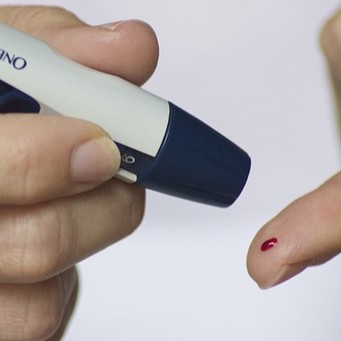
Join Dr. William T. Choctaw on the Healthy, Wealthy, and Wise podcast for an in-depth look at how carbohydrates affect diabetes. This episode covers the physiology of glucose, the different types of diabetes, and practical tips for maintaining a heal...
Join Dr. William T. Choctaw on the Healthy, Wealthy, and Wise podcast for an in-depth look at how carbohydrates affect diabetes. This episode covers the physiology of glucose, the different types of diabetes, and practical tips for maintaining a healthy lifestyle. Equip yourself with the knowledge to make informed dietary choices.
0:00 Coming up on this episode of the Healthy, Wealthy, and Wise podcast. So what are the, how are the three different food groups broken down? Carbohydrates, proteins, and fats. Welcome to the Healthy, Wealthy, and Wise podcast with Dr. William T. Choctaw, MD, JD, where the doctor helps you unlock your full potential by equipping you with tools and knowledge in the areas of health, wealth, and wisdom. Anchored in his experience as a business executive, a physician, the surveyor for the. The joint commission, a former mayor, and over 50 years of experience as a general surgeon. You've got questions. He's got answers. So let's get started.
0:41 Here's Dr. William T. Choctaw, MD, JD. Good morning. This is Dr. William T. Choctaw. We're delighted to have you with us this morning today. We have an extraordinarily broad and an interesting topic for you. We're going to talk about diabetes basics. What you need to know as diabetes basics, what you need to know each month, we strive to provide you all distance with mental, physical, and spiritual strength by giving you actionable advice. We consider the health and the mind of the mind, body, and spirit paramount. As a single unit to help you survive and to thrive.
1:24 We appreciate your time with us. So sit back and enjoy the next few minutes of our presentation. So our discussion today is diabetes basics. What you need to know, what you need to know. As always, um, these podcasts, uh, and presentations are based on my 50 years of experience as a general surgeon, um, and also my 75, 76 years of life experience. This is part of our medicine masterclass series and our mission is to inform you about various Um, events and, and information that we think is, is valuable, um, we hope that that information will then educate you and our definition of education is that it changes behavior somehow, uh, within you and that that change in behavior is number three, that it motivates you to help others and be a force.
2:27 For good in today's society, uh, these podcasts are based on my beliefs and my beliefs number one are that life is about service to others. Number two, knowledge is power. And number three, leaders can change the world. As always, we like to put up an outline, um, and the purpose of the outline is to give you an idea about what we're going to talk about, but more importantly, or as important to let you know when, when we're just about done. We're going to talk about basic physiology of glucose, um, and how it is involved in the disease or a medical problem called diabetes.
3:10 We're going to define diabetes for you. We're going to talk about the, what I call the, the road to diabetes. Uh, that involves food, glucose, insulin, cells, and energy. And we're going to talk about the importance of all this in the normal functioning of the human body. Now, I purposefully like to use redundancy, uh, in my presentations, and what that basically means is I will say the same thing or the same facts, but I will say them different ways. And the purpose of this is to help you to better understand what we're talking about better apply it to your life and your, the work that you're doing, um, and, uh, to make it more profound and more interesting to you as time goes on.
3:56 So when we look at food, just basic food, it's important to understand that the most important purpose of food is to provide energy. Well, the body and the food does that by providing energy for the body at the cellular level. Okay. Let me say that again, food provides energy. For the body at the cellular level. Now there are over 3 trillion cells in the body and so we'll, we'll get into that a bit later. But just keep that in mind. We're talking about food for once you consume it, once you put it in your mouth until it gets to the cell, um, and the energy that it produces.
4:40 So let's take a step back. There are three basic food groups. Carbohydrates, protein, and fats. Carbohydrates, protein, and fats. We are going to be concentrating primarily on carbohydrates today as we talk about diabetes. Okay. And when I say carbohydrates, I will interchangeably use the word sugar or interchangeably use the word glucose. Carbohydrates, protein, and fats. So, glucose and sugar are carbohydrates and vice versa, and that's the main of the three types of food groups that we're going to be talking about today, particularly as it relates to diabetes.
5:24 So, if you, when you sit down with your family for a delicious meal, it is more than just eating, and it is more than just physical. When mom and dad sit down with the kids for dinner, um, usually it's a fun meal, uh, so not only does the food satisfy you, um, nutritionally and physically, um, it satisfies you psychologically and spiritually, I would add. So what food does is that it is able to touch us on the three levels, physical, mental, and spiritual simultaneously. Simultaneously. And so what we want is that on that physical level, we want that food to be maximum in its operation and in its functionality.
6:13 So what are the, how are the three different food groups broken down, carbohydrates, proteins and fats? Let's start with fats. Fats are broken down into fatty acids and glycerol, and they are primarily used, um, Um, repair parts of the body, um, and to, to build cell walls, produce hormones, um, which all adds to, or have important roles in the basic functionality of the body, okay? Protein, uh, at the same time are broken down to amino acids. And these amino acids are very important in building blocks for body tissue.
6:56 It helps in repair of muscles, organs, bones, skins, hormones. And then of course, our primary food group that we're talking about today, carbohydrates. The carbohydrates are the quickest food group to be digested, and to be digested and converted into body energy. So carbohydrates is the majority, is the primary fuel source for the body, and the fastest fuel source. And indeed, when there are abnormalities with this process with the carbohydrates, diabetes type 2 may be one of the results. So if we were to look at an anatomical chart of the gastrointestinal tract of the body, we can see that when we eat food that goes down through the esophagus into the stomach, The stomach has enzymes which then break down the food into smaller building blocks.
7:50 which then go into the intestines and can then go into, uh, the bloodstream. So we want, when we look at diabetes, there are basically two categories of diabetes, type 1 and type 2. Today, for our purposes, we're going to be talking about category 2 or type 2 diabetes. Type 2 is what 95 percent of patients in this country have, who have diabetes. Roughly about 5 percent may have type 1, but for our purposes today, we will not be discussing type 1. And so, what we will do, for the short period of time you're with us, is go through the process from eating food to getting energy, uh, to mitigating the whole diabetes problem, uh, so that, uh, these cells can then perform their normal function.
8:48 Well, how many cells are there in the body? Think about that. There are over three trillion, with a T, three trillion cells in the human body. Okay. 200 different types of cells. Red blood cells, white blood cells, nerve cells, skin cells, muscle cells, fat cells, bone cells, etc, etc. And the purpose of these cells is to provide a certain type of energy, or I call functionality. Each cell has a unique function, and that unique function through its energetic activity keeps the body functioning normally.
9:28 So when we eat sugar or carbohydrates, and when carbohydrates are broken down into sugars, the purpose is to to get the glucose into the cell, and the purpose of glucose in the cell is to provide energy for that cell. Now, are there different types of carbohydrates? I said that when I say carbohydrates, I want you to think of sugars, but in reality there are other types of carbohydrates. When I say sugars, sugars are basically, uh, we're talking about what we call a simple sugar. A simple sugar is, um, um, the carbon, hydrogen, monoxide structure, which is pretty basic.
10:13 There are other types of carbohydrates. One type of the type of carbohydrates are what we call starches. Okay? Starches are called complex carbohydrates. What does that mean? That means instead of having a single strand of carbon, hydrogen, and oxygen, um, um, starches have complex strands. There may be eight or ten different strands attached together instead of one single strand because starches are complex carbohydrates. Example of starches are breads. Cereal, pasta, potatoes, vegetables, peas, and corn.
10:55 And then a third type of carbohydrates is basically fiber. Fiber are also complex carbohydrates. Um, and these are the type of carbohydrates that you may, uh, uh, eat in fruits and vegetables, beans, whole grains. Grains and plants. So other types of common carbohydrates are bananas and berries, mangoes, legumes, juices, sodas, fruit drinks, Um, et cetera. These presentations are based on, um, a number of podcasts, um, that have been done over the last two years, uh, from the Healthy Wealth and Wise Podcast group.
11:38 Um, you can access, um, um, a number of these podcasts on your normal podcast platform, or you can go to stsc.org, uh, and click on, uh, ministry, uh, podcast. And you can find all of them there in conclusion. Thank you so much for being with us today. And as always, be the change that you want to see in the world. Thank you. Have a great day. Thank you for listening to this episode of the Healthy, Wealthy and Wise podcast with Dr. William T. Choctaw, MD, JD.
12:19 Be sure to check out other great episodes covering areas of health, wealth and wisdom at THW. com. wp.com. And while you're there, be sure to check out the books, blogs, and other literature in your preferred format. And don't forget to leave a review, subscribe, share, and support the podcast. That's at TH wwp.com. You've been listening to the Healthy, wealthy, and Wise Podcast with Dr. William t Choctaw, md, jd.
