Time is Brain: Understanding the Urgency of Stroke Treatment and Recovery with Dr. William T. Choctaw, MD, JD
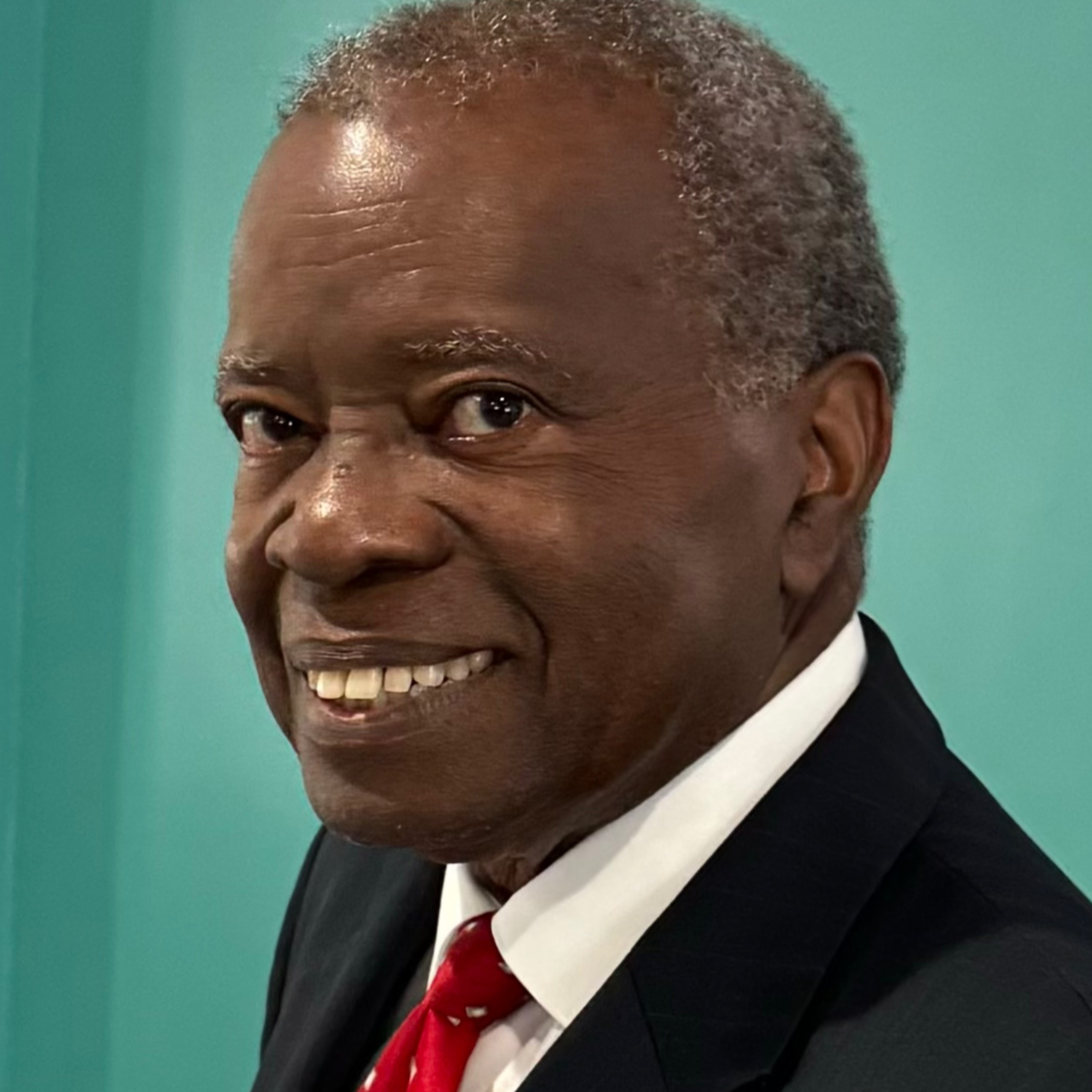
This episode demystifies the science behind strokes, emphasizing the critical window for intervention. Dr. Choctaw explains the two main types of strokes, their symptoms, and the importance of recognizing them quickly to save lives and improve recovery outcomes.
0:00 Coming up on this episode of the Healthy, Wealthy, and Wise podcast. You know, in terms of my Sunday school class, if you wonder where the Holy Spirit resides, it resides in my opinion. Welcome to the Healthy, Wealthy, and Wise podcast with Dr. William T. Choctaw, MD, JD. This podcast will provide you with tools and actionable information you can use to help live a more healthy, wealthy, and wise life. It's powered by the over 50 years of medical experience of this Yale University Medical School trained surgeon, who is also a Western State Law School trained attorney, with executive experience being a former mayor of Walnut, California, as well as the current chairman of the nonprofit Servants Arms, and as president of Choctaw Medical Group, Incorporated.
0:52 This is the Leadership Masterclass Edition. Already in progress. Robin, Andrew, call the phones. Okay everybody, what I want to do is give you a scripture and then a prayer. Uh, our scripture this morning is going to be James chapter 1, verses 2 through 4. I know it's very familiar with everybody, but I, you know, the Lord gave it to him. I see it's so pertinent for today's lesson. He says, My brother, encounter all joy when you fall into various trials, knowing that the testament of your faith produces patience. But let patience have its perfect word, that you may be perfect and complete, lacking nothing. Let us go to the Lord in prayer. Father God Almighty, as we come to you right now, we just want to thank you for this opportunity, my Father.
1:33 First of all, to be in the land of the living once more again, Father. We pray, my Father, that we will serve and worship and glorify you, edify you, which you so richly deserve when we travel down life's highway today. We pray that also we will be able to strike from today's Subject matter that we have is coming from Dr. Chata, my father, things that we need to use, my father, for us physically, mentally, my father, so we can be all that you want us to be. So right now, we pray that you continue to fill Dr. Chata with your Holy Spirit, wisdom, and knowledge, so he can be able to distribute to us what you have for him today. We ask this of you, and we thank this of you, in your daughter and son, Jesus Christ, Holy Name, Amen. Dr. Chata. Hey, good morning again.
2:13 Welcome to the um, Leadership Masterclass. Sometimes I'm asked, how do I decide which subjects to use? And there are a number of different ways I do this, quite honestly. One, based on my experience, I go by those subjects that are most common. You know, things like high blood pressure, diabetes, stroke, are very, very common. And we know that that's going to affect a large group of people. The other thing I do is that every day, I review probably about five or ten medical type articles online, every single day. And most of the times that gives me an idea about what the national trend is, uh, in terms of what's going on in the country, uh, if there are new things that have to, um, uh, that have developed, have been developed, I, I follow those up and try to bring those to you also.
3:05 And so today we're going to talk about stroke prevention, treatment, and recovery. Now we've, we've touched on the subject of stroked in the past, but we've not gone into detail about it as we're gonna do today. Um, and again, stroke is one of those things that are very common. As always, we like to start off with our beliefs. Why are we doing this? Why is there a masterclass? Um, and so, um, there was a very famous, or is a very famous, um, um, uh, person named Simon Sinek, uh, who talks about. Uh, in terms of TED Talks, um, it says that whenever you're going to do anything, you should tell people what you believe, uh, because your belief sort of gives them an idea about where you're coming from.
3:48 So I thought that was a very good idea. And so some, some years ago, uh, I developed my beliefs and I'm, I'm always welcome to share that with you. I believe life is about being observant to others. I believe knowledge is power. And I believe leaders can change the world. Now, this masterclass started, uh, last year. So we're coming up on two years, uh, that we've been doing this, um, at this location at St. Stephen's. And the purpose is to inform you, to educate you, and I define education by receiving information that changes behavior, receiving information that changes behavior.
4:31 Um, and the third, uh, What we wanted is we want to motivate you. We want you to go out and do something or to put it another way, we want you to use what you have learned to help somebody else, including yourself. This is basically my opinion about different issues. If you have a particular medical problem, you first always want to consult your own health care professional because everybody's a little different. It's one of the things that we try to stress. All hypertension is not the same. All diabetes is not the same. All strokes are not the same. Um, and the way God made us is we're individually unique.
5:13 And our health care is individually unique. So it's important to sort of keep that in mind. So these, this information is primarily advisory. But you always follow your, your, your physician's recommendation about yourself specifically. So what I like to always do is to define what we're going to talk about. Um, a stroke is a damage to the brain that occurs when a blood vessel in the brain bursts or gets blocked. And we're going to go over this a number of times. We're going to repeat this definition. Um, the whole thing is that the body is a very complex, my term, human computer, the most complex computer you can ever imagine.
5:56 Uh, but it is extraordinarily beautiful and intricate and how it works. Um, having said that, the body is very sensitive to different things and also it is very variable. And one of the areas of the body that's most is the brain. It's the brain. Um, it sits in the skull. Um, has different areas, and we'll go over some of that. Um, uh, my personal opinion, uh, uh, you know, in terms of my Sunday School class, if you wonder where the Holy Spirit resides, It resides, in my opinion, in the prefrontal cortex of the brain, frontal lobe, just my opinion, okay?
6:39 So there is a location. You know, it's interesting, because we used to have this philosophical discussion in college about Well, where is the mind? And where is the soul? And is it in the heart? Is it in the brain or whatever? So different people have different opinions, but I'll just, just share my, my humble thoughts with you about that. But there is a location. It is there. There is a location. So, let's go ahead and get started. So, as a general overview, about 800, 000 people in this country have strokes every year. Put that in context, uh, United States of America has about 370 plus million people.
7:25 Presently in 19, in, in 2024. Um, but every year close to a million people have a stroke. Uh, my point is, it's very common. It's very common. Stroke is the number five. Some even say the number that the third leading cause of death in this country from a medical condition. Um, about 690, 000 people. Um, have strokes that caused by blood that cuts off, uh, by, by, uh, situations that cut off, uh, blood clots, that cut off blood flow to the brain. Um, and what you want to do, uh, within a stroke is remember, um, this is a phrase we use in healthcare arts, time is brain, time is brain, and I'll, I'll go into that a little more clearly, uh, as we, as we go on.
8:16 So what's my point? My point is it's very calm. It's very calm. Uh, number two, it's, it's very fast in the damage that it can do. Uh, and number three, uh, we can help either ourselves or others when they have it, but we've got to have knowledge, which is why it's good that you're in the leadership masterclass. Um, either to help ourselves or to help others. And again, that's part of our design. So one of the main things is that if you're having a stroke or you think somebody's having a stroke, um, uh, you want to get them to a healthcare facility very, very quickly. And we'll go into what that looks like.
8:56 And again, time is brain. And when I say time, I'm talking about minutes, not hours. Minutes, not hours. Actually, about four or five minutes, so it's really a very short amount of time. So what are some of the risk factors, we're going to come back to the time issue, but what are some of the risk factors, uh, that can occur, um, uh, that can increase your risk of, of having a stroke? Well, certainly if you smoke, that increases the risk of you having a stroke. Why is that? Because the nicotine affects the blood vessels. It contributes to the damage of blood vessels, and the blood vessels, as we know, are basically the avenues of delivering blood to all parts of the body, including the brain, right?
9:46 Heart disease, um, uh, uh, uh, different types. can also contribute to stroke. Alcohol, uh, contributes to stroke because alcohol damages different parts of the body. Now a lot of the literature will say limits your, your alcohol intake. I say have zero alcohol intake, and let me, let me parenthetically say that I do not believe that wine is not alcohol, wine is alcohol. I do not believe that beer is not alcohol, beer is alcohol. But I will tell you that somebody once said, uh, that an alcoholic is somebody who drinks more than his doctor.
10:29 Uh, so, so, so, so I can tell you I do not drink. Uh, so zero, zero alcohol is what I recommend. And so just, just keep that in mind. Uh, be active, be active. Uh, and when I say active, I'm not saying that you'd be a marathoner like Reverend Collins or, or my wife Lorena, but you gotta move. You gotta move. You gotta walk around. You gotta, Uh, walk around the city or walk around your house or walk around your yard, go to the store three or four times a day and walk around. But you want to do something. Why is that important? Because exercise basically allows you to use the brain.
11:12 Uh, your heart to keep your heart healthy, pumps that blood around more, more regularly. Uh, and that also, um, allows you to stay healthier and you got to eat healthy foods. And again, we're going to go back over this again throughout this presentation. Um, if you are on hormone therapy, let's say if you take birth control pills, uh, that may put you at a unique risk. Uh, for strokes, that's something you, you, uh, uh, should communicate with your physician about because there are many different types of pills that you can take, uh, to, to, to, um, um, moderate your, your risk with that. So let's, again, go a little more deeper.
11:53 One of the things that, another reason why I decided to go over this subject again and in more detail is that this. month, this past month actually, the CDC came out with new warnings about stroke. You see, the Center for Disease Control, which is in Atlanta, Georgia, it is a governmental agency and if you remember about COVID, the CDC was the one that we depended on for guidelines because that's its job. It has a staff of doctors and nurses, epidemiologists, et cetera, et cetera. Uh, and their job is to warn the public about various types of health issues. And so one of the things that the CDC Um, noted, and we'll mention this later, that the percentage of strokes, um, um, is, has increased, um, uh, compared to the last 10 years.
12:46 And more specifically, and we'll talk about this a little later, it's increased in a certain group, certain age group, uh, and it's basically those individuals who are less than 60. Okay. Normally you expect that as you get older, as we get older, we have more and more and more, uh, heart, more and more medical issues. And that's just normal. You know, I compare it to, um, um, that car you got 50 years ago. Um, as that car continues to age, it starts having all sorts of issues. Um, I know it's sort of a, a crude example, but the human body is no different is my point.
13:26 That as we get older, uh, certain things start coming up that didn't come up 40 or 50 years ago, um, among other things. But my point is, because in my judgment, uh, there may be more of a sense of urgency about strokes and about our knowledge about strokes. It's one of the reasons we want to bring up. So there are two main types of strokes. One is stroke that comes from a blockage of blood that goes to the brain, and the other that comes from a bleed, a rupture of the blood vessel that takes blood to the vein. But the bottom line is that blood is not getting to the, to the, to the brain tissue in the amount and at the rate that it should.
14:12 And that's the problem. That's the problem. As I mentioned before, from the CDC this year said that, uh, as they, as they reviewed data and they monitor data 24 seven as they view data, they noticed. that there's an uptick in strokes among, um, people who are less than 60. Those of us like myself who are in that 70 category, we view 60 as being very young. So if you're in that 60 category, you're, you're like children to us. Now another issue about stroke, and this should be no surprise.
14:52 There's a higher rate in general of strokes, uh, in certain minorities, particularly African Americans. Now there could be a number of reasons for that, but I'm going to suggest that a major reason for it is, uh, heredity, that it's in your genes. Why do I say that? One, because it's true, but the other reason is that one of the areas of healthcare disparities in this country. What do I mean by health care disparities? Health care disparities is where different groups are treated differently in terms of health care, both in terms of why they have certain illnesses and how they should be treated. And it has not been uncommon that many times minorities are treated differently than those who are not minorities.
15:40 Sometimes intentionally, sometimes not intentionally. A classic example I always like to use is to attribute certain illnesses that certain minorities might have to lifestyle only. This you may see with things like, um, uh, diabetes. So you may see it with things like, welcome, come on in, um, uh, with, with obesity, other types of things. Uh, and for years, in my opinion, uh, people were sort of beat over the head with, well, you just need to change this, you just need to change that, and you people are this and you people are that, all along not appreciating the fact that a major contributor to a lot of the healthcare issues we have come from mommy and daddy.
16:26 Now I'm not saying it's always mommy and daddy's fault, but what I'm saying is if it's in your genes, it's in your genes. And certain things like hypertension could be in your genes. Obesity can be in your genes. Having a stroke can be in your genes. If it's in your genes, theoretically, it may very well happen. Now, can you do things to mitigate it? Maybe. But my point is, it's not something that you and you alone have done. Uh, and I'm trying to get rid of a lot of this guilt that's been dumped on folks, uh, particularly minorities, because you're different and if you were more like us, you wouldn't have all this problem. That's just hogwash. Absolute hogwash.
17:08 And, uh, particularly, I've given this talk many times. Um, particularly when we talk about obesity and related issues, uh, there's a Dr. um, um, Jameson, um, um, um, at, at Harvard who, uh, wrote a lot of articles on obesity and the cause of obesity, but the bottom line is, it's a large percentage of it is genetic. It's in your genes. And if it's in your genes, you can't help that. You can't help that. If you doubt that, look at somebody, look at a family, four or five people. And if you look at that family, you can see certain physical characteristics that are unique to that family. And one of those characteristics may very well be body shape, uh, color, um, how they move, how they walk.
17:54 Um, most of us have said, I know I've got four kids. I can see my son distance off and I can tell that it's him just by the way he moves. You know, I don't know why, but I can, and I bet all of you can also. Because there are certain things that are unique. To us that have to do with our genes. Okay, but let me go back to the point African americans have a high percentage of stroke because many times we have a high percentage of high blood pressure Diabetes and obesity. Okay, you put all those things together that can contribute to the stroke Thank you for listening to the Healthy, wealthy, and Wise Podcast with Dr.
18:35 William t Choctaw, MDJD. You can listen again to this and any of the previous episodes. Leave a comment or pose questions to the doctor by going to www.thwwp.com. That's www.th wwp.com. It's also available wherever you get your podcasts. Be sure to follow, like, share, and subscribe if you haven't already. Then tune in for the next episode of the Healthy, Wealthy, and Wise podcast with Dr. William T. Choctaw, MD, JD. A production of Changemakers Communications, LLC.
