Weaponizing the Bible: Manipulation, Misinterpretation, and the Importance of Context with Rev John B Nickens III
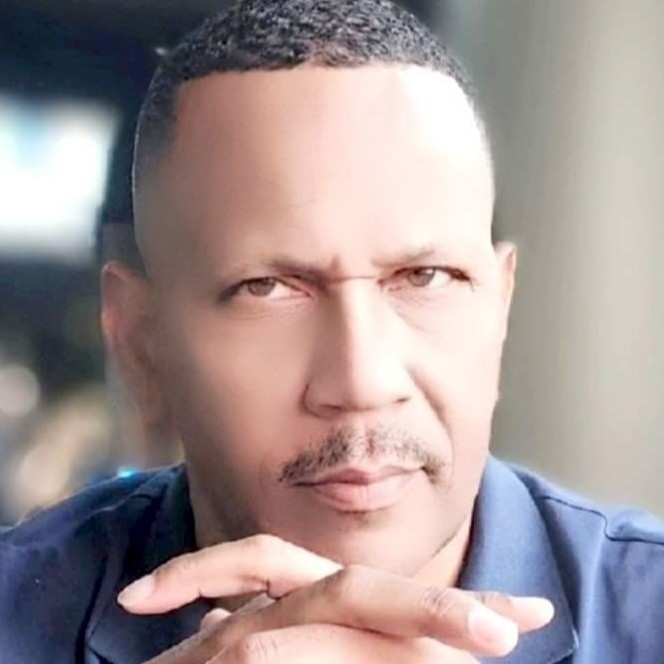
Reverend John B. Nickens III and Dr. William T. Choctaw discuss the dangers of "weaponizing the Bible" by taking verses out of context. They explore historical examples like slavery and how individuals like Harriet Tubman resisted such manipulation. The conversation emphasizes the importance of understanding the full meaning of scripture and the power of personal interpretation.
0:00 Coming up on this episode of the healthy, wealthy, and wise podcast, but it says provoking out your children to rap, you know, they will pull out key verses and, um, similar to what was, and I don't want to get too fast, but Juneteenth is Wednesday. Yes, yes. It wasn't. And then there's some people who are ignorant of that. And welcome to the healthy, wealthy, and wise podcast with Dr. William T. Choctaw, MD, JD. Our mission is to empower you with the knowledge and experience. Equip you with the tools you'll need to thrive in all aspects of your life. Join us now as we discuss everything from nutrition and exercise to money management, personal growth, and spiritual growth.
0:42 Dr. Choctaw will provide insightful advice on how to improve your physical, financial, and spiritual health, as well as your emotional and mental wellbeing. So whether you're looking to get the latest in medical news, unlock financial opportunities, or cultivate a more positive mindset, we've got you covered. Get ready to become the best version of yourself. So let's get started. Here's Dr. William T. Choctaw, MD, JD, with an interview already in progress. You use the term, um, that I had not heard, um, um, and I want you to expand on that. Tell me about weaponization of the Bible.
1:24 Um, for instance, and Dr. McCall used to preach like this, for instance, people will take out key verses in the Bible. To the point that they want to get across without giving proper context on how to do, for instance, I'm sure no one does that in 2024 does this in 2024, but perhaps, um, husbands and wives, Ephesians 5 and 20 wives, submit yourselves to your own husbands. Oh, yes. We'll pull that out, but you're supposed to submit to me, but you have to keep reading. It says that's for the family and it says. At the end of all that, it says submitting yourselves one to another, right? Yes. Which means that it's not about what I want.
2:05 It's, it's about, and it says, Husbands, love your wives as Christ loved the church. And we know Christ was willing to die for the church. So, wives, you know, you shouldn't, men would throw that out, but then they're not following the pattern. Exactly. It's disappointing. Contextually for the rest of the scripture. Are you loving your wife in such a way that you would nobody's asking you to go jump In front of a truck, but if it came to that Would you do it without thinking would you would you as christ did for the church, you know, he gave him support Would you do that for your children? Nobody's asking you to do that. But if it came to that Would you do it and would you do it and do they know that you would do it?
2:46 Are you living in such a way today again respect and trust you? You Yes, you know, um, but some men will weaponize that and say, you're supposed to do what I say. And just like we talked about, uh, earlier, oh, you honor my father and my mother. That's what it says, but it says provoke not your children to rap, you know, they will pull out key verses. And, uh, similar to what was, and I don't want to get too far into it, but Juneteenth is, is Wednesday. But the slave Yes. Yes, indeed. It wasn't, and then there's some people who are ignorant of that, and even people of color today, oh, I don't believe in the Bible, because they used to use it to, no, they didn't use the whole Bible. Right. They, they weaponized it.
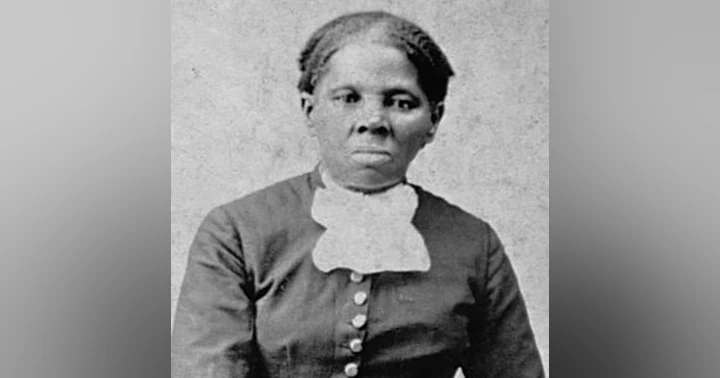
3:27 There you go. They justified their point and didn't put it in proper context, and that's what a lot of people do. And they're still doing it. They're still doing it. And so to me, that's the weaponization. You're not really giving the whole truth. You're just using it to justify your little point for manipulation. You're trying to control people. So that's, that's what I meant by that. Well, I, I think it's a very profound concept and I think whether, uh, whether we're talking about, um, uh, back in biblical times or whether we're talking about the, the periods of slavery and I'm sure, uh, people like Harriet Tubman, uh, uh, sat in meetings where folks were reading the Bible to her and saying, you know, or some context saying slaves be obedient, whatever, whatever.
4:14 And she says, no, I don't think so. Cause my God, that doesn't say that, you know, and so my point is, I I think you, you hit on such an important point. One has to be able to understand, um, when words are being weaponized, uh, to manipulate, uh, and, uh, taken out of context. And your whole point is read the whole context, get the full meaning of whatever document you're talking about, whether it's the constitution or, or, or the Bible. Um, uh, and many times you will get a broader interpretation or more specifically, a more accurate interpretation.
4:54 And I think you're also correct that, uh, bad leaders or poor, um, uh, individuals who want to be leaders, but who never will be, uh, will try to manipulate because that's all they have. So, so they're, they're going to misdirect and they're going to lie and they're going to cheat and they're going to steal and, um, and they're going to have you look at the shiny object instead of what's real, you know. Um, uh, and I think it's important to always look at what's real. Um, and, um, and I think, uh, uh, and also I, I think your thoughts about men are right, right on the mark. Um, uh, it, it's so important. I, you know, I think it's clearly a difference between men and women.
5:36 Men really are for Mars and women really are for Venus, right? And I think, and I think particularly if you look at men of color, um, who have undergone a number of things throughout the years and slavery and, you know, Why folks were separated from the family, because, you know, they didn't want that powerful union, uh, to be able to create powerful families in the future, but fortunately, much of that has changed. Um, uh, but I, I just think it's, it's, it's, it's a good point to look at, uh, any other thoughts about that? None that come to mind, sir. Although at the conclusion of this, when we're, when we're separated, I'm sure a bunch of things will pop into my head, but right now that's, that's generally, that's about it for right now.
6:22 But it's just important to remember that at all times we're talking about this point, a lot of the things we've been speaking up, but that thing about the weaponization of the Bible and not only to be on guard for it, but to make sure that we aren't perpetrators of it. You know, at the same time Right. That we don't do it. Yeah. You know, we can fall into it and, you know, so we have to make sure that, you know, we're, we're interpreting it and, and then we're, uh, disseminating the information correctly and in the proper context. And, um, it's a two-edged sword. It's not always gonna be to our liking. Yes, yes, yes. You gotta be ready for that, you know, and you gotta be willing to accept that.
7:02 And move along, you know, so I guess, if anything, that would be that problem. Well, you know, one of the ways that I try to check myself in terms of, um, weaponization of the Bible is judgment. You know, whenever I start looking at, uh, person A or person B or person C and I start judging them, then I start saying, wait a second, wait a second, let me take a step back. Um, and who am I? to judge one's lifestyle? Who am I to judge one's religion? Who am I to do that? Um, and I think I, I just think that those are sometimes guideposts for us to take a look at and make sure that we don't, uh, inadvertently, uh, fall into, um, it's, it's my way or the highway type of mentality.
7:57 Absolutely. I, you know, I often think. So along those lines, you're speaking when I see an unhoused person who might be crossing the street or whatever, make sure that I'm not judgmental because, you know, I don't know their life or brought them to their point. That point, it could have been me. It could be me. Not only that, but I often think of the analogy or the parable, I should say. That jesus mentioned in the bible with the poor man and the rich man Yes, and the man lifted up his eyes and hailed and the poor man ends up in the bosom of abraham And the rich man was like, you know, can you dip your finger in the water and Right The poor man was in heaven and the rich man was like, well, can you just tell my family, you know to live right?
8:45 And and i'm paraphrasing to do all these things. They don't end up down here So when I see those people, I, I, the first thing that I've conditioned myself to pop into my head is, you know what, I can't judge because they very well may be in heaven before me or in heaven, I have to work on me. I have to work on my heart and my mind and not judge them because God doesn't look at that, you know, exactly. I often see them and you know, I've learned that now a lot of unannounced people, they have, you know, mental challenges and they have other things and some are not the nicest people, but don't know which is which, you know.
9:29 So I check myself with that as well with regard to what you said about judging. Like, well, I don't know. You know, who am I, you know, because then I think, and I say, what if someone's over there looking at me and they're judging me, you know, Oh, he's a, he's a black guy. You know, he might be on crack. He might've been good. He might be getting ready to steal something, you know, exactly. So I make sure I stay, you know, stay dialed in and don't, and don't do that and realize that everyone has values and everyone, everyone has God made us all. Everyone. That's value to God. And so I can, you know, it's challenging sometimes because we're humans and we think finite, like you said earlier, but to your point, yeah, the judging, I always check myself with that.
10:19 And when I see unhoused people, that's where my head goes. Like, instead of like, Oh my gosh, I'm like, Hey, wait a minute now. I don't know their story. You know, cause as you know, there's people with a doctorate degrees on skid row. Yes, yes, yes, they are. Happy. You know, so, and so, yeah, I'm, I'm wrapping up at that point. Yeah, I stay dialed in. No, what, no, what, what you're saying makes perfect sense. I, my growth as a person, uh, clearly occurred, um, um, when I was in medical school. I'm talking about judging now. You know, I'm basically, you know, from Nashville, born and raised in Nashville, Tennessee, on and on and on.
11:00 Um, and I had certain ideas and certain, um, uh, opinions and judgments, if you will, about folks, because this is what I was taught and, and I had limited experience. And, um, One of the points they said, my medical school, they brought up that, they said, you need to know everything about different people because you're going to come across all these different people in, in your profession. And it is not your job to judge, uh, if so and so comes in with this infection or whatever, you know, what kind of person are they, whatever that, that's not your job. Your job is to take care of them. Um, um, I, and, and we used to say, I used to say to some of my friends, if, if I was on trauma call for one night and the imperial wizard of the Ku Klux Klan came in having a gunshot wound, uh, and he ends up on my table, my job is to save his life and I will save his life, you know, and I will not judge him.
11:56 I will not judge him because I was taught that and I believe that's the right thing. And I have continued to carry that. But it has, it has broadened my scope. I think about it, had I not done, had I gone in a different direction, my way of thinking, I'm sure, would be completely different. But I've seen that other way. And I said, to your point, that's not right. Who am I? to judge the guy just because he's homeless and, and has raggedy clothes and body odor and blah, blah, blah. You know, he can have gallbladder, uh, disease and perforation just like anybody else. My job is to go in and fix the problem. You know, and I, and I think the more I focused on that, it, it made me a better person.
12:41 It clearly made me a better person, uh, because I, I looked at just changing that one aspect a little different, you know, but for one paycheck, all of us could be on skid row or on the street or whatever, you know, it's not that far away. Uh, and you're correct. A lot of the folks who are there, uh, do have mental illness, uh, who started off doctors, lawyers, teachers, blah, blah, blah, blah, blah. But, but, but things didn't go well. It didn't go well and they didn't have the help and weren't able to do it and they end up, uh, being, being, being there. type thing, some, some women with children, et cetera, et cetera.
13:21 Um, so it's, it is that that's reality. Anything else you want to share with us? Again, I want to be respectful of your time. Oh, no, that's okay. Like I said, I just have this event and I will wrap it up with this one with two things and what you were saying, and I don't want to step outside of my lane because but that goes in, in sync with, I believe it's your Hippocratic oath. I believe it starts with do no harm. Yes, that's exactly right. You're just saying that number one, and then number two about the unhoused and. You all are probably familiar with this story, but, um, there was a, uh, uh, someone told me a story one time they were, um, you remember when we had an influx of these Christian plays, they would show at the Wilshire e bill and it would be a musical and they had a Christian theme or whatever.
14:12 And so many people would go and see that. And someone told me 1 time, they went to see this play. I can't remember the name of it or whatever. And there was this homeless guy that was going down the line. And asking for money, his clothes was all raggedy and all that stuff like that. And he was annoying people and getting annoyed while they were waiting to get into the place. And so he was just, you know, I don't know if he had body odor or if he was, you know, if he was just a mess, you know, and he was asking for whatever donations or whatever. And he was just annoying people and, and all of that. And someone told me they, they experienced that while they were waiting in line to get, um, into the play. So anyway, they got into the play and they were watching the play and all of that stuff like that.
14:56 And the play had to do with Jesus and all of that stuff like that. And when the time, the time came for Jesus to come out, it was the homeless guy. Is that right? Interesting. He came out on stage, the same guy that had been annoying. They were like, well, I wish you'd leave me alone. And he was Jesus. that's right. Careful. Yeah. You don't uh and there's a scripture that speaks to that too. You know, you don't know you might be entertained in an angel and you shouldn't be that way. Anyway, you should treat everybody with respect but my point is, you know, um just be careful.
15:39 You know, you just don't judge people, you know, judge, judge. He not let you also be judged with that same measures and there's only one judge and that's and that's Jesus. He's the righteous judge. None of us can judge because we're all jacked up. Oh yeah, I'm sorry not to give you another story, but that's really all I can say. so much. As, as always, it is a pleasure, uh, uh, beyond measure, beyond measure, uh, and we do still there. Did I put you to sleep? Oh, I'm here. I'm here. I was just bringing it all in and I was thinking, uh, um, that you mentioned something about something might come to you after we conclude.
16:28 Uh, we do have a website and we do blogs. So feel free to jot down whatever those thoughts are. You can send them to either one of us and we can make it and post it as a blog. Okay. Afterthoughts, you know, of things. That's true, that's true. Like on the, uh, Postscripts. There you go. Yes. Yes. Yes. Indeed. Uh, cause indeed you, you are part of us. And when I say us, I mean the podcast specifically. Um, well, uh, part of me, trust me. I, I, I love you all dearly. Not, uh, you know, the whole St. Stephen, the men's class, but you know, you two in particular, um, I really do.
17:09 Uh, you have a special place. In my heart at all times, and that's why I'm always, it's almost like Christmas and whatever month I come and I see Dr. Trofkoff, and you know, I come back to the church, I'm like, oh my gosh, it feels like my gift is seeing you. So I love you all both, and thank you. Thank you so much. Same here, same here, and thank you again for your time, and have a wonderful rest of your Father's Day weekend. Yes, sir. And you all as well. You should be able to pick any place to eat because on Father's Day, it's wide open. On Mother's Day, we can find a place on Mother's Day. That's true. The crowds are not there. No.
17:51 Alright. Take care now. Okay, bye bye. God bless you. God bless you too, Thank you for listening to this episode of the Healthy, wealthy, and Wise Podcast with Dr. William t Choctaw, MDJD. Be sure to check out other great episodes covering areas of health, wealth, and wisdom@thwwp.com. And while you're there, be sure to check out the books, blogs, and other literature in your preferred format, and don't forget to leave a review. Subscribe, share, and support the podcast that's at THWWP.
18:32 com. You've been listening to the Healthy, Wealthy, and Wise podcast with Dr. William T. Choctaw, MD, JD.