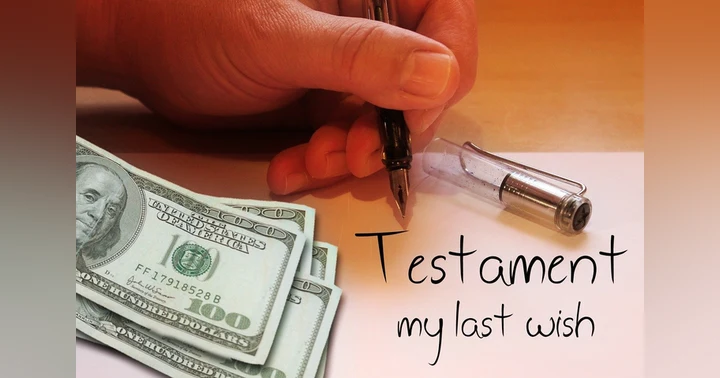
Wills and Trusts: Avoiding Probate and Controlling Your Legacy with Attorney Bernie Brown

This episode dives into how to manage your assets after your passing, focusing on wills and trusts as key tools.
Key Points:
Wills: Designate beneficiaries for your property after death, revocable and go through probate.
Trusts: Avoid probate, manage...
This episode dives into how to manage your assets after your passing, focusing on wills and trusts as key tools.
Key Points:
- Wills: Designate beneficiaries for your property after death, revocable and go through probate.
- Trusts: Avoid probate, manage assets while alive, and name a successor to distribute property.
- Benefits of trusts: Faster distribution, privacy, and potentially lower costs compared to probate.
- Types of trusts: Revocable (maintain control) and irrevocable (more protection from creditors).
- Alternatives to wills and trusts: Joint tenancy, pay-on-death designations, and life insurance beneficiaries.
- Considerations: Wills require witnesses and notarization, trusts involve transferring property to the trust.
This episode empowers you to understand your options for controlling your legacy and making informed decisions about your future.
0:00 Coming up on this episode of the HWWP lawyers do not recommend wills they recommend trust the problem or issues with probate is that like i said before welcome to the healthy wealthy and wise podcast with dr william t chalk tall md jd a special episode featuring attorney bernie brown former los angeles deputy city attorney author and podcaster You've got questions, he's got answers. Join us listening in as Bernie shares facts, wisdom, and knowledge at the Don't Leave a Mess conference held at the St. Stephen Missionary Baptist Church in La Puente, California.
0:44 Wow! This is almost as good as a jury trial. Okay. Alrighty. Well, God bless you all. Praise the Lord. Today we're going to talk about how to control your property after you die. That has a ring to it. Thirty five percent of all wealth is inherited. You can't take it with you. So why not give it to someone you love? Leave it to someone you love so that they can have a happier life or at least a more comfortable life. So basically what we're talking about today is wills and trust.
1:29 Now, I'm going to try to break everything down as simple as possible. Okay? Make it simplistic. A will is a document that designates a will. Who you want to receive your property after you die. Okay. A trust is a document whereby you transfer your property to the trust. And a trustee controls the trust while you are alive. You can name yourself as the trustee, which means you will still be in control of all of your property. And you name a successor trustee, the person who will take over when you die, who distributes your property to your designated beneficiaries.
2:22 So you're in control of your property after you die. What happens when you die? Your property is frozen. That's basically what happens. Your beneficiaries, your heirs, they cannot sell your property. They cannot receive rents or proceeds on your property. They basically can't do anything with your property until the court approves it. Now there are exceptions and we're going to talk about those exceptions. But basically everything is frozen. So, the court that makes the determination of who gets your property based on your will or your trust is called the probate court.
3:13 Now, basically what happens when you die, If you have a will, your property all goes into probate court. What's created is a probate estate. Alright, so when it goes in, what happens is, in your will you would name an executor. And your executor will hire a lawyer, and the lawyers will all get together, well, not get together. They will hire a lawyer that will file an application with the probate court to start the process.
3:57 in probate court so that the court can examine your will and determine your assets and determine who, based on your will, is entitled to receive your assets and to begin the process for distribution of your assets. Okay? Now, generally speaking, Lawyers do not recommend wills, they recommend trust. The problem or issues with probate is that, like I said before, your property is frozen until the probate court makes a decision.
4:40 The probate process can take up to one or one and a half years. So during that process, it can also be an expensive process because you have to hire lawyers. Lawyers have to come in. The probate court will frequently hire appraisers. Okay. They may hire accountants. You may have to pay court fees. So generally, lawyers Recommend trying to avoid the probate process. And generally, they do that through a trust, all right?
5:22 Now, there are, I just want to give you a basic overview. There are several ways to avoid probate, OK? And I'm just going to quickly go through some of the possibilities. One possibility is just give the property to whoever you want to have it while you're alive. Now, there are advantages and disadvantages of giving the property away while you're alive. If you give it to them while you're alive, then you no longer own it while you're alive. And that's a disadvantage because you want to continue to own the property. A second alternative is what's known as joint tenancy.
6:05 What generally happens when you buy a home is frequently you take in what's called joint tenancy. Now under the law, a joint tenancy does not go through probate. It transfers automatically when you die. So, if there's a husband and wife, wife and spouse, when one spouse dies, if they own the, the home. In joint tenancy, when one dies, the property automatically transfers to the other spouse. Now, that sounds great, and that's easy, it doesn't have to go through probate. The issue becomes, when these both spouses die, then you need either a will or a trust to control who gets it afterwards, which namely might be your children, but they're not part of the joint tenancy, so that's why you would need a will or a trust.
7:02 Now, in California and several other states, there are still oh, she's waving, is that the time? How many? Okay, five minutes. This is the sixth, almost a year class in law school. And I have five minutes. Okay, so, pardon me if I start speaking fast. Okay, so there are also what's called pay on desk. designations. There are transfer on death deeds. There's a deed that you can go, you can get the form and it's set up so that when you die, automatically your property, your deed, your real estate transfers to the person who you've designated.
7:49 Transfer on death does not go through Obviously life insurance, you name the beneficiary in your life insurance, so that doesn't go through probate. That's automatic. Living trust, we're going to talk about living trust. But that's a document that's created that does not go through probate. A lot of times with regard to your retirement accounts. They don't go through probate because you've named a beneficiary. Also, there's what's known as a pay on death account, and a designation, and that's where you tell the bank that you want them to convey your bank account, whatever's in it, to whoever upon your death.
8:30 So Let me just briefly, I'm going to be talking faster, I'm going to get faster, I'm going to get short. Death without a will. What happens if you die without a will? It's called intestate. That's basically, the court determines who gets your property if you die without a will. Okay, and they have certain rules about who gets what based on who your heirs are. So if you die without a will, the court's going to control everything and they're going to determine who gets your property based on the will. I'm sorry, based on the rules of the state of California or whichever state. is in conducting the probate process.
9:11 Basically, just very quickly, wills. Wills control, like I said, who gets your property. Wills are revocable. You can change it, you tear it up, rip it apart, write a new one, revoke it, you can get rid of it. As long as you're alive you can do that. Ok. Like I said earlier, wheels do go through probate. Creditors One of the things creditors must make their claims in the probate court. If they don't make their claim in the probate court, their claims are forever waived. That's creditors of the state. You can name a guardian in your will to be guardian for your children.
9:56 You can provide, you can disinherit anybody you want to disinherit. However, they still may have to pay child support. That might be paid out of your out of your estate. Basically to To to create a will, well, to authenticate a will, you know, it has to be signed and dated in front of two witnesses and notarized. And everybody has to be in the same room at the same time when that happens. Let's talk about another alternative, and that's what we call a holographic will. A holographic will is legal in the state of California, and legal in many states throughout the nation. And basically what it is, it's a free handwritten will.
10:40 Now the key is you have to entirely write the entire document out. You have to write down, this is my last will and testament. And this is, you basically say who you leave it to, and then you have to sign and date it. And if you do that, and if you don't include any typewritten, no typewritten stuff in there, then that is a valid will in the state of California. It's free. You didn't have to pay anybody anything. Signed, dated, handwritten, free will. Now so, that's one way to get around the entire process. Like I said, there's authentication of wills, because I'm running out of time, I'm going to go briefly into trust.
11:25 There are several types of trust. Basically the parties to a trust. is the person who creates the trust, which is usually you, you create the trust, and you name yourself as the trustee, so you're still in charge of all of your assets and everything, and then you name a successor trustee, the person who's going to come after you, who's going to distribute your property to whomever you want it distributed to. Trust, avoid probate. They do not have to go through probate, whatever, whatever property you put into the trust, you can transfer automatically.
12:06 So you don't have that year, year and a half delay. You don't have all the attorney's fees. Now here's the issue with, with the fees on trust. The trust costs more up front, because it costs more to create a trust. But, even though it costs more up front, there is no probate. So you don't have to go through the probate process. The probate process can be, oh, she's walking toward me. You don't have to go through the probate process, so you don't have to pay for those fees, the attorney fees, the court fees, the accountant fees, the appraiser fees, all of those different kinds of fees.
12:50 Also, just like a will, a trust is revocable. You can revoke the trust, right, hereby revoke this trust and no longer want to do, and write a new trust, prepare a new trust, and so that, you know, those are the alternatives available. There are several different types of trust. The two main types of trust are revocable trust and an irrevocable trust. An irrevocable trust gives you more protection from your creditors and possibly tax. Protections, a revocable trust gives you more control because you still control the property.
13:32 An irrevocable trust, you lose some control of the property, whereas with a revocable, revocable trust, you still retain complete control. of your property. There are several other types of trusts, but we'll get into those later in the breakout room. There's a spin thrift trust, Totten trust, pour over trust, testamentary trust. There are a zillion different kinds of trusts. The trusts are authenticated in the same way as the will. You, two witnesses, witnessing while you, when you sign the document.
14:14 And everybody's signing off in front of a notary public just for, just for Informational period, I mean information you can get a notary public loan signing agent. You just contact used to be AAA, and I think it is still AAA. You call them, tell them you want a notary public loan signing agent to be present. You want some documents signed, and you can appear at AAA and sign the documents. And and have the whole thing notarized there in front of the your witnesses. I think I'm, I'm pretty much done with the basics. Just a couple of other things.
14:55 You do have to transfer all your property to the trust. If you don't transfer the property to the trust, the property you did not transfer may still have to go through probate. Now, and so that you could have two things. You could have some trust property that flows automatically and certain property that you didn't transfer. A lot of times lawyers don't mention that you have to like prepare quickly in transferring the property from your cell to the trust. And so if it's not in there.
15:36 Then it still has to go through probate. So there's still some formalities that have to be taken care of. And I'm sure I'm missing a few of the things that I wanted to talk about. But I think I'm Well exceeded my 10 minutes. Oh, she's pointing at the clock. Okay, well, thank you very much. We'll be open for further questions. Cool, thank you. Thank you for listening to this special episode of the healthy, wealthy, and wise podcast.
16:18 Be sure to go to thwwp. com to download and subscribe to the podcast. This will help ensure you don't miss an episode. Then be sure to share this and many other episodes with your family, friends, and associates, providing you with the tools that you can use to be the change you want to see in the world. You've been listening to another great episode of the healthy, Wealthy and Wise Podcast with Dr. William T. Chalktoff, M. D., J. D.